

- The key to AI is not intelligence. It is safety. And safety is not a feature. It is a philosophy, writes AI advisor John Kamara.
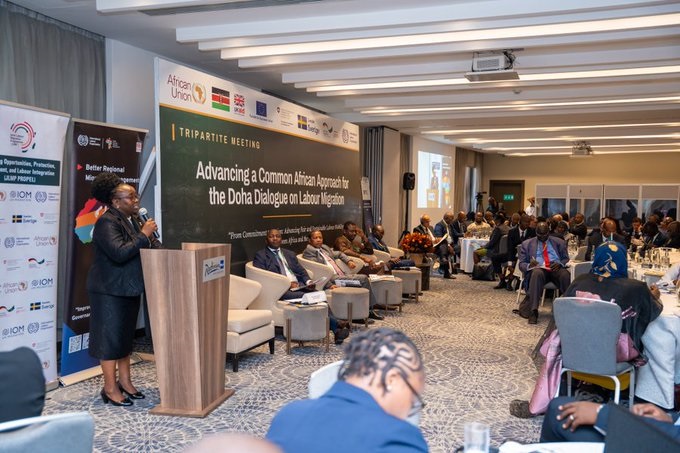
A few weeks ago, I wrote about being in a room in Nairobi full of smart, passionate people talking about African AI. The energy was real. The intent was genuine. And something kept nagging at me like a splinter I could not locate. We were talking about AI. We were not, I realised on the drive home, talking about intelligence.
This is the piece I could not write yet. Because the more I sat with it, the more convinced I became that the whole conversation about models, markets, moats, and miracles is happening at the wrong altitude. The real question underneath is older than Silicon Valley. It is older than America. It is as old as the first time a group of humans looked up and decided to build something that would put them closer to the sky. So here is my thesis, said plainly: The key to AI is not intelligence. It is safety. And safety is not a feature. It is a philosophy. Let me show you what I mean.
The Woman Who Did Not Ask
There is a woman cooking on a fire tonight in a village whose name is not in the decks we were flipping through. She does not know what a transformer model is. She has never heard the word alignment spoken in any room she has ever entered. She does not read the quarterly earnings reports of the companies that are, at this moment, deciding the shape of her grandchildren’s lives. And yet the tower we are building reaches over her house too. When it falls, or when it stands, she will be living inside its shadow. This essay is, in part, for her.
It is also for the man clocking into his second shift because the first no longer covers the rent. For the founder who bled a decade into a company and woke on a Tuesday to find it hollowed out by a system trained on her own team’s work. For the young engineer in Lagos, in Kigali, in Cape Town, who is being told — with perfect sincerity that she is now part of a global opportunity, without being told whose opportunity it actually is. For the bad actor sharpening knives in a room the rest of us cannot see. For the child who will be born in 2029 and never know a world without synthetic voices.
It is for anyone who has ever looked up and wondered whether we know what we are doing. We do not. We have never known. That has never stopped us before.
The Old Babel and the New One
In Genesis 11, the story is brief and devastating. The whole earth speaks one language. The people say to one another, come, let us build a tower with its top in the heavens, and let us make a name for ourselves. God comes down to look, and what God says is curious. Not that the tower is evil. Not that it is blasphemous. Only this: with one language and one will, these creatures could accomplish anything they imagine. So their tongues are jumbled, and they are scattered, and the city is called Babel from the Hebrew balal, to confuse.
Read it slowly. The sin of Babel was not ambition. It was unchecked ambition divorced from wisdom the conviction that reach alone could grant meaning, that rising high could substitute for rising well.
The oldest myth of the civilizations that now fund most of the world’s AI research is, it turns out, not a story about knowledge. It is a story about what happens when we build faster than we can understand what we are building.
Every culture has told this story in its own clothes. The Greeks gave us Prometheus, nailed to a rock for stealing fire. The Akan of Ghana told of the sky-god Nyame, who once lived close to the earth until a woman pounding fufu kept striking him with her pestle, and so he withdrew and we have been reaching for him ever since.
From Anansi to Icarus, every founding myth buries the same warning: you will reach, and reaching will cost you something, and whether it is worth the cost depends entirely on what you remember to bring with you.
We are the tower. We have always been the tower. And here is what the story does not say aloud: the scattering did not stop us. It never has. We went off in our separate directions with our separate tongues and we started building again. Smaller towers at first. Then bigger ones. Then ones made of steel, then code, then mathematics and now, finally, ones made of something that can almost think.
The reaching is not a flaw in us. It is the deepest thing about us. The question was never whether we would reach. The question is what we owe to the world we are reaching through.
Umuntu Ngumuntu Ngabantu
There is a phrase in the Nguni languages of southern Africa. Umuntu ngumuntu ngabantu. A person is a person through other persons. Desmond Tutu put it this way: I am a human because I belong. I participate. I share.
Now think about what that does to Descartes. Cogito, ergo sum. I think, therefore I am. For four hundred years, that sentence has been the quiet foundation of ruling powers in modern history the single isolated mind, thinking its way into existence, alone.
Ubuntu answers: no. The mind does not make the person. The people make the person. You are, because we are. This is not a small disagreement. It is a fork in the road that was taken many centuries ago by our civilizations as we now build the most powerful non-human intelligences in history.
The cogito builds alone. The cogito optimises alone. The cogito ships a model to a hundred and ninety countries and asks, afterwards, whether anyone got hurt. Ubuntu would have asked first (Who are we hurting)
The Cameroonian philosopher Achille Mbembe, writing from Johannesburg, has described our moment with a phrase I cannot get out of my head: what is happening in our time is the becoming-artificial of humanity and the becoming-human of machines. Read that twice.
The machines are learning to seem more like us at precisely the moment when we are learning to live more like the machines plastic, synthetic, interchangeable, optimised, measured in tokens and clicks and uptime. The mutation is running in both directions at once. Mbembe warns elsewhere that killing is the lowest form of survival. He is right. And yet survival at any cost, against any neighbour is exactly what our economies keep telling us to race toward. Ubuntu is the counter-sentence. You cannot survive alone. You were never alone.
If the AI we build is trained to optimise for the solitary cogito for the individual user, the individual buyer, the individual metric then we will have built a very clever tower on the wrong foundation. We will have built Babel again, only this time we will have given it the power to speak every language we ever confused.
The Questioners Who Would Not Stop
Socrates walked the streets of Athens asking questions that made powerful men squirm. The unexamined life is not worth living, he said. For this for refusing to pretend he knew what he did not Athens killed him with hemlock.
But the questioners are not only found in Athens. Wangari Maathai, the first African woman to win the Nobel Peace Prize, walked out of a university office in Nairobi one day and decided that the best thing she could do with the rest of her life was plant trees. With women. In villages. On hillsides the colonial foresters had said were finished. She was arrested, beaten, tear-gassed, called mad. And she kept planting.
When asked why, when the problem was so big and she was so small, she told a story about a tiny bird throwing drops of water on a forest fire while the bigger animals stood and watched. I will be a hummingbird, she said. I will do the best I can.
Notice what Maathai did. She did not write a treatise. She did not build a model. She did not issue a white paper. She put her hands in the soil. And in doing so she was asking Socrates’ question in a different register: what is the smallest real thing I can do, today, that makes the world a little less of a lie?
This is the philosophical inheritance I want to bring to the building of AI. Not only Athens. Also Nyeri. Also Soweto. Also Yaoundé. The questioners from every direction on the map, standing now at the edge of something that has begun very quietly to question us back.
Two Futures in 2040
Let me tell you about two futures. Both are real in the sense that they are possible. Neither is guaranteed. Both are being poured into the concrete of our present, right now, by choices most of us are not in the rooms to witness.
In the first, I wake in 2040 and I do not remember what it felt like to be needed. Machines perform the tasks. Enterprises rise and devour each other, and the war between them is quiet, constant, and has no front line you can name. The village where my grandmother was born is a node in a grid humming, harvested, its red earth threaded with cables going somewhere else.
Humans have tiers. Nobody is crass enough to name them, but we all know which one we are in. Work is a matrix of small tasks dispensed by systems none of us designed. Music is autonomous and sequenced and beautiful in the way a corpse is beautiful: arranged, lifeless, perfect. This is what Mbembe called the becoming-artificial of humanity. This is the future in which we “won.”
In the second, I wake in 2040 and I jet to work in a flying wheel that hums like the inside of a bee. Lunch is on a floating terrace that lines the city skyline like Christmas lights. I think, occasionally, about people in 2026 — about the arguments they had, the fear they carried, the decisions they made in rooms without enough windows. And I thank them. Because in that world, they chose.
They chose not to let the tower fall sideways onto the woman in the village. They chose to build with her. They built AI as a safety partner, not a supervisor. The African village became a node of power, yes but a node that kept its own current, spoke its own language, and taught the grid something the grid did not previously know.
They did this by making a thousand small, Ubuntu-shaped choices. They tested before they deployed. They paused when the outputs looked strange. They paid the humans who labelled the data a wage those humans could actually live on. They wrote the laws. They funded the research nobody could profit from.
They asked the question Socrates asked do we know what we are doing? and, more importantly, they asked the question Ubuntu asks, which is the harder one: Who is the “we,” and who got left out of it? The difference between these two futures is not technology. Both futures have the same technology. The difference is us.
The Forgotten Are Not a Footnote
This is the part I want to write most carefully. Because the temptation when you are inside a great historical moment is to believe that the moment is the story. That the companies, the models, the benchmarks, the funding rounds, the summits in glass towers that these are what will be remembered.
They are not. What will be remembered is the woman cooking on the fire. What will be remembered is the man who took a second job because the first was automated out from under him without a letter, without a meeting, without even the dignity of being fired by a person who could look him in the face. What will be remembered is the founder who woke up to nothing.
What will be remembered is the quiet village with no name in your textbook. What will be remembered is the shell organisation the one that produced nothing and owned everything, the one that wrote a beautiful values statement and meant none of it.
And what will be remembered, most of all, is the bad actor. The bad actor has been there since Cain stood over Abel. The bad actor does not care about our alignment charters, our responsible deployment frameworks, our conference panels. The bad actor is patient. What the bad actor is waiting for is for us to have built something powerful and forgotten to lock the door.
Safe AI is not a slogan. It is a door. It is a lock.
It is the grown-up acknowledgment that in every garden there is a serpent, that the serpent was there before we arrived and will be there after we leave, and that our job is to know this and build accordingly.
Safe AI is the letter we write back in time to the people who did not ask to be part of the story the promise that we tried to keep them in the frame. It is a refusal to be enthusiastically included in someone else’s version of our future. It is capital formation, yes. And policy. And governance. But beneath all of that, it is an older African idea: that you are not free until your neighbour is free, and you are not safe until your neighbour is safe. It is the only kind of tower worth finishing.
Read also: Africa’s AI economy is evolving from just adoption to creation, new data shows
The Dance Has No Destination
Alan Watts used to say that life is not a journey. A journey implies a destination, and if the destination is death as it is for all of us then to live as though you are racing toward something is to misunderstand what you are doing. Life, he said, is a musical thing. The point of music is not to reach the final note. The point of dancing is not to arrive at a particular spot on the floor. The point is the dance itself.
There is no destination. There has never been one. There was no year we were supposed to arrive. The thirst for knowledge was never a problem to be solved, because the thirst is not a problem the thirst is what we are. If AI is anything, it is the newest verse of the oldest song.
It is Babel and it is also the Sistine Chapel. It is Prometheus and it is also the kora of the Mande, and a child in Nairobi writing her first line of Python. It is the abyss looking back at us and it is also a block of marble with an angel inside we have not yet seen clearly.
Our job is not to choose between these readings. Our job is to hold all of them at once and to build with both hands open one hand reaching toward the thing we might become, the other hand steady on the shoulder of the woman in the village, so that when the tower rises, she rises with it, and not under it.
Watts would say the dance has no destination. Ubuntu would add: but the dance is not a solo. There is no version of this song where only some of us are dancing and the rest are sweeping up.
To Her
To the woman I have not met, cooking on the fire tonight: I am sorry for every decision we made in rooms you were not invited to. I am trying. Some of us are trying. The tower is going up and we cannot stop it humanity has never stopped a tower once the bricks began to move but we can still decide what the tower is for, and who it is for, and whose names get carved into its base. Socrates said the unexamined life is not worth living.
I will add to it: the unexamined technology is worth building if we act with caution and care for the unknown is a hole we will learn from. Let us plant trees, like Wangari. Let us remember, with Mbembe, that killing of jobs, of cultures, of lives rendered irrelevant is the lowest form of survival. Let us remember, with Tutu, that my humanity is tangled up in yours whether we acknowledge it or not.
And let us remember that there is nowhere to arrive. We are the song. We are the tower. We are the angel and the marble and the chisel and the hand. We are also, all of us, the scatterers and the scattered. Let us be careful this time. Let us build something worth being remembered for, by people we have not yet met, in a year we will not see, on behalf of a woman whose name we do not yet know how to say.
As the AI debate hots up, international and regional AI economy stakeholders are gathering in Kenya’s capital Nairobi for the inaugural edition of AI Everything Kenya X GITEX Kenya summit, which is running from 19–21 May. AI Everything Kenya x GITEX Kenya showcase will see captains of industry, policymakers and key stakeholders advance debates on sovereign, inclusive, and investment-driven AI ecosystems across East Africa.
The Inclusive AI Summit will take place at the Sarit Expo Centre on 19 May, followed by the AI Everything Kenya Expo and Conference on 20–21 May at the iconic Kenyatta International Convention Centre.
Written in 2026, for 2040, and for her by John Kamara, one of Africa’s leading advisors on enterprise artificial intelligence in financial services, partnering with the continent’s largest banks, insurers and telecommunications groups to translate AI from concept into production-grade capability. His practice spans executive strategy, regulatory engagement, data and platform architecture, and product design enabling institutions to deploy AI responsibly and commercially across credit, payments, customer experience, and digital assets.