


- Nairobi hosts a landmark AI Everything Kenya X GITEX Kenya summit, running from 19–21 May as the continent confronts a hard truth: you cannot build a viable AI economy on an unstable grid.
- As AI economy gathers pace, so does the demand for energy. Can policymaker’s switch natural gas from being the continent’s export commodity to a strategic enabler for data centre investments? We examine.
Starting this week, international and regional AI economy stakeholders will start gathering in Kenya’s capital Nairobi for the inaugural edition of AI Everything Kenya X GITEX Kenya summit, which is running from 19–21 May.
The AI Everything Kenya x GITEX Kenya showcase will see captains of industry, policymakers and key stakeholders advance debates on sovereign, inclusive, and investment-driven AI ecosystems across East Africa.
The Inclusive AI Summit will take place at the Sarit Expo Centre on 19 May, followed by the AI Everything Kenya Expo and Conference on 20–21 May at the iconic Kenyatta International Convention Centre.
The timing of this summit comes at a time when policymakers in the continent are engaged in a quiet but urgent conversation: where will the energy come from to power Africa’s artificial intelligence ambitions?
Last week, Kenya’s Special Envoy on Technology, Ambassador Philip Thigo, pushed back against media reports claiming that the East African country had quietly suspended the rollout of $1 billion Microsoft-G42 data centre project owing to energy supply constraints.
Amb Thigo explained on X that Microsoft’s data centre project remains a flagship undertaking in sync with the country’s digital growth objectives, and any concerns raised relate solely to the amount energy infrastructure that is required, and not a stoppage of the investment.
Electricity supply a key constraint of AI economy
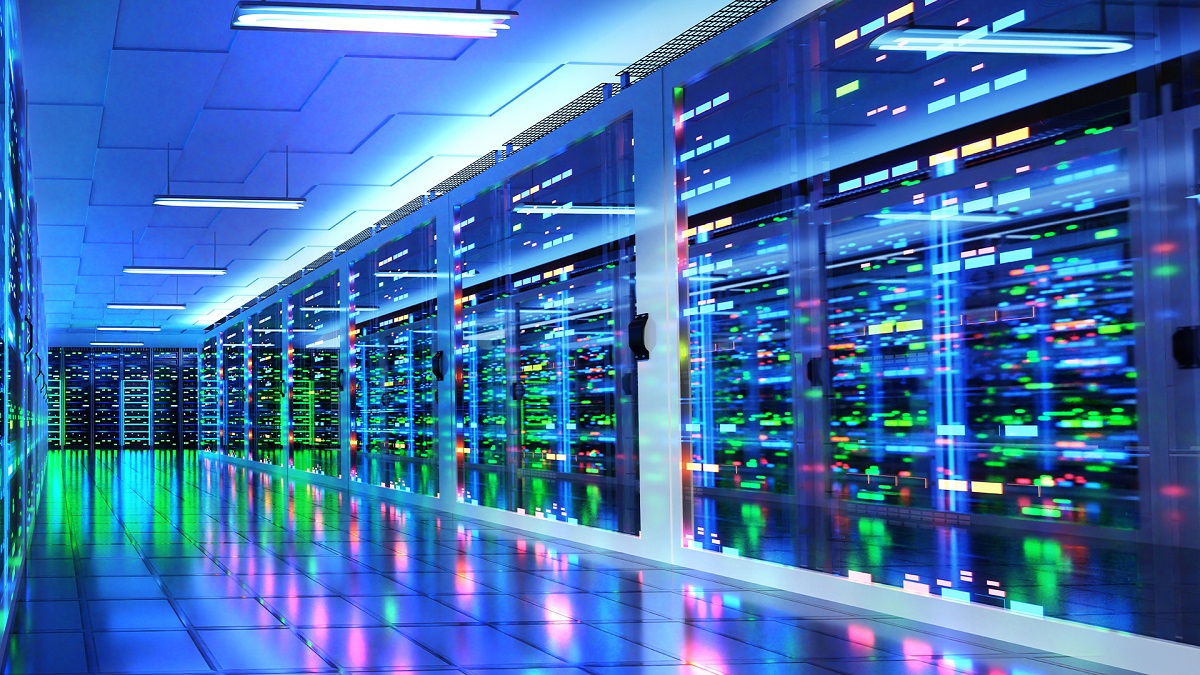
Artificial intelligence has a field of tech hiding behind its sleek interfaces. Data centres, which represent the physical infrastructure that trains large language models (LLMs), processes queries and stores massive volumes of digital information, consume electricity on a scale that is rapidly becoming unsustainable under current grid configurations.
For Africa, this presents an investment paradox. The continent holds more than 600 trillion cubic feet of proven natural gas reserves, a significant share of the global total. Yet it consumes barely a fraction domestically. Most production has historically been shipped to export markets, leaving African households and industries to contend with chronic power shortages.
At the same time, Africa’s digital infrastructure remains strikingly underdeveloped. The continent accounts for just 0.6 per cent of global data centre capacity, despite representing nearly 20 per cent of the world’s population. Total installed capacity across active, planned and pipeline projects stands at roughly 1.2 gigawatts, with only about 360 megawatts currently operational.

Is energy gap about to become a crisis or an opportunity?
Africa’s data centre needs are projected to increase 3.5 to 5.5 times by 2030, requiring between $10 billion and $20 billion in investment. Power demand from digital infrastructure is growing at the rate of 20–25 per cent annually and is expected to reach 8,000 gigawatt-hours in the coming years.
The challenge is that Africa’s electricity grids, where they exist at all, are notoriously unreliable. Intermittent power, voltage fluctuations and frequent blackouts are incompatible with the always-on requirements of AI data centres.
This is where natural gas enters the conversation with force. Unlike solar or wind – which are variable by nature – gas-fired power provides dispatchable, baseload energy that can run continuously. Globally, data centres already consume around 1.5 per cent of total electricity, with demand growing at roughly 12 per cent annually, far outpacing overall electricity consumption. In emerging markets with weak grid infrastructure, gas offers a pragmatic bridge.
Read also: East Africa’s AI market is rising rapidly – but ownership will define its future
Mozambique, Nigeria and other gas frontiers
Major projects across the continent underscore the scale of potential supply. Mozambique’s offshore liquefied natural gas developments, which is among the largest in the world, are expected to produce more than 13 million tonnes per year. Nigeria, with over 200 trillion cubic feet of reserves, continues to expand its gas monetisation strategy. Newer producers such as Senegal and Mauritania are also entering the market with large-scale LNG developments.
The strategic shift under discussion at African Energy Week 2026’s AI and Data Center Track is not simply about exporting more gas, but rather retaining a portion of that supply domestically to power industrialisation and digital infrastructure. Today, Africa exports energy while still suffering power shortages, reflecting a disconnect that has long frustrated economists and policymakers.
Bridging that gap could redefine the continent’s trajectory. Gas-to-power projects integrated with data centre development offer a pathway to anchor digital infrastructure in energy-rich regions. Nigeria, Egypt and Algeria are particularly well positioned, while emerging producers like Mozambique and Senegal could embed domestic supply into new industrial and digital hubs from the outset.
“This is not just an energy discussion – it’s an economic strategy,” states NJ Ayuk, Executive Chairman of the African Energy Chamber, in remarks tied to African Energy Week 2026. “AI data centres require constant, reliable power at scale, and natural gas is the only resource Africa has today that can deliver that immediately. If we align gas development with digital infrastructure, we can industrialise, create jobs and position Africa as a serious player in the global AI economy.”
The Nairobi summit next week week will provide a parallel platform for these debates. With East Africa emerging as a regional digital hub, the conversation about sovereign, investment-driven AI ecosystems is inseparable from the conversation about energy. You cannot have one without the other.
The risks to digital future: infrastructure gaps and regulatory inertia
Still, formidable obstacles remain. Pipeline networks are underdeveloped. Pricing structures for domestic gas often lag behind export economics. Regulatory frameworks in many countries have not caught up with the convergence of energy and digital infrastructure.
Without coordinated investment in pipelines, power plants and data centres, the continent risks continuing its dual role as an energy exporter and a digital services importer – extracting resource wealth while paying foreign providers for the computing power that increasingly drives modern economies.
As AI drives a new wave of energy demand, natural gas is emerging as a critical enabler of digital infrastructure. For Africa, the challenge, and the opportunity, is to turn that advantage into genuine global competitiveness.
Read also: Africa’s AI economy is evolving from just adoption to creation, new data shows