

Trending
- Weather experts warn of the most powerful El Niño in decades as extreme weather hits Africa
- Africa Blockchain Festival ignites a new dawn for African innovation
- Africa’s gaming market set to quadruple to $4 billion, defying global slowdown
- Tanzania throws its bond market wide open to the global investors
- VALR sets sights on East Africa as blockchain moves deeper into Africa’s financial system
- The cost of the data gap: Why Kenya’s lenders can’t afford to miss the full picture
- Tanzania takes EAC labour migration helm as regional rules face overhaul
- 2026 is turning out as a defining year in geopolitics, but for whom?



A majority of Kenyan workers are disengaged according to the 2024 edition of Gallup employees survey. The survey further shows that men are slightly…
Kenya’s $168Bn plundered development loans were taken over 11 year…

Kenya’s Political Instability has seen calls for President Ruto’s impeachment,…


On October 14, 2018, the Kenya Space Agency (KSA) presided over the launch of a 1U nanosatellite, Kenya’s first space mission. The event took place at Konza Technopolis, a large technology hub planned on the outskirts of Kenya’s capital, Nairobi.
At the launch, some five Kenyan top universities competed for top position each presenting its own satellite model with the primary payload being a low-resolution camera.
The competition was meant to see which university’s satellite camera would be able to perform remote sensing applications. The project primarily focused on using satellites to provide imagery for crop monitoring to assist in smart agriculture.

Cashlet has been developed by Sycamore Capital Ltd, and it works in partnership with regulated fund managers in Kenya, to allow users to invest in unit trust products in simple, fully digital, and modern way.
The initial partner fund managers include ICEA Lion Asset Management, Old Mutual, and Genghis Capital.
The app seeks to pioneer saving and investing flexibility, life goals creation and tracking, market interest rates, financial visibility, and expert support.

Constructed under the East African Community regional development project, the road is key to the much aspired regional integration and opens doors to the ports for Africa’s landlocked countries like Uganda, Rwanda and the DRC.
Owing to its importance, the African Development Bank and the Japan International Cooperation Agency (Jica) are among the project funders as well as the Tanzanian government itself through its own internal revenue.
Complete with spar roads, the highway will open up enormous economic potential of each region it passes. On the other side of the border, the Kenyan government has also begun work on the connecting 40km project Mtwapa-Kilifi Road, part of the overall 460km Malindi-Tanga-Bagamoyo East African corridor development project.
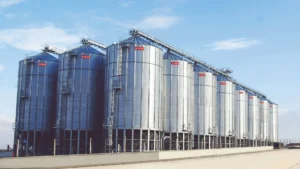
The Tanzania Cereals and Other produce Board (CPB) reported that the grain stores in Juba and Lubumbashi were already experiencing a vibrant business environment. They also expected the Mombasa facility to outperform the two.
According to the 2019 Statistics, Tanzania exported more than 97,000 tonnes of maize. This factor opened the country to the opportunity of launching its grain surplus scheme with the Southern Agricultural Growth Corridor of Tanzania (SAGCOT).
SAGCOT was established in 2010 to create a transformed and economically viable agricultural sector in Tanzania that protects food security, enhances environmental sustainability, and improves livelihoods. The Agricultural growth corridor uses 350,000 hectares in the fertile southern islands of Tanzania to grow maize, wheat, paddy, sorghum, cassava, millet, beans, bananas and sweet potatoes.
The Central Bank of Kenya added that all countries in the region needed to participate in flattening the multi-layered correspondent banking structure and shortening the payment chains for a digital currency to work.
The development of CBDCs has been on the rise. According to a 2021 survey of central banks by the Bank for International Settlements (BIS), 86 per cent of central banks are in the process of researching the potential for CBDCs, 60 per cent are experimenting on them, and 14 per cent were deploying pilot projects.
The CBK has maintained the cryptocurrency ban and has not issued a digital currency due to concerns about the risks of a CBDC.
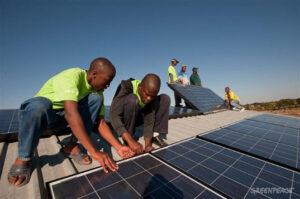
However, all efforts have been directed in that sector to try and make it greener and cleaner. Among consumers, a major shift is now being witnessed with most of the industries investing in clean energy sources that are both affordable and sustainable.
Such initiatives have made Kenya be rated among the top countries that are implementing their nationally determined contributions that seek to cut greenhouse gas emissions in the country by 32 per cent by 2030.
The latest industry to have made noted efforts to transit to clean Energy is Bamburi Cement Factory situated in Bamburi Mombasa.