

Trending
- Weather experts warn of the most powerful El Niño in decades as extreme weather hits Africa
- Africa Blockchain Festival ignites a new dawn for African innovation
- Africa’s gaming market set to quadruple to $4 billion, defying global slowdown
- Tanzania throws its bond market wide open to the global investors
- VALR sets sights on East Africa as blockchain moves deeper into Africa’s financial system
- The cost of the data gap: Why Kenya’s lenders can’t afford to miss the full picture
- Tanzania takes EAC labour migration helm as regional rules face overhaul
- 2026 is turning out as a defining year in geopolitics, but for whom?



A majority of Kenyan workers are disengaged according to the 2024 edition of Gallup employees survey. The survey further shows that men are slightly…
Kenya’s $168Bn plundered development loans were taken over 11 year…

Kenya’s Political Instability has seen calls for President Ruto’s impeachment,…




M-KOPA enables underbanked customers in select African markets to access a broad range of products…
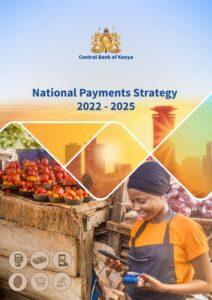
The first National Payments Strategy implemented in 2004 through to 2008, was aimed at addressing challenges across risks due to the absence of a real-time settlement system, limited trust in payment instruments such as high-value cheques and an under-developed policy, legal and regulatory framework.
The NPS is motivated by a desire to meet the diverse needs of the Kenyan people and its economy and support our nation’s ambition for a digital, inclusive and 24/7 economy. The Strategy will also be the basis for consolidating and extending Kenya’s global leadership in digital payments and innovation. Finally, the Strategy will provide the overarching policy framework that will guide the work to strengthen the NPS legal and regulatory framework.
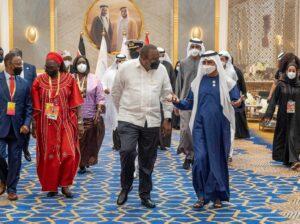
According to the Mohamed Ali Al Shorafa Al Hammadi, Khalifa Fund, and the Abu Dhabi Department of Economic Development Chairman, the directive of Sheikh Mohamed bin Zayed Al Nahyan to establish a centre for innovation and tech-focused entrepreneurship in Kenya comes as part of the UAE’s ongoing commitment to contribute towards empowering talented innovators and entrepreneurs globally.
“With centres such as these, we provide entrepreneurs with resources, support and guidance to contribute to their local and global economy, bringing about positive economic implications and security,” Al Shorafa said.
He added that the collaboration between the United Arab Emirates and Kenya through the Khalifa Fund would see Kenya having the same levels of achievement as has been experienced in the United Arb Emirates.

Other than the trade issues, the session examined and harmonized implementation of decisions across various sectors of bilateral cooperation including immigration, education, transport, communication, defence and security, energy and mineral development among others.
The meeting was a success to say the least, however, it still remains to be seen whether in the wake of the meeting, Ugandan truckers will pay less at the Tanzanian border. With a six month reporting period, a lot can transpire in the interim.
It is now going towards a month since the January sit-down and no ground reports have been publicized as to whether the toll fees have been harmonized for Uganda to match other EAC charges at the Tanzanian border.

Protectionism and non-tariff barriers persist between the two countries countries have varying processes which seriously…

The hydropower project is worth an estimated US$1.3 billion that will see Ethiopia import 400…