



- Analysts say DRC’s over-subscribed eurobond indicates investor confidence despite conflict and rare ebola ravaging the country.
- DRC now poised to access international capital instruments.
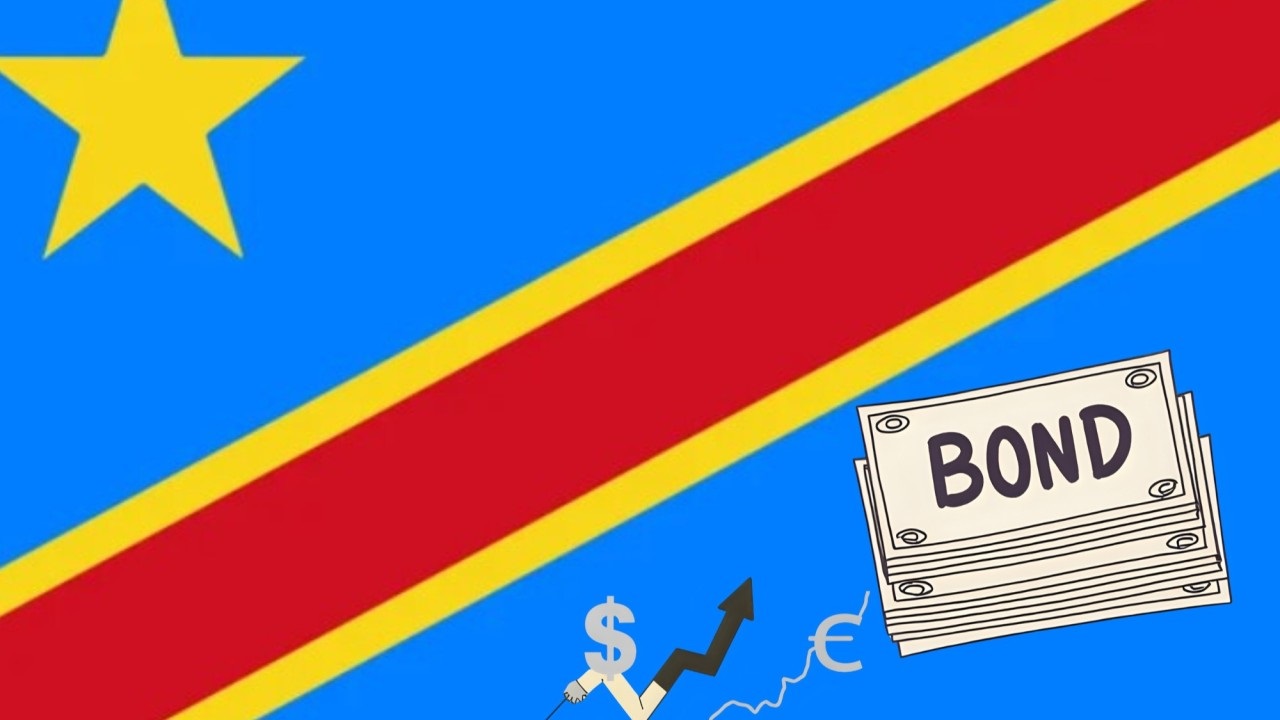
DRC eurobond has beat critics doubt upon first issuance. Against all odds, the Democratic Republic of Congo (DRC) has managed to hold and grow investor confidence evident in the over-subscription of its debut eurobond issue that is to be listed on the London Stock Exchange.
According to an official government statement from the DRC, the eurobond racked in more than $5.2 billion, representing an oversubscription of more than four times the expected value. “Sometimes the most revealing market signals emerge not from countries with improving fundamentals, but from investors willing to look past them,” notes Ray Ndlovu in his Bloomberg published analysis of the issuance.
Despite the DRC shouldering the most negative credit rating (CCC+) and while it still bares one of Africa’s heaviest national debts, it has managed to raise nearly $2.5 billion from international investors over the past half year.
Just how bad is the DRC credit rating, according to S&P Global, a “CCC+ credit rating is a highly speculative, ‘junk’ grade rating indicating a substantial risk of default. An issuer with this rating is currently vulnerable and depends entirely on favorable economic and business conditions to meet its financial obligations.”
However, this rating was revised to a slightly higher B- earlier this year owing to the International Monetary Fund (IMF) favorable review.
Titled ‘Congo Eurobonds Defy Ebola as Investors Chase High Yield’ Ndlovu’s report interprets the over-subscription saying; “The message is clear, in a world still searching for yield, frontier-market risk remains remarkably attractive.”
True to the fact, the DRC raised an impressive $1.25 billion when for the very first time, the country sold it’s Central Bank bonds in a foreign currency, that is, the eurobond.
Analysts say the move is evidence that global capital markets are not swayed by negative publicity when it comes to investing in frontier high return markets despite worrying conditions like the current ebola outbreak in the DRC. Alongside Citi group, Standard Chartered Bank and Raw Bank, well over 110 investors from across Europe participated in the eurobond issue.

Investors confident in DRC as ‘a high return market’
Just as investors have showed confidence in the DRC despite purported risks, the DRC too has exhibited great confidence in European investors in that it is actually the first African country to issue a euro bond since 2019.
The bond was structured in two tranches, first, a 5-year tranche that will mature in 2032 and yield 8.75% interest and secondly, a 10-year tranche due to mature in 2037 and yield a whopping 9.5%.
According to the DRC Minister of Finance Doudou Likunde, concessional financing remains central for the DRC but the country is now looking to diversify its funding sources.
Noting that the raised funds will be allocated to priority investment in infrastructure, energy and social development in accordance to the national development strategy, he reassured stakeholders that the DRC is open and safe for business.
He said the eurobond issuance followed careful preparation, robust structuring and was curated with advice and help from the International Monetary Fund (IMF). In it’s commentary following the issuance, the IMF also reassured stakeholders that the DRC has met suggested structural reforms and has met all but one performance criteria.
“The international market entry is an important step in our national financing strategy,” the diplomat said, adding: “At the same time, we remain committed to maintaining debt sustainability in line with the IMF programme.”
“Our ambition is to become a regular sovereign issuer and this transaction lays the foundation for the country’s continued access to international financial markets,” Likunde detailed.
“At the same time, we remain committed to maintaining debt sustainability in line with the IMF programme,” he added seizing the opportunity to reassure investors that their investments in the DRC are secure despite publicized conflict in the country.
The safety reassurance is backed by the IMF that reported conflict in the DRC is putting pressure on the government’s public spending but the country’s economy remains resilient.
“The DRC has remained resilient despite the persistence of the armed conflict in the eastern part of the country…which continues to exert significant pressure on public finances,” the IMF cautions.
According to the IMF, as of January 2025, it approved a 38 month financing arrangement for the DRC. This financing comprised of a $1.73 billion given as part of its Extended Credit Facility (ECF) and another $1.04 billion issued as part of its Resilience and Sustainability Facility (RSF).
Since then, the IMF conducted a second review of the ECF and it also conducted the first review of the RSF in December.
Following the reviews, the Fund said the DRC’s economy “has remained resilient despite the persistence of the armed conflict in the eastern part of the country, which continues to exert significant pressure on public finances.”