



- In Africa, renewable energy from solar and wind power is transforming the economics of freshwater production, but brine disposal risks and financing challenges remain unresolved. We highlight the countries pioneering the revolution.
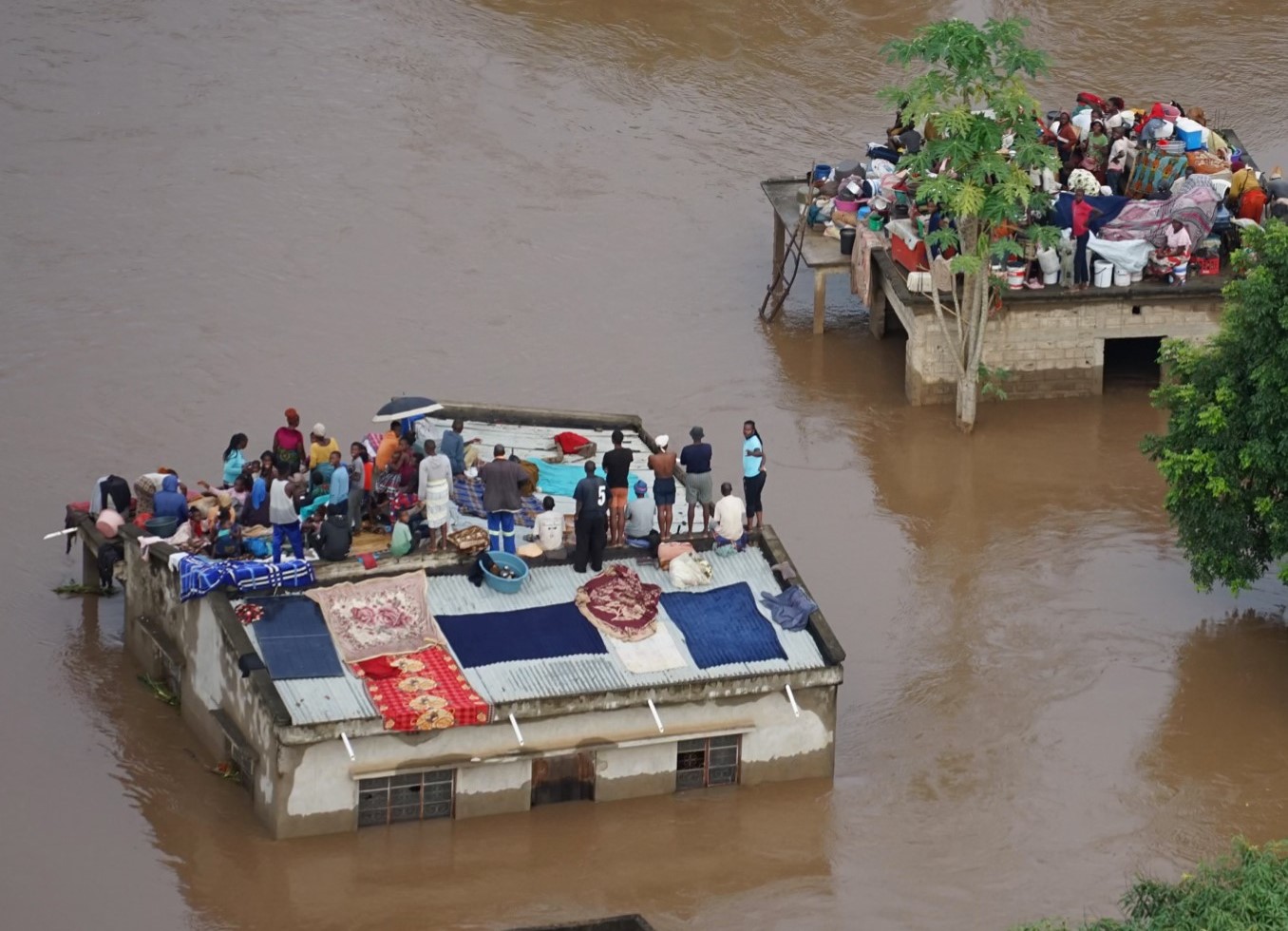
By 2050, at least 800 million Africans will live in regions of acute water scarcity, where renewable freshwater resources fall below 1,000 cubic metres per person per year, according to the Food and Agriculture Organization (FAO). Agriculture, already the continent’s largest water consumer, will face the steepest shortfall.
For decades, desalination offered a technical solution but at prohibitive cost. High electricity consumption made large-scale plants unaffordable for all but the wealthiest, most energy-rich economies. That calculation is now changing.
Renewables changing the cost for water desalination plants
The dramatic fall in solar photovoltaic and wind power costs, coupled with more efficient reverse osmosis pumps, has cut the operational expense of water desalination by half or more in some markets, industry engineers say.
Where a plant might have relied on dedicated fossil-fuel generation, hybrid renewable energy systems now produce water at tariffs increasingly competitive with overexploited groundwater or distant surface supplies.
“Energy and water are basic prerequisites to developing the industrial capacity of any nation or region,” explains Hashim Ghabashi, president for Africa at Acwa Power, a Saudi developer that has become the world’s largest private desalination company by volume.
“Modern reverse osmosis systems use advanced pumps that operate with a fraction of the power required in the past,” he added. “By coupling them with solar or wind, you lower operational costs and create a funding surplus for long-term economic development.”
North Africa leads adoption of renewable energy desalination plants
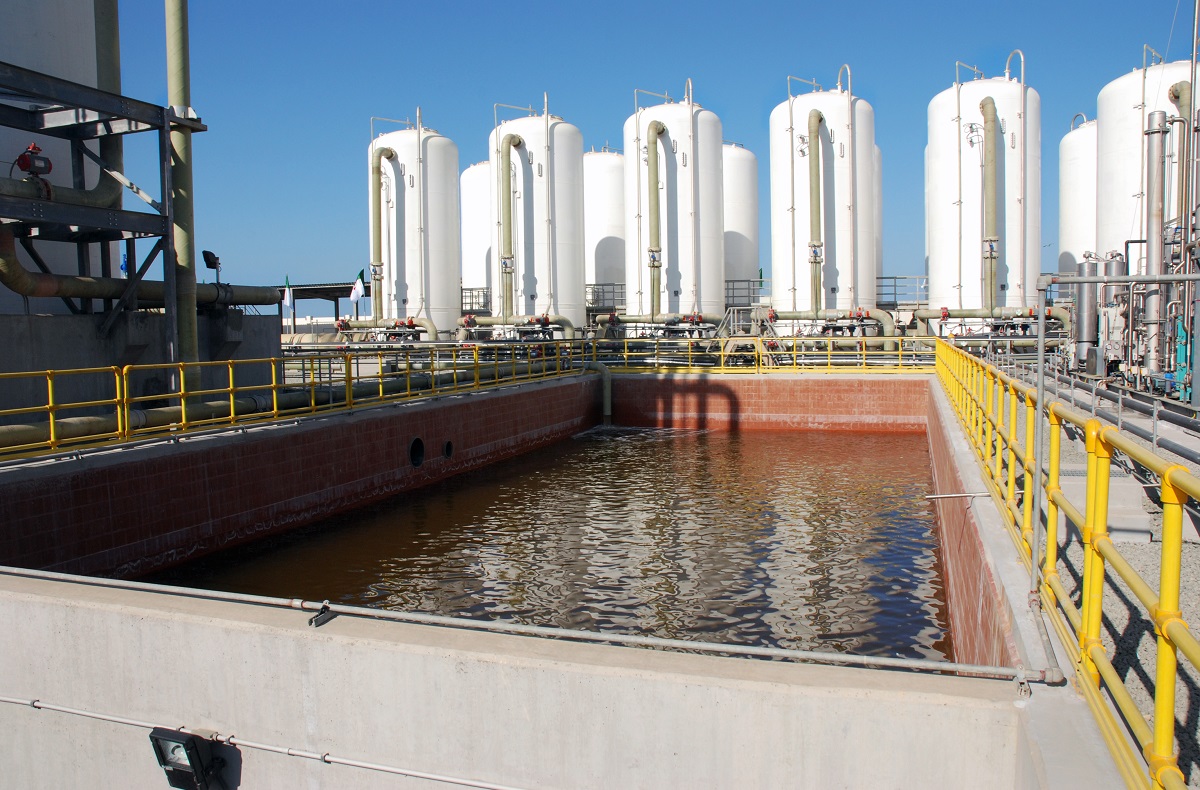
Several African governments are already investing heavily. Algeria operates 11 water desalination plants, including the continent’s largest, the Hamma Seawater Desalination Plant that produces roughly 200,000 m³/day. Those facilities supply 17 per cent of the country’s drinking water, with four new plants planned.
Another success story is Egypt. The country recently announced an $8.5 billion plan to develop 47 water desalination plants through public-private partnerships by 2050.
Across Morocco, the country has brought online a large-scale plant with capacity exceeding 275,000 m³/day. South Africa and Namibia, neighbours who are both facing recurrent water crises, have also announced massive water desalination projects, according to the FAO.
The private-sector model: Acwa as a case study
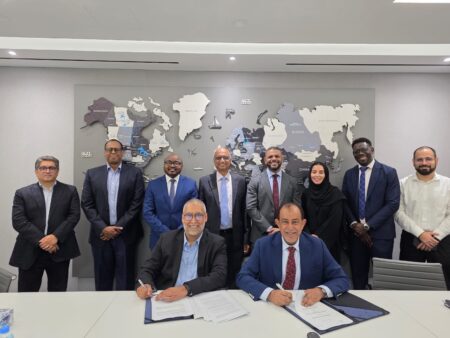
Acwa Power, backed by Saudi Arabia’s Public Investment Fund, develops and operates renewable generation and desalination plants across 15 countries. Its global portfolio of 110 projects is valued at $124 billion, with capacity to generate 97.9 GW of power and produce 9.8 million cubic metres of desalinated water daily.
In Egypt, Acwa has developed more than 2 GW of wind and solar energy capacity. In South Africa, it built the Redstone and Bokpoort concentrated solar power plants while in Morocco, it is constructing utility-scale solar thermal, photovoltaic and storage facilities.
Ghabashi argues that Gulf developers bring three advantages Africa cannot replicate quickly: scale, long-term patient capital, and an owner-operator model. “We maintain and operate assets for decades,” he said. “That is how genuine skills transfer happens – not through one-off training sessions.”
The FAO has also encouraged such public-private partnerships, noting that established enterprises can help with capacity building, local procurement and tariff competitiveness.
Read also: Water Security: The Bilateral Treaties Preventing Horn of Africa Conflict
Water desalination poses risks
Yet desalination remains far from a pure environmental solution. For every cubic metre of fresh water produced, reverse osmosis generates about 1.5 cubic metres of hypersaline brine, often pumped back into the sea, with growing evidence of damage to marine ecosystems near large plants. Across the Mediterranean and Red Sea coasts for instance, brine discharge is increasingly emerging as a regulatory and reputational risk.
Financial questions also persist in this venture. Public-private partnerships shift demand, currency and political risk onto private developers, which raises the cost of capital in countries with unstable grids or untested legal frameworks. “The technology is ready,” one water economist familiar with African infrastructure said, speaking on condition of anonymity. “The question is whether utilities can sign 25-year water purchase agreements that banks will accept.”
Industrialisation’s prerequisite
Ghabashi acknowledges the challenges but insists integration is unavoidable. “Industrial development in Africa is frequently bottlenecked by the lack of reliable power and water,” he said. “Reliable, affordable and sustainable power is the key enabler.”
The Africa Energy Forum 2026, to be held in Cape Town under the theme “Building Africa’s Industrialised Future”, will devote significant attention to linking desalination with renewables for water and food security. The forum convenes as the FAO warns that without concerted action, water scarcity will constrain agricultural output and manufacturing alike.
Without integrated energy and water solutions, Ghabashi argued, “the wheels of Africa’s industrial transformation will not turn – and may very well come to a grinding halt”.
Read also: Angola opens energy frontier to U.S. investors in renewables and minerals
Beyond political rhetoric on safe water supply
What remains unclear is whether African governments can move from announcements to execution. Currently, Algeria and Egypt have concrete pipelines; others have yet to finalise feed-in tariffs, environmental regulations or tender frameworks.
“GCC companies bring scale, speed and long-term capital,” Ghabashi said. “But African countries need to go beyond political rhetoric to tangible, grassroots approaches that integrate energy and water.”
For now, the falling cost of renewable energy has opened a door that was previously locked. Whether African industry walks through it will depend less on technology, which is now proven, and more on the quality of regulation, the management of environmental trade-offs, and the patience of project financiers.
Read also: Renewable Energy: Gas, Solar, and the Politics of Power in Africa