


- China is aggressively investing in electric vehicles’ production in Morocco’s free zones, giving it access to the lucrative EU markets.
- Data shows over 200 Chinese companies to set shop in Morocco.
- Morocco denies ‘bridging’ China EV products to the EU and US markets.
China’s Electric Vehicles (EVs) and related complimentary components face heavy tariffs imposed by Europe and the U.S. to protect their domestic industries. To cleverly circumvent this hurdles, Beijing is setting up shop in strategic locations that have zero tariffs deals with the EU and U.S. such as Morocco, the North African country that has overtaken South Africa on industrialization.
Is it a lucky turn of events that Beijing’s green diplomacy led it to invest in tariff free North Africa or could it be that China is using Africa to evade EU and US tariffs? “Morocco is emerging as a crucial piece of China’s global green industrial strategy, with Beijing increasingly turning to the North African country to strengthen supply chains, expand clean energy investments, and reduce exposure to geopolitical risks,” reports a new research from the Stimson Centre.
Here, we will focus on the ‘geopolitical risks’ which encompass said EU and US tariffs on China.
According to Amanda Chen, a Research Fellow at the ChinaMed Project of the Torino World Affairs Institute (T.wai), on one hand, China’s enormous investment in Morocco should come as no surprise, since Morocco was actually the first African country to join China’s Belt and Road Initiative (BRI) back in 2017.
Almost a decade later, Chinese FDI in the North African Kingdom has increased a whopping 61%, to reach $513.3 billion.
Notably, the gigantic capital expansion is mainly driven by Chinese private sector even though it is in line with Beijing’s national strategy, globalization of its renewable energy industry.
Green value chain
As part of this strategy, China is also consolidating it’s green value chain, from mineral extraction to producing end products, in this case, manufacturing of electric vehicles and batteries.
Now, with countries and companies been forced to reroute owing to the Israel-US Gulf war, “Chinese firms embedded in the local ecosystem are well-positioned to benefit from Morocco’s emergence as a critical node in the rerouting of global trade,” Chen writes.
Her research sought to analyze impact of the rise of China on the wider Mediterranean region and it reveals a win-win scenerio for both Morocco and China.
On Morocco’s side, Rabat is seeking to accelerate its renewable energy transition and industrial development, hense Beijing’s large investment in the sector is much welcomed.
It maybe an understatement to describe China’s investment in Morocco as impressive. China’s investment ranges from renewable energy, battery manufacturing, and electric vehicle supply chains to major stakes in mega projects like the Noor solar complex in Ouarzazate, the world’s largest concentrated photovoltaic plant and Tanger Tech City, an enormous free zone largely funded by China.
Given the fact that Morocco just so happens to harbor the world’s largest phosphate reserves, a key component of EV batteries, the research indicates that it is no wonder that it attracted Chinese EV and battery producers.
“These new players benefit from Morocco’s established position as Africa’s top car manufacturer,” Chen notes.
To ice the cake, Morocco’s logistical infrastructure connects factories to the Tanger Med Port via the Al Boraq high-speed rail, onwards to its vast export networks into the European market.
Which circles us back to the question at hand, is China strategically using Morocco to circumnavigate EU and US tariffs?
Notably, Morocco has robust long standing free trade agreements with both EU and the U.S. which grant it duty-free access for a majority of its industrial products
Also Read: Tanzania’s lemongrass trade eyes global wellness boom as value addition and AI become entry tickets to lucrative markets.
Read also: The unlikely hero? Public transport’s surprising role in EA’s green mobility shift
Tariff free Morocco, a gateway for Chinese electric vehicles drive into EU?
More than natural occurrence of high phosphate deposits and the fact that Morocco just so happens to be Africa’s largest car manufacturer, the Kingdom’s foreign investment policy also supports China’s green diplomacy and may offer a way around EU and US tariffs.
In a 2025 report titled China’s Energy Strategy: The Case of North Africa, published by Hafed Al-Ghwell, Senior Fellow and Director, North Africa, Mediterranean, and the Sahel Program the researcher points out that luckily for China, Rabat has a host of supportive policy frameworks for foreign actors.
Other than the 2020 Draft Law No 40-19 that empowers local authorities with autonomy in in the planning of renewable projects, Morocco’s 2022 Investment Charter provides irresistible incentives for foreign actors.
Read also: Ghana-based EcoSecurities signs partnership to fuel Africa’s electric mobility
Tax exemption
Take for instance the Tanger Tech City, an industrial free zone. Officially known as the Mohammed VI Tanger Tech City, the industrial hub spans over 2,167 hectares and connects Africa, Europe, and the Middle East.
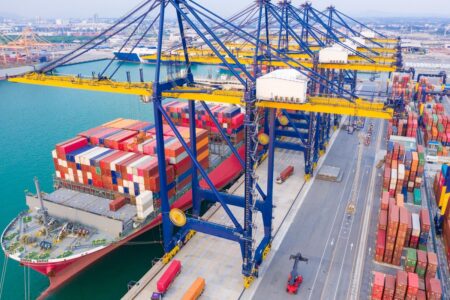
It’s proximity to Europe, been located just 14Km across the Strait of Gibraltar gives Morocco unprecedented access to the European Union via the Tanger Med Port, Africa’s largest port.
Moreso, the Tanger Tech City is ranked the number one free zone in Africa offering full corporate tax exemption for the first 5 years, and a reduced rate of 15% thereafter.
It also affords professional tax exemption for 15 years and VAT exemption on goods and services traded within the free zones.
To top it all up, it offers exemption from customs duties and import taxes, gives full freedom to transfer foreign currency and even provides withholding tax exemption on dividends paid to non-residents.
Given these facts, the research report underlines the fact that the Sino-Moroccan cooperation opens an avenue for China EVs to enter the EU and US.
As to this fact, the researcher, Al-Ghwell is blunt, pointing out that; “…nearshoring parts of its EV production capacity to Morocco may act as a potential avenue for circumventing trade restrictions from the European Union and the U.S., with both of which Rabat enjoys free trade agreements.”
By leveraging Morocco’s geographical strategic position between Africa and Europe, China is uniquely positioned to reap dividends, either as visionary foresight or sheer luck.
Read also: The unlikely hero? Public transport’s surprising role in EA’s green mobility shift