
Trending
- African trade is growing despite the obstacles
- Why global capital is betting big on Africa’s digital promise
- Kenya posts stronger-than-expected Q1 growth at 5.3% on manufacturing rebound, tourism boom
- China’s new investment rules are about guardrails, not closed doors
- Zanzibar optimistic economic growth will hit 7.5% on tourism boom
- Kenya defies economic shocks to post record $22 billion in tax collections
- Forget South Africa: East Africa now rules in banking industry returns
- Lamu over Tanga: The commercial calculus that cost Tanzania $20bn refinery



Zanzibar legislators project 7.5% economic growth. President Mwinyi advocates private sector participation. Zanzibar recent talks with Brazil, US expected to bare fruits. Zanzibar has…
KRA reports record KES2.84 trillion (up 10.6%) in tax collections,…

UAE has cemented its spot as the main refining, and…


Studies indicate that girls marrying or dropping out of school early are more likely to have poor health, bear more children over their lifetime and earn less in adulthood. Ending early child marriage according to a report (The cost of not investing in girls: Child marriage, early childbearing, low educational attainment for girls, and their impacts in Uganda), could generate up to US$2.7 billion in annual benefits (in purchasing power parity terms)which includes lower population, among others.
Moreover, it would contribute to increased earnings for women today had they been able to avoid early marriage, say, in 2015.
Instead, up to US$500 million is lost. The loss according to the report is due to risks associated with early marriage and childbirth such as under-five mortality and stunting for young children. Moreover, with a lower population, governments could invest resources to improve the quality of the services provided, instead of squeezing their miniature budgets to meet the needs of a larger population.
Thomas James, Agritech West Africa’s project director, said that the rising demand for food and the targeted food growth in Ghana and West Africa requires innovation and mechanization in agriculture patterns. This could be done by adopting new and modern agriculture technologies, machines, crop care practices, irrigation, warehousing and storage facilities.
Ghana has invested heavily in mechanisation in agriculture, importing Tractors, Spares, Implements, Agrochemicals and Irrigation setups worth US$1 billion. Annually, Ghana imports over 10,000 tractors and their associated implements and parts.
The seminars, pre-fixed meetings and conferences in the exhibition will help Ghanaian and West African agriculture-based companies an opportunity to network with manufacturers and suppliers from across the globe.

Nairobi needs a few changes in transport. First of all, the Central Business District should be free of Matatus. This means of transport is as old as independent Kenya and on a good day, ferries 80 per cent of Nairobi dwellers. It also racks millions in income both for individuals as well as taxes. However, the industry makes the city lose more than it makes.
Matatus are known for breaking all transport rules including double parking, blocking lanes and sometimes harbouring criminals. It costs even more money to position policemen and county government officers to reinforce discipline.
Trams and light rails have always been mooted. However, the cost and time for this have made the idea be delayed. Creating circular high capacity-bus trips commonly known as Bus Rapid Transport (BRT) system in key roads around the CBD and fed by well-positioned termini from the estates will ensure that there is a consistent flow of people to the city without the matatus clogging the road.
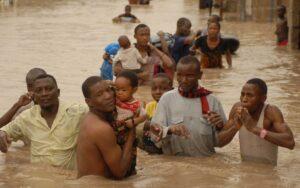
A careful study of the 2011 flood’s socio-economic impacts on Dar es Salaam indicated that the flood events damaged properties worth millions and the government was forced to spend a total amount of US$796,968 in rescuing and relocating vulnerable communities who lived in the low-lying areas of Dar es Salaam’s districts.
Per World Bank research, which offers clear insight into the matter, exposure to floods is a widespread phenomenon affecting at least 39 per cent of the population, or two million people, having been impacted either directly or indirectly by floods.
The April 2018 floods alone affected between 900,000 and 1.7 million people, and among the affected households, 47 per cent (18 per cent of the city’s population) reported health impacts.
Tanzania’s President Samia spearheaded the signing of some 36 MoUs. Of these, 12 were signed by government public institutions, 23 by private sector parties and one by the Revolutionary government of Zanzibar.
The President reassured investors of Tanzania’s favourable business environment. She placed emphasis on the country’s peace and political stability which she said makes Tanzania a unique investment destination where investors will enjoy open doors to invest across all sectors.
She placed a special note on the country’s potential in tourism and hospitality as well as agriculture and energy.
“Tanzania is strategically located and the port of Dar es Salaam is the gate to Africa’s interior,” she added.

The Nigerian Minister also praised Equatorial Guinea, saying that the Western African country has a massive record of world-class gas processing and liquefaction infrastructure already in Punta Europa and allocating investment funds for development.
Minister Obiang Lima said that Equatorial Guinea was in line to be an essential player in the African energy market.
“New, fast, and competitive sources will be a major determinant of success,” he said. “This strategic collaboration breaks down geographical boundaries and allows gas delivery from Nigeria to Equatorial Guinea’s Punta Europa facilities, extending their life and providing access to the regional and global energy markets.”
Through the agreement, the Nigerian National Petroleum Corporation (NNPC) and its joint venture partners will put into monetary use gas that would have otherwise been stranded offshore due to the absence of infrastructure.