

Trending
- African trade is growing despite the obstacles
- Why global capital is betting big on Africa’s digital promise
- Kenya posts stronger-than-expected Q1 growth at 5.3% on manufacturing rebound, tourism boom
- China’s new investment rules are about guardrails, not closed doors
- Zanzibar optimistic economic growth will hit 7.5% on tourism boom
- Kenya defies economic shocks to post record $22 billion in tax collections
- Forget South Africa: East Africa now rules in banking industry returns
- Lamu over Tanga: The commercial calculus that cost Tanzania $20bn refinery



Zanzibar legislators project 7.5% economic growth. President Mwinyi advocates private sector participation. Zanzibar recent talks with Brazil, US expected to bare fruits. Zanzibar has…
KRA reports record KES2.84 trillion (up 10.6%) in tax collections,…

UAE has cemented its spot as the main refining, and…

Aga Khan Hospital will use the funding to support covid-19 pandemic response The funding will…
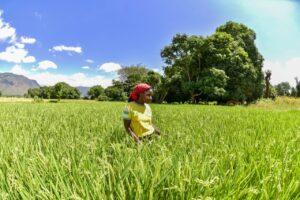
With so many more mouths to feed every year, the World’s ambitious Sustainable Development Goals, particularly on poverty eradication and ending hunger, seem further away than ever before.
The trend is global, and on October 16, 2021, the UN admitted and warned that the global fight against hunger is being lost.
With the warning, the UN called for action to improve food security for the world’s most vulnerable people, African coming on top of that list. For a place that relies so heavily on substantial farming for a livelihood, Africa faces a most daunting reality, clear forests to farm, lose potential output.
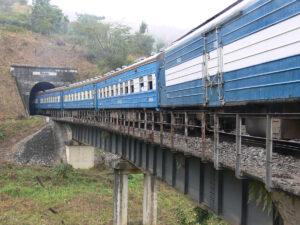
In the most recent development, an additional 282km of the railway are being constructed to connect Tanzania and Burundi giving the latter access to East Africa biggest and busiest port.
The construction is an extension of the already laid down Standard Gauge Railway (SGR) in Tanzania. The two governments have signed an agreement that paves way for new rail to be laid at a sum of US$900 million.
What does this extension mean for Burundi and how will it benefit Tanzania?
Apart from the obvious economic benefits, let’s first consider the small towns through which the railway snakes. From Tanzania’s little town of Uvinza in the Kigoma region to the bustling capital city of Gitega in Burundi, the railway is expected to spark life, rejuvenate slowed businesses and build new people relations.
The company has managed to make a strong comeback from when it faced an existential threat when prices of commodities slowed down in 2014. Prior to that period, mining company shares were hot because of China’s urbanization. It drove prices of commodities through the roof taking the shares of resource companies with them.
When China’s economic growth slowed down the miners also felt the pinch. The pinch was felt especially at Gold Fields which had to restructure its business and retrench at least 1,300 workers mainly from Ghana to ensure the long term sustainability of the company. The restructuring produced desirable results characterized by net cash inflow of US$ 235 million. In that same year, its Australian operations produced 1 million ounces of gold.
The company’s operations are massive and span 3 continents.
Other than the trade issues, the session examined and harmonized implementation of decisions across various sectors of bilateral cooperation including immigration, education, transport, communication, defence and security, energy and mineral development among others.
The meeting was a success to say the least, however, it still remains to be seen whether in the wake of the meeting, Ugandan truckers will pay less at the Tanzanian border. With a six month reporting period, a lot can transpire in the interim.
It is now going towards a month since the January sit-down and no ground reports have been publicized as to whether the toll fees have been harmonized for Uganda to match other EAC charges at the Tanzanian border.
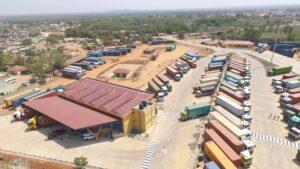
South Sudan joined the East African community joined the EAC in April 2016, after being the youngest nation to gain independence on July 9, 2011. In 2020, South Sudan’s exports summed up to US$87 million to the EAC member states, while imports amounted to US$573 million.
In contrast to the year 2016, the exports and imports to the same stood at US$2.6 million and US$400 million respectively.
According to the International Trade Center, South Sudan exported US$86 million and imported US$357 million from Uganda in 2020.