
Trending
- VALR sets sights on East Africa as blockchain moves deeper into Africa’s financial system
- The cost of the data gap: Why Kenya’s lenders can’t afford to miss the full picture
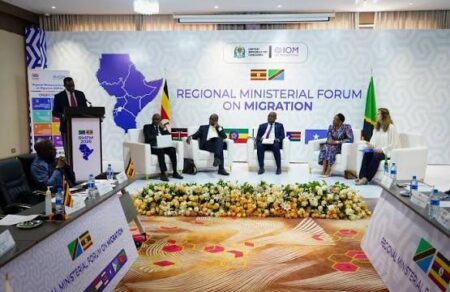
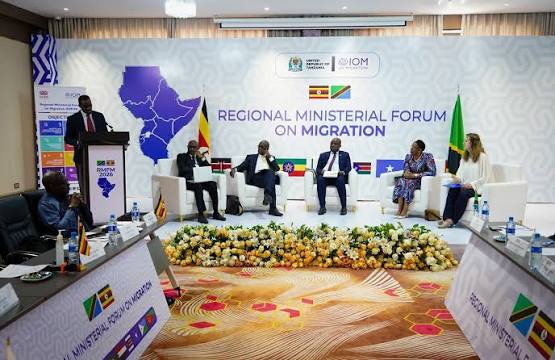
- Tanzania takes EAC labour migration helm as regional rules face overhaul
- 2026 is turning out as a defining year in geopolitics, but for whom?
- Saudi Arabia and Tanzania pledge to deepen bilateral trade ties
- Tanzania rewrites its digital investment playbook
- Ethical sourcing boosting demand for Tanzania organic cotton
- DRC deploys 70,000 Ebola vaccine doses in high-stakes trial against deadly Bundibugyo strain


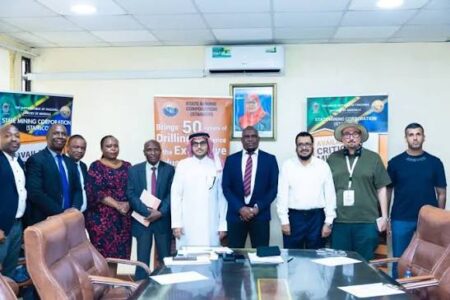
Saudi Arabia commits to increased trade with Tanzania. Already the oil-rich nation has entered into an agreement to set up a meat processing plant…

Tanzania is rolling out new laws aimed at attracting investors…

Tanzania organic cotton gaining global market interest. Growing call for…
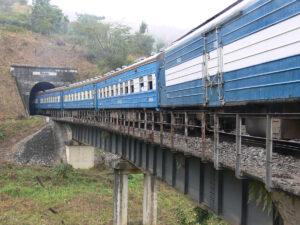
In the most recent development, an additional 282km of the railway are being constructed to connect Tanzania and Burundi giving the latter access to East Africa biggest and busiest port.
The construction is an extension of the already laid down Standard Gauge Railway (SGR) in Tanzania. The two governments have signed an agreement that paves way for new rail to be laid at a sum of US$900 million.
What does this extension mean for Burundi and how will it benefit Tanzania?
Apart from the obvious economic benefits, let’s first consider the small towns through which the railway snakes. From Tanzania’s little town of Uvinza in the Kigoma region to the bustling capital city of Gitega in Burundi, the railway is expected to spark life, rejuvenate slowed businesses and build new people relations.

Other than the trade issues, the session examined and harmonized implementation of decisions across various sectors of bilateral cooperation including immigration, education, transport, communication, defence and security, energy and mineral development among others.
The meeting was a success to say the least, however, it still remains to be seen whether in the wake of the meeting, Ugandan truckers will pay less at the Tanzanian border. With a six month reporting period, a lot can transpire in the interim.
It is now going towards a month since the January sit-down and no ground reports have been publicized as to whether the toll fees have been harmonized for Uganda to match other EAC charges at the Tanzanian border.

In Tanzania, the Fair Competition Commission (FCC) is responsible for promoting and protecting effective competition in trade and commerce as well as protecting consumers from unfair and misleading market conduct.
Without such an entity, companies use false advertising to capture markets, mergers of large firms occur undermining smaller businesses unfairly and the end-user, the consumer, is put at threat.
It is for this reason that Tanzania has recently passed the Fair Competition Order which sets out the thresholds for mergers that should be reported to the Fair Competition Commission (the FCC). In this most recent Order, Tanzania moved the merger notification threshold from USD 360,000 to USD 1.6 million.

In the past decade alone, there has been a proliferation of new means of digital payment that to a great extent has brought about financial inclusion in a way that traditional platforms like banks and money lenders couldn’t.
It is the introduction of these new non-bank financial services providers generally referred to as FinTechs that has conjured the need for digital financial services regulations. Towering above FinTechs are Mobile Network Operators (MNOs), commanders of the Digital Financial Services market.
MNOs were lucky enough to find a ready and defined market to usurp. MNOs already had an existing client base and an enormous network of agents that were using their mobile telecom services for texting and calling.

Learning poverty is costing African young learners dearly Median international school fees in Africa span…

Constructed under the East African Community regional development project, the road is key to the much aspired regional integration and opens doors to the ports for Africa’s landlocked countries like Uganda, Rwanda and the DRC.
Owing to its importance, the African Development Bank and the Japan International Cooperation Agency (Jica) are among the project funders as well as the Tanzanian government itself through its own internal revenue.
Complete with spar roads, the highway will open up enormous economic potential of each region it passes. On the other side of the border, the Kenyan government has also begun work on the connecting 40km project Mtwapa-Kilifi Road, part of the overall 460km Malindi-Tanga-Bagamoyo East African corridor development project.