

- US invites Kenya to lead regional partnership in critical minerals deals
- US recognizes Kenya’s role in leading regulatory transparency
- Proposes mutual benefits opposed to current ‘predatory investments‘
The US is looking to Kenya in it’s efforts to iron out relations with Africa and build partnerships in the critical minerals mining sector. The development comes in the wake of Kenya announcing the Mrima Hill rare earth deposit in Kwale County competitive tender earlier this year.
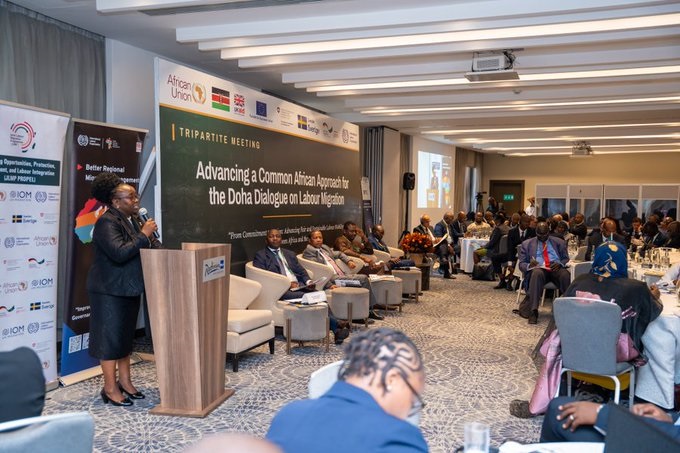
The United States’ partnership invite to Kenya was formally presented at the Kenya Mining Investment Conference and Expo 2026 in April.
It proposes for Kenya to join the US preferential trade zone, a mineral framework enforcing a price threshold along with adjustable tariffs that will serve to protect Africa’s mineral rich nations from what the US describes as ‘market manipulation.’
The US described the offer as one that Kenya cannot afford to miss; “Washington is extending an invitation to Kenya and regional countries, join us in building this preferential trade zone.”
Critical minerals ministerial meeting
Earlier this year, the proposal was introduced at a press briefing following the Critical Minerals Ministerial meeting in Washington, where US Secretary of State Marco Rubio said Kenya has a leadership role in setting up regulatory transparency and investment-friendly policies that positions it as a key US partner.
“Washington views Kenya as a commercial partner with the governance framework to facilitate responsible mining development,” he said.
He went on to point out that the Trump administration has now made critical minerals a top national security and economic priority. “We face a global market that is failing, failing to create sustainable investment, failing to support dignified jobs, and failing to keep our nations secure,” lamented Secretary Rubio.
US President Donald Trump admitted that African countries are the key to diversify global supply chains. As such, he reiterated commitment to building strategic partnerships with Africa “…based on aligned national interests and shared economic security objectives.”
According to the Secretary, mining projects are at risk because investors have lost confidence in stable, predictable markets. “The critical minerals sector is facing many challenges…supply chains remain dangerously concentrated…prices are persistently depressed by non-market forces,” he decried.
He described how mining initiatives are announced along with financing commitment but; “overnight, foreign supply floods the market, prices collapse and projects die. “This pattern punishes strategic investment and long-term planning. It’s unsustainable for producing countries like Kenya and consuming countries like the United States,” he went on to lament.
As such, he announced the United States’ proposal to establish a concrete mechanism that involves setting up a preferential trade zone for critical minerals that is protected by enforceable price floors and adjustable tariffs.
According to the Secretary, the US proposed framework bears prices that reflect what he described as ‘real world fair market value.’ “It eliminates the problem of strategic dumping that undercuts domestic producers only to see prices spike once competition is eliminated,” she detailed.
The suggested preferential zone, she said, will serve to stable prices regardless of external market manipulation, secure access to critical mineral supplies in emergencies, and create a foundation that makes private financing possible.
He said over the last year alone, the US has mobilized $100 billion in lending authority through the Office of Strategic Capital. The official highlighted US’ Project Vault, a $12 billion undertaking to create a domestic critical minerals stockpile. “We’re not writing reports anymore, we’re making deals. We’ve facilitated over $10 billion in critical mineral agreements across five countries in a single month,” she reassured stakeholders.
Also Read: Kenya’s Green Grid and Cement Usage Surge: Inside 2025 Economic Reset
US Project Vault to end ‘predatory investments’ in Africa
According to Secretary Rubio, Washington recognizes that African governments are increasingly viewing the United States as a sustainable partner and not part of what she described as “…predatory investments that have dominated African mining sectors.”
“Our goal is simple, to work together with countries to build secure, transparent, diversified, and commercially viable supply chains that benefit all countries involved, not just the consumers,” she asserted.
In this regard, she highlighted the U.S.-DRC Strategic Partnership Agreement which she said demonstrates US’ commitment in this new model. Using the DRC as an example, she said the US is working to build infrastructure, logistics, and processing capacity that helps the country capture more value from its resources.
That being said, she recognized Kenya’s efforts to modernize it’s own mining framework that “…creates the kind of stable, predictable environment that makes long-term investment possible.”
She went on to invite Kenya (and regional partners) to join the US in building the proposed preferential trade zone for critical minerals. “Together, we can build diverse production centers and supply chains immune to external disruption,” he implored.
Through the sought after partnership, Kenya and the EAC will have access to U.S. financing tools at an unprecedented scale. As per the US proposal, the partnership will support coordinated infrastructure development for projects like the Lobito Corridor model.
According to the Secretary, the partnership will be ground for the establishment of stable and predictable pricing that “reflect real costs and rewards your investment in mining development.”
Further still, it will create the basis for technical cooperation that will help grow institutional capacity and accelerate project realization all the way from planning to implementation.
The Secretary cautioned that; “Decisions made in forums like this will determine whether African countries capitalize on the tremendous economic value of your mineral wealth or whether opportunity slips away due to market manipulation and concentrated supply chains.”
Summing up, he said; “The United States is ready to partner with you. We respect your sovereignty. We believe in your capacity and we recognize that America First is compatible with Africa First because our national interests align.”
Making the invite, US Chargé d’Affaires Susan Burns, said; “Decisions made in forums like this will determine whether African countries capitalise on the tremendous economic value of your mineral wealth, or whether opportunity slips away due to market manipulation and concentrated supply chains.”