
Trending
- African trade is growing despite the obstacles
- Why global capital is betting big on Africa’s digital promise
- Kenya posts stronger-than-expected Q1 growth at 5.3% on manufacturing rebound, tourism boom
- China’s new investment rules are about guardrails, not closed doors
- Zanzibar optimistic economic growth will hit 7.5% on tourism boom
- Kenya defies economic shocks to post record $22 billion in tax collections
- Forget South Africa: East Africa now rules in banking industry returns
- Lamu over Tanga: The commercial calculus that cost Tanzania $20bn refinery



Digital development is attracting new Foreign Direct Investment (FDI) to Africa. This as overall FDI into Africa is on the decline according to data…

Kenya’s economy grows 5.3% in first quarter, powered by manufacturing…
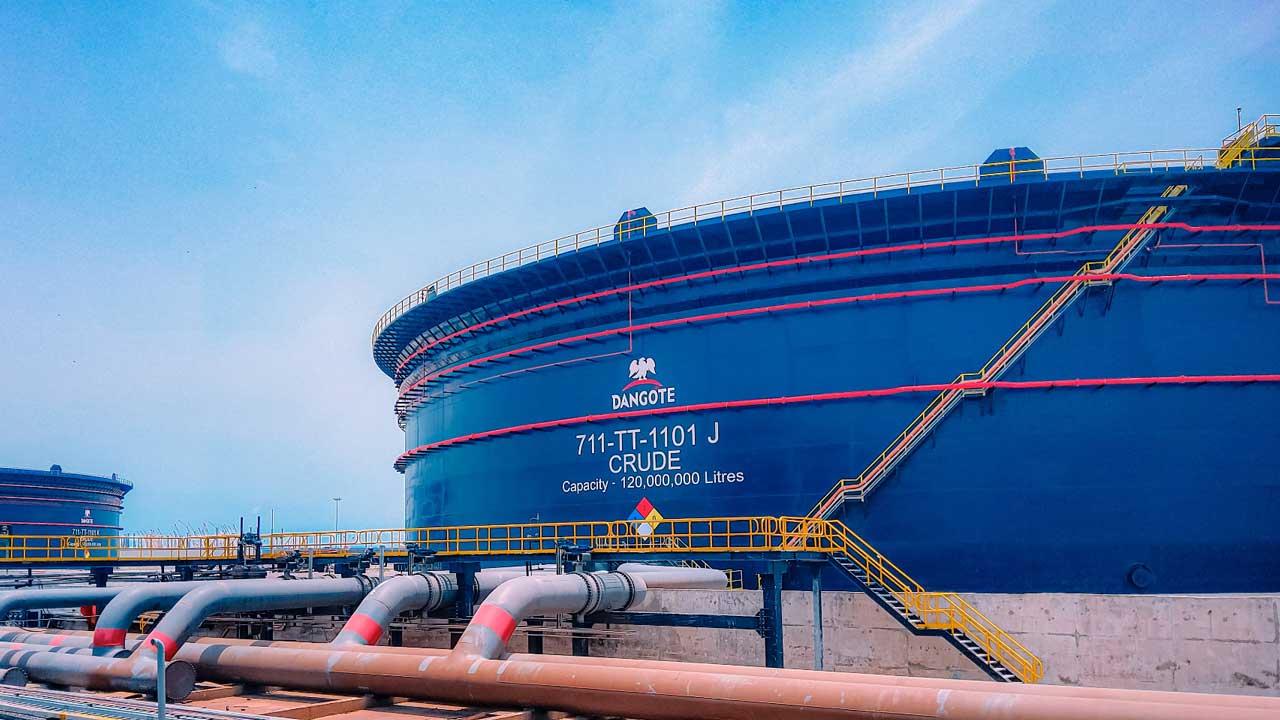
Dangote Group’s major refinery in East Africa needed deep-water berths…




Kenya first announced the discovery of oil in Block 10BB and 13T in Turkana in March 2012.
This became a beacon of hope for the nation, to massively spur economic growth through the so-called ‘petro-dollars’. Currently, Tullow is the project operator and has a 50 per cent stake, while Africa Oil Corp and Total Energies hold 25 per cent each. However, the country is yet to fully commercialize crude oil production. Hitherto, Kenya’s petrodollar dream has only experienced delays and missed deadlines. The project stalled as the companies’ focus was on mitigating debt and finalizing its development programme.
The major road block has been a lack of sufficient working capital, which has led to a scale back in activities to minimize capital investment, until both a strategic partner and the Final Development Plan (FDP) are approved. Since the start of the year, the firm has been engaged in discussions with the government, on the approval of its FDP and securing their deliverables thereof. Currently, the government has extended the review period of the FDP to the November 6, 2022.
“These items require satisfactory resolution before the Group can take a final investment decision. Due to the binary nature of these uncertainties, the Group was unable to adjust the cash flows or discount rates appropriately,” Tullow explained.

Music and film are now turning the creative and entertainment tide across the continent. The creatives in Africa are now crowned and featured by other established performers in the developed world, which signals the potential of the creative industry in Africa.
There are more than 2,500 films made each year in Nigeria’s film hub, “Nollywood”. As modern filmmaking technologies expand across Africa, more works are now done in other developing industries in East and Southern Africa.
The United Nations Education, Scientific and Cultural Organization (UNESCO) find the audio-visual sector to be a honeypot, but it is largely untapped. The industry is estimated to account for $5 billion in revenue in Africa out of a $20 billion potential and employ at least 5 million people.
On a global scale, cultural and creative industries are estimated to generate about $2.25 trillion annually, 3 per cent of global GDP, and employ around 30 million people worldwide (UNESCO).

The war in Ukraine has shown how dependent Europe is on natural gas for power.…
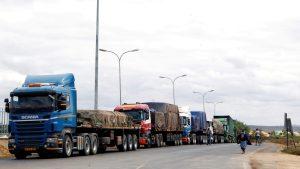
The difficulty of transferring commodities throughout Africa is not new to the continent. It is currently a key impediment to the AfCFTA’s prospects, especially in building regional industrial supply chain clusters. Africa’s massive infrastructure deficit has hindered regional trade and economic integration for decades, notably in transportation and supply chain fragmentation.
Some parts of the continent, specifically areas surrounding East African nations, do far better in cross-border movement and trade. However, most African countries fare poorly on metrics such as cross-border clearance processes. According to the World Bank’s Logistics Performance Index, the regions also struggle with trade quality, infrastructure, inconsistent tax regimes, and consignment trace and track techniques.
Digitalisation in Africa’s logistics industry will address some of these difficulties. Furthermore, the development of digital logistics startups has aided in the facilitation of connection, which is critical to the movement of commodities within the area and across borders.
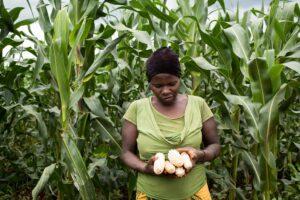
Tanzania is building irrigation schemes for rice production and encourages efficient use of fertilizers via its 10-year National Rice Development Strategy Phase II (NRDS-II). “The NRDS-II purpose is to double the area under rice cultivation from 1.1 to 2.2 million hectares from 2018 to 2030, double on-farm rice productivity from two t/ha to four t/ha by 2030, and reduce post-harvest loss from 30 per cent to 10 per cent by 2030,” according to ITA.
The exportation of goods is a numbers game. Numbers give a unique perspective on the trend of agro-product exportation across potential and competitive markets in the region and abroad.
ITA shows that the exportation of corn has faced setbacks in the financial year 2021/2022 as forecasted to decrease by 20 per cent, equivalent to 80 million metric tonnes, due to the COVID-19 pandemic disrupting supply chains. The decrease is attributed to reports of truck drivers’ screenings, lockdowns and curfews in neighbouring countries.

A STIHL East Africa report has now shown that farmers using power tillers can significantly…