
Trending
- African trade is growing despite the obstacles
- Why global capital is betting big on Africa’s digital promise
- Kenya posts stronger-than-expected Q1 growth at 5.3% on manufacturing rebound, tourism boom
- China’s new investment rules are about guardrails, not closed doors
- Zanzibar optimistic economic growth will hit 7.5% on tourism boom
- Kenya defies economic shocks to post record $22 billion in tax collections
- Forget South Africa: East Africa now rules in banking industry returns
- Lamu over Tanga: The commercial calculus that cost Tanzania $20bn refinery



Digital development is attracting new Foreign Direct Investment (FDI) to Africa. This as overall FDI into Africa is on the decline according to data…
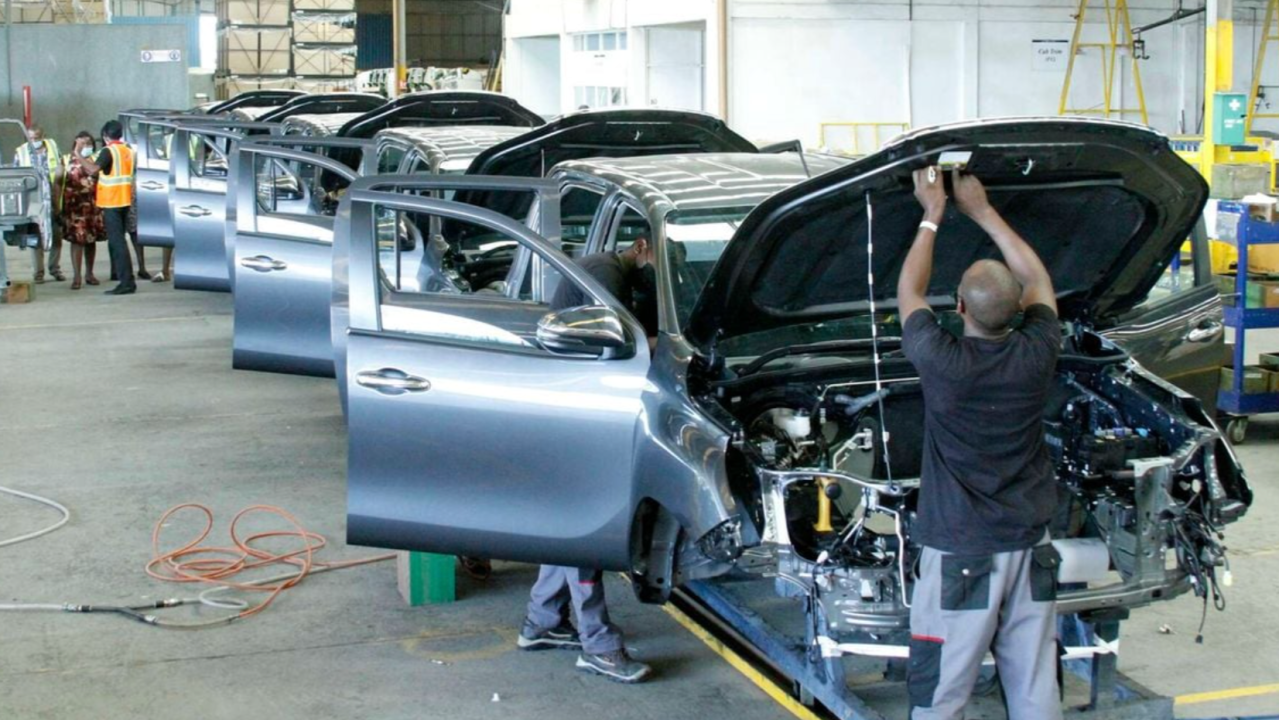
Kenya’s economy grows 5.3% in first quarter, powered by manufacturing…
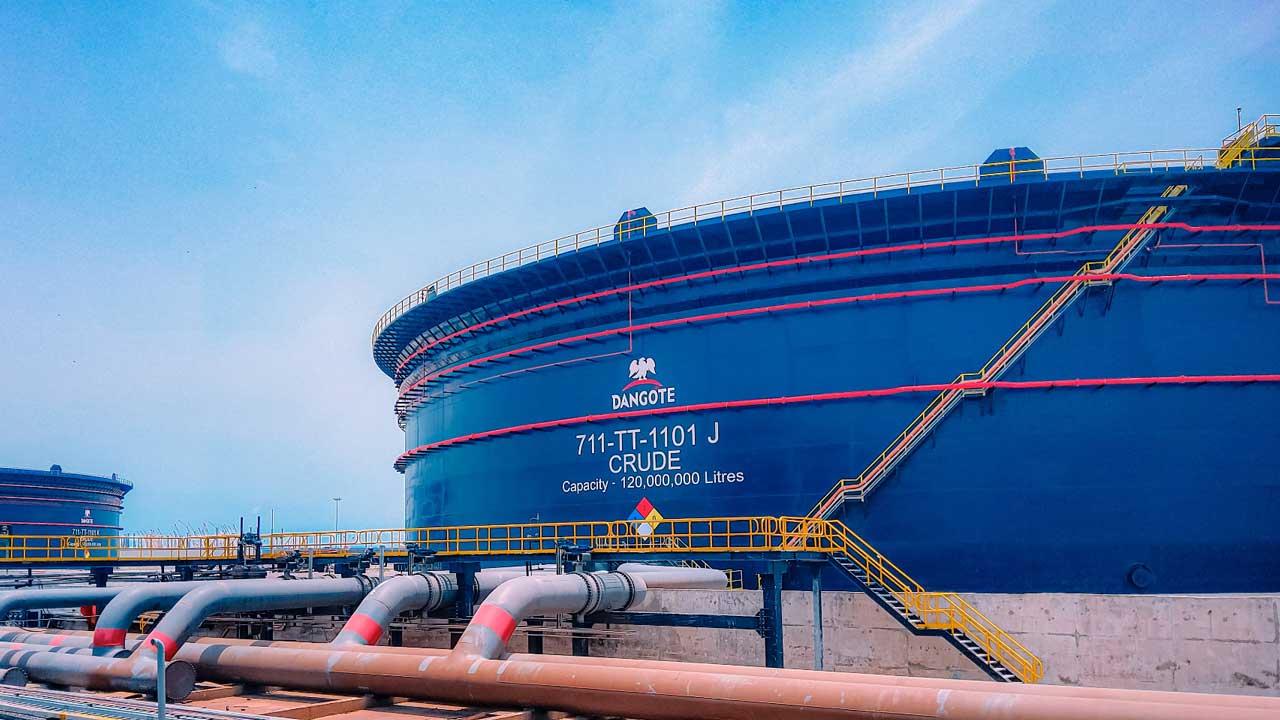
Dangote Group’s major refinery in East Africa needed deep-water berths…

Qantas will operate the only direct service from Perth to Johannesburg, South Africa from November 1, 2022.
Currently, people going to Johannesburg from Perth currently have to fly on Qantas via Sydney or via the Middle East. The new flights will cut more than six hours from the fastest current travel time.
United Airlines will operate a non-stop flight between Washington Dulles Airport and Cape Town International Airport. With this route, United will be the first airline to offer non-stop, round-trip service between Washington DC and Cape Town. The first flight will take off on November 18, 2022, and there will be three flights every week after that.
Air Mauritius is set to resume non-stop flights from Cape Town to Mauritius from November 16 this year.
More importantly though, a clear signal was sent to the EU Parliament that the colonial days are over and that meddling in affairs and interfering with matters that are of the exclusive sovereign remit of the host countries, Uganda and Tanzania, is simply not tolerated.
Following the EU Parliament’s action, Total Energies is to appear before the Parliament for a hearing and answer queries that the members of parliament will have. That coupled with the fact that Total has an ongoing court case in France regarding an allegation of its failure to put in place an adequate vigilance plan covering health, safety, environment, and human rights risks as required by French law, related to the the same EACOP project, it will be interesting to see whether or not Total Energies might drop out of the project at the risk of being exposed to breach of contract claims by the other Parties to the venture.Total Energies controls EACOP legal shareholding since it has the majority.
However, it may be a small price to pay amid the increasing pressure in France and Europe for green and climate friendly projects. Worldwide, financiers are avoiding investments in fossil fuels projects and looking for what is hailed as green investments.

Ecological Organic Agriculture (Initiative for Africa), EOA(-I), certification in Africa has gained leverage through a Memorandum of Understanding (MoU) signed between the AU-led EOAI Continental Secretariat hosted by Biovision Africa Trust (BvAT) and the African Organisation for Standardisation (ARSO) aimed at developing a common continental EOA standard. The partnership will additionally link the EOAI with the African Continental Free Trade Area (AfCFTA) Secretariat to engage further on strategies of boosting EOA trade on the continent.
In West Africa, Burkina Faso, Ghana, Mali and Togo reported an increase in Participatory Guarantee Systems (PGS) certified producers and hectares. 2021 was the last year of the implementation of the Organic Markets for Development (OM4D) project, which supported the development of PGS initiatives in Burkina Faso, Ghana Togo, and Sao Tomé and Principe according to FiBL survey 2022.
Participatory Guarantee Systems (PGS) are locally focused quality assurance systems. They certify producers based on the active participation of stakeholders and are built on a foundation of trust, social networks, and knowledge exchange
According to the International Union for Conservation of Nature (ICUN), natural gas economy governance commands the norms, institutions and processes that determine how power and responsibilities over natural resources are exercised, how decisions impact the constituents of the region and how citizens (in this case people in Mtwara and the rest of Tanzania), women, men, indigenous peoples, and local communities, participate and benefit from the management of natural resources.
Tanzania has only explored a small fraction of the natural gas reserves (0.5 TCF out of 57.74TCF), and in order to explore further socio-economic and political affairs ought to be aligned perfectly to ensure that the production of natural gas comes with blessings and not a curse, as manifested in some African nations.
A Tanzanian policy research think tank—Economic and Social Research Foundation (ESRF)—converged with local government authority officials, to discuss how governance gaps in planning and management of the natural gas economy in Mtwara can be addressed.

A favourable balance of payment translates to good exchange rates for the shilling against the dollar. A strong shilling means more value per shilling, allowing the country to make even larger purchases or investments.
Another aspect is the fact that a decrease in the oil price should translate to similar, if not multiple decreases in the cost of doing business and even the cost of living. This is because the cost of transportation is expected to fall, and with it, the cost of the goods being delivered is another gain for Africa (where borders were not closed during that time).
Also, in economic terms, there is a difference between an increase or decrease and rise or fall in price. An increase or decrease in price means a short-term price hike or price drop, which is what we expected to see during the period of oil price increase/decrease.
On the other hand, rise/fall in price refers to persistent increase/decrease over a prolonged period. When this happens, we see sustained inflation or deflation, that is, the general increase or decrease in the price of goods and services over time.
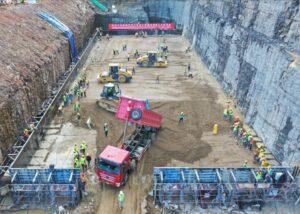
The Julius Nyerere Hydropower dam is an ambitious energy project and one of its kind across East Africa, with the capacity to generate 2,115 megawatts. The project cost $2.6 billion and is currently the most significant contract handled by Egyptian companies in Africa.
In August, it was reported by the Tanzanian Minister of Energy, January Makamba, that construction of the dam reached 67.18 per cent. The real work on the ground kickstarted in December 2018, which spanned out Tanzania’s government’s ambition to enrich its energy capacity from all fronts.
Further, the dam is 131 meters high and 1,025 meters long at the summit. The constructors managed to complete the tasks 687 days after the diversion of the river in November 2020 (Tanzania Times).
Tanzania’s electricity generation is comprised of several sources. Hence the dam stands to vitalize power availability and change the state of installed capacity. At least 48 per cent of Tanzania’s electricity is from natural gas, 31 per cent from hydropower and 18 per cent from petrol.