

Trending
- 2026 is turning out as a defining year in geopolitics, but for whom?
- Bitcoin Surges 20%: How Crypto Holders Are Exploring Cloud Mining Income in 2026
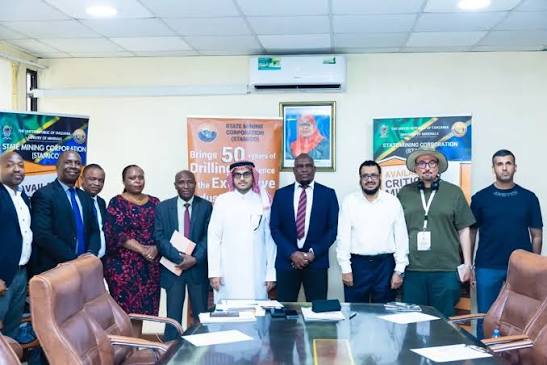
- Saudi Arabia and Tanzania pledge to deepen bilateral trade ties
- Tanzania rewrites its digital investment playbook
- Ethical sourcing boosting demand for Tanzania organic cotton
- DRC deploys 70,000 Ebola vaccine doses in high-stakes trial against deadly Bundibugyo strain
- Kenya’s private sector optimistic on growth despite inflation and geopolitical risks
- AfDB and Standard Bank ink $332 million social bond deal to fund South African SMEs


Tanzania organic cotton gaining global market interest. Growing call for ethical sourcing is boosting demand for Tanzani cotton. Tanzania is looking to increase cotton…
Banks across Africa investing heavily in AI. Private sector required…
While Diageo’s global profit fell 27.2% to $3.16 billion in…




Africa’s maritime trade, which hit $22Bn in 2018, will reach $48Bn by 2063 but relies…

Despite rising investments in renewables as the world moves to realize net-zero emissions by 2050, the contribution of Africa’s wave energy remains very minimal. The Africa Climate Summit (ACS) was a pivotal platform to explore the potential of tapping oceans, one of Africa’s biggest resources.
With the summit’s overarching theme, “Driving Green Growth & Climate Finance Solutions for Africa and the World,” heightening the urgency to address the climate crisis; harnessing the potential of ocean water for clean energy could accelerate Africa’s journey to net-zero.
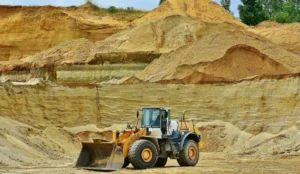
Africa is home to nearly all the valuable minerals that are essential to generating wealth, producing commodities, and advancing technology. Approximately 30 per cent of the world’s mineral reserves are in Africa, but most mineral-rich countries remain poor with little to celebrate. Some of the key minerals found in Africa include oil, diamonds, gold, silver, copper, cobalt, coal, iron ore, uranium, and platinum.

The inclusion of the Oman JSRS eMarketplace (JeM) in this year’s Tanzania Energy Congress signals…
According to the Agriculture and Food Authority (AFA) there are 15 sugar factories in the…
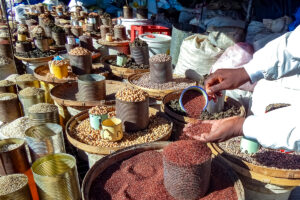
Commodity exchanges are organized marketplaces that facilitate the trading of agricultural commodities such as grains,…