

Trending
- VALR sets sights on East Africa as blockchain moves deeper into Africa’s financial system
- The cost of the data gap: Why Kenya’s lenders can’t afford to miss the full picture
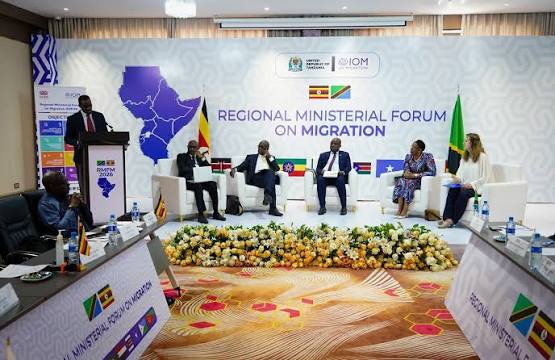
- Tanzania takes EAC labour migration helm as regional rules face overhaul
- 2026 is turning out as a defining year in geopolitics, but for whom?
- Saudi Arabia and Tanzania pledge to deepen bilateral trade ties
- Tanzania rewrites its digital investment playbook
- Ethical sourcing boosting demand for Tanzania organic cotton
- DRC deploys 70,000 Ebola vaccine doses in high-stakes trial against deadly Bundibugyo strain


Browsing: AfCFTA

As AfCFTA becomes a part of the daily business environment, governments and businesses need to know how product standards and…
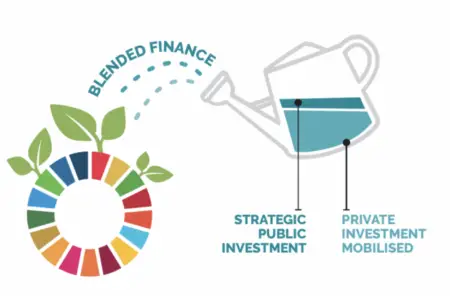
With its immense potential and vast resources, Africa stands at a critical point in its economic growth path. While the continent has promising economic prospects, it also has significant challenges that have impeded growth. A concept known as “blended finance” has gained popularity in recent years as a viable answer to assist governments in overcoming economic challenges. As a result, it is vital to look into what blended finance is, how African economies can leverage its benefits and its crucial role in supporting sustained growth across the continent.
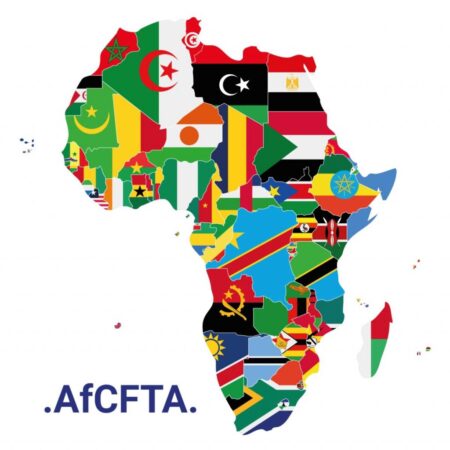
The African Continental Free Trade Area (AfCFTA) is now widely touted as the African Union’s (AU) most audacious project. The framework ties together the most significant number of member countries of any trade agreement since the World Trade Organisation (WTO) in 1995.
The AfCFTA had become topical even before its formal launch. Members of the business community eagerly awaited the full implementation of the AfCFTA. But two years since its formal launch, how far has the AfCFTA ushered in the ‘new era’ of African integration it promised?

Africa’s e-mobility is gaining momentum, largely driven by the daunting climate change crisis, fueling the need to decarbonize transport systems. African countries remain in pursuit of e-mobility solutions and advancement to low-carbon economies. Africa’s endowment with minerals key to the global green transition offers a significant advantage.

A recent report has revealed that the ban on second-hand clothing, also known as mitumba, might not enhance Kenya’s textile industry as previously anticipated. The report commissioned by the Mitumba Consortium Association of Kenya (MCAS) on the Second-Hand Clothing Industry in the East Africa Community has cautioned against protectionism towards importing second-hand clothing.

In May 2023, Zimbabwe released a gold-backed digital currency for peer-to-peer and business transactions. It acted as a store of value as the Zimbabwean dollar continued its steep depreciation. International gold prices controlled by the London Bullion Market Association will dictate the local pricing of Zimbabwe’s digital currency tokens.
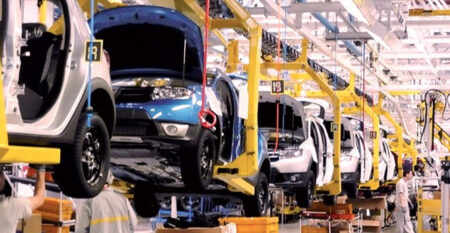
Africa’s automotive market size is expected to grow from 1,325.89 thousand units in 2023 to 1,777.69 thousand units by 2028, at a CAGR of 6.04 per cent, during the forecast period between 2023 and 2028. According to a recent report by the Globe Newswire, the market is expected to reach the pre-Covid demand rates from customer industries only in the second half of 2023. This is because the African automotive market was severely affected by the Covid -19 pandemic.

Population growth and economic development have necessitated speeding up and scaling up infrastructure development in Africa. Over 28 African nations have seen population growth of more than double in the last 30 years. The population of 26 other African countries will quadruple over the next 30 years. Consequently, funding for the continent’s infrastructure has become essential.
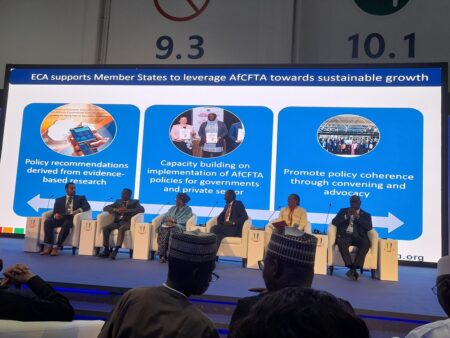
Key staff in Eswatini and Zimbabwe have gained critical skills on how to harness Africa Continental Free Trade Area (AfCFTA).…
By enhancing intra-African trade, AfCFTA estimates that the continent with gain $195 billion by 2045. These gains are projected to…