
Trending
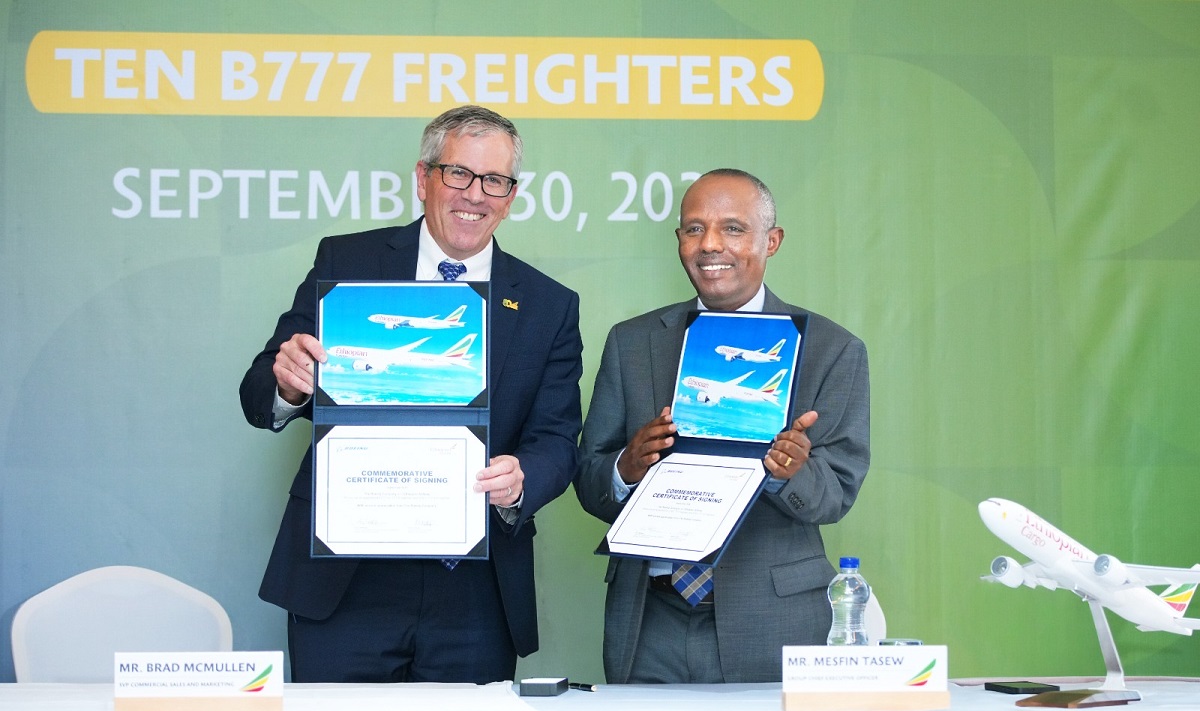
- Ethiopian Airlines bets big on Boeing freighters in $5 billion cargo fleet expansion
- Silicon Valley’s Tim Draper backs Nairobi blockchain festival, sees Africa as next digital frontier
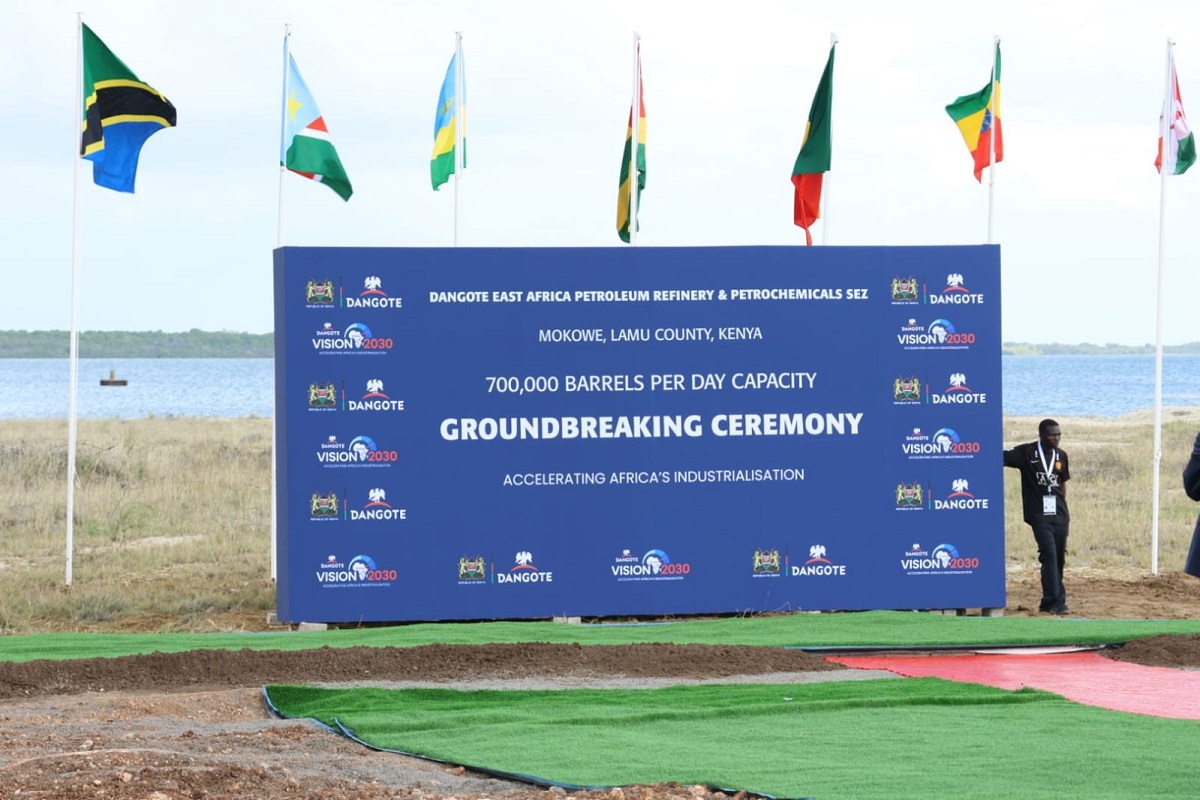
- Dangote breaks ground on $16bn Lamu refinery as East Africa seeks fuel independence
- Gulf and African states meet in Dar to rewrite rules of labour migration
- African governments drive new forest finance progress as global report warns funding globally must scale faster
- Fine Spinners eyes Kenya’s Agoa-backed apparel supply chain with $5m plant
- Why young Kenyan investors need to stop treating the stock market like a betting slip
- Tanzania tax reforms mandate VAT refunds to under 30 days


Browsing: Africa
Smartphone adoption in Africa remained sluggish in the latter part of the last decade. This is beginning to change as…

Kenya has not been left behind in the growth and development of technology. East Africa’s richest economy stands tall in the development of digital technology. However, a lot needs to be done, and the new administration has enough space to execute its plan regarding the advancement of the Kenyan digital space.

Much like it did in South America, EBANX wants to centre its strategy on collaborations and partnerships with global merchants. The company processes payments for Uber, Airbnb, and over 1,000 digital companies throughout Latin America.
In a statement, the CEO and co-founder, João Del Valle, explained that although Africa’s digital economy is still nascent, its exciting potential motivated his company’s decision. “Africa’s fast-growing digital economy is only in its early days, and it’s projected to grow up and to the right for the next few decades. Together with local players, EBANX will be a catalyst to realize the many benefits of a digital economy even faster.”
“Expanding our solutions to African countries speaks directly to EBANX’s mission of creating access, and having Pipefy as a merchant makes this moment even more special to us, expanding solutions and services throughout regions full of opportunities,” Paula Bellizia, the President of Global Payments at EBANX, said in a statement.

Due to globalization, countries worldwide are increasingly interdependent. This is why a conflict between two countries in Europe will cause ripple effects that the rest of the world feels. On this basis, the World Bank projects that economic growth in 2022 will slump. Not slow down but slump. The choice of words is intentional.
Malpass now believes that the world is in for several years of above-average inflation and below-average growth. This projection will most likely lead to destabilizing consequences for low- and middle-income economies. These low- and middle-income countries are largely on the African continent. Stagflation which the world last saw in the 1970s, will have a devastating effect on countries in Africa. Most countries in the continent do not have the resources like Germany to muster multibillion Euro or multi-billion United States dollar packages to subsidize the economic plight of their citizens.
World Bank forecasts a sharp downgrade of its global economic outlook and anticipates a sharp contraction in the economy. The global economy is expected to slow down from the GDP growth rate achieved in 2021 of 5.7% to 2.9% in 2022. The downgrade from the multilateral institution is because of the war in Ukraine, which has triggered food and energy increases as well as supply and trade disruptions.

According to the EIU graphic, much of the external debt stock of African countries consists of public medium- and long-term borrowings. This form of borrowing has been on the rise since 2000.
Private medium- and long-term debt stock in Africa has also been on the increase but not at the same scale and magnitude as the public debt. In short, governments, through their finance ministries, have been on a borrowing binge since 2000, whereas the private sector has marginally increased its borrowings in United States-denominated debt.
The increased levels of borrowing in hard currency badly expose governments to movements in interest rates and exchange rates. South Africa has the most external debt exposure of any country in Africa, followed by Egypt and Nigeria. With these facts in mind, it is no surprise to how much the Rand, the South African currency unit, has depreciated against the dollar.

The answer is in the law and the governance models that these countries approach. The way in which the governments of those countries approach the mining industry is imperative.
In South Africa, the natural resource curse is more pronounced in the sense that while the mining sector has made a few individuals fabulously wealthy, inequality in that country has meant that while the richest of the rich get richer, the poor get poorer.
How can governments approach the mining sector to ensure its development leads to broad-based and shared prosperity for all? The answer is the same. The answer is in the respective governments and the legal frameworks for the mining industries of those countries.
The head of the Portuguese government was speaking in Maputo at a joint press conference with the President of the Republic of Mozambique, with whom he met as part of the 5th Luso-Mozambican Summit.
The Autorização de Residência para Actividades de Investimento – first introduced in 2012 and commonly known as the ‘Golden Visa’ – is a residence permit that provides qualifying non-EU / EEA / Swiss citizens and their families with full rights to live, work and study in Portugal.
According to The Portugal News, an alternative to the Golden Visa is the Portugal Passive Income Visa – also known as a D7 Visa – which provides residency status to non-EU / EEA / Swiss citizens, including retirees, who intend to relocate to Portugal and are in receipt of a reasonable and regular passive income. The D7 Visa is aimed at those who intend to live in Portugal, so holders must spend six consecutive months or eight non-consecutive months per year in Portugal.

Queen Elizabeth II’s leadership of the Commonwealth for the past seven decades has remained admirable. She steered the institution’s evolution into a forum for effective multilateral engagement whose potential to drive tremendous socioeconomic progress remains incontestable and redounds to the Queen’s historic legacy.
Over the years, Britain’s interactions with its former colonies in Africa have grown to diplomacy, aid, trade and economic growth. The Queen has, over the years, remained highly revered and recognized as the head of the Commonwealth. The Queen has now rested. Her death breeds a wave of uncertainty about the future of the organization. The possibility of the status of the British monarch also disappearing becomes more visible. At this point, the rout of the British monarchy in Africa could be complete.

In terms of the economic outlook for India, opinions are divided given the headwinds facing the global economy presently, like the cost-push inflation from increases in food prices and soaring energy costs brought on by the Russia-Ukraine conflict. Deloitte, the global consulting and accounting firm, is optimistic about the economic growth prospects of India. It is projected that the Asian country will remain the fastest growing economy in the world, with growth projected to come in at between 7.1% to 7.6% in the years 2022 to 2023 and 6% to 6.7% in the years 2023 to 2024.
How has India managed to bullet-proof its economy to the extent that it has managed to register economic growth within a context of slowing global economic growth? According to Deloitte, India is primarily a domestic demand-driven economy, with consumption and investments contributing to 70% of the economic activity.
According to the Reserve Bank of India (RBI) analysis of 10,000 listed companies, businesses have seen a steady net profit-to-sales growth over the past year and are sitting on piles of cash. This fact highlighted by the global accounting firm is a key contrast with African economies, which tend to be driven by factors other than domestic demand. African economies generally suffer from a disproportionate dependence on foreign demand to drive economic growth.
In 2020, Amazon launched the Africa (Cape Town) Region, the first AWS Infrastructure Region in South Africa. However, plans for the construction of a new Cape Town-based Amazon Africa headquarters were blocked earlier this year by the Cape Town High Court as Amazon had allegedly not gone through the proper process to acquire the land.
Meanwhile, retailer Pick n Pay migrated its entire on-premise information technology infrastructure to Amazon Web Services (AWS).
In a statement, AWS says Pick n Pay worked with Lemongrass Consulting, an AWS Premier consulting partner with migration and SAP Consulting Competencies, to migrate its on-premises SAP environment to AWS and implement a modern SAP HANA platform.
According to the US-based cloud computing giant, moving to the cloud will enable Pick n Pay to streamline its operations and modernize the supply chain network for its stores, develop new digital customer experiences in omnichannel grocery, and expand into new areas of business.