

Trending
- VALR sets sights on East Africa as blockchain moves deeper into Africa’s financial system
- The cost of the data gap: Why Kenya’s lenders can’t afford to miss the full picture
- Tanzania takes EAC labour migration helm as regional rules face overhaul
- 2026 is turning out as a defining year in geopolitics, but for whom?
- Saudi Arabia and Tanzania pledge to deepen bilateral trade ties
- Tanzania rewrites its digital investment playbook
- Ethical sourcing boosting demand for Tanzania organic cotton
- DRC deploys 70,000 Ebola vaccine doses in high-stakes trial against deadly Bundibugyo strain


Browsing: Agoa

Ongoing wars in Africa are bleeding billions from poor economies as investors flee the region. Sudan army is spending about…
Governor Patrick Njoroge has written to Janet Yellen seeking audience with her during this year’s Spring Meetings of the World…
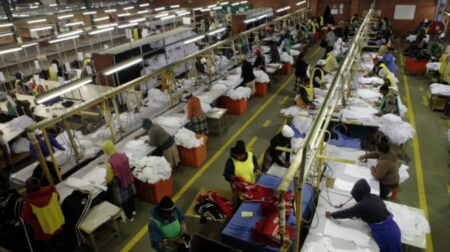
The influx of used clothes from the west in effect affects the development of textile industries in the EAC Five…
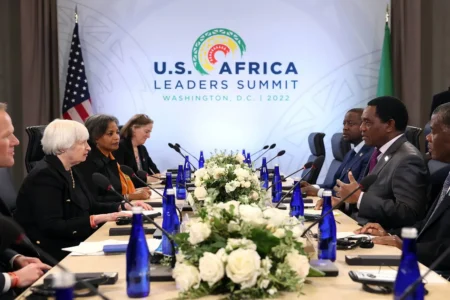
US$55 billion to be invested in Africa over the next three years along with several new partnerships and initiatives. The…

Ahead of the US-Africa Summit in December, the Russia-Africa Summit next year and as new geopolitical alliances form, Africa is…
Agriculture value chain analysis, also commonly referred to as mapping the agriculture value chain, is the assessment of the value chain participants and factors influencing the performance of the agricultural commodity industry and evaluating the relationships between these participants to identify the main constraints.
The purpose of agricultural value chain analysis (AVCA) is to increase the efficiency, productivity and competitiveness of an agricultural sub-sector or industry and develop solutions for how the identified constraints can be overcome.
AVCA assists in developing an understanding of how value chain actors/participants deal with powers and who governs or influences the chain.

Worth noting here is that Africa, including Ethiopia and most of its East African neighbours, are squirming in shipments of second-hand clothing, interestingly, imported from Europe, North America and other western countries.
What better defines neo-colonialism than Africa producing clothes to be exported to Europe and North America only for these very clothes to be sold back to Africa after they have been used! This sounds worse than the renowned exploitative colonial and post-colonial trade agreements (that still hold true and strong) where Africa, using cheap labour, produces raw material, which is cheaply exported to Europe, processed, packaged and sold back to Africa!
Several East African countries have attempted to honour up and ban the import of second-hand clothes. As you can imagine, the attempt failed.
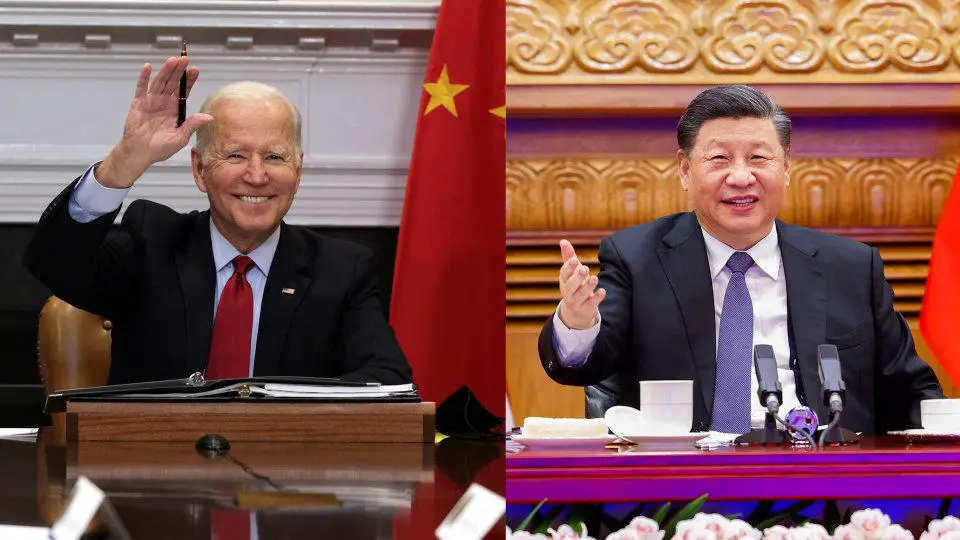
Africa is home to at least 47 foreign military outposts, with the US controlling the largest number. Djibouti is the only country in the world to host both American and Chinese outposts.
A recent survey by Afrobarometer across 34 countries indicated that 63 per cent of the population see China’s influence in Africa as positive, whilst 60 per cent made similar comments about the US. Are there benefits to be extracted from this searing rivalry?
Africa’s Agenda 2063 on the ‘Africa we want’ set by the African Union, advocates under its first aspiration, a ‘Prosperous Africa based on inclusive growth and sustainable development’ and ‘A Strong, United, Resilient and Influential Global Player and Partner’ under aspiration 7.
As of 2017, the trade initiative had created over 300,000 jobs in sub-Saharan Africa, many of which were in the apparel sector.
We recently carried out a Kenya country case study on the implementation of AGOA in the 2000 to 2016 period. We found that in this period, Kenya’s total exports to the US grew by US$443.2 million (or 405 per cent) from US$109.4 million to US$552.6 million. By 2020, the figure had risen to US$569 million, with most of the country’s exports coming from eligible products.
Looked at differently, in the nine years before the trade programme (1992 to 2000), Kenya’s average annual exports to the US were US$101 million. In the nine years after (2002 to 2010), average annual exports to the US rose to US$305 million. They rose further on average to US$557 million in the 2012 to 2020 period.
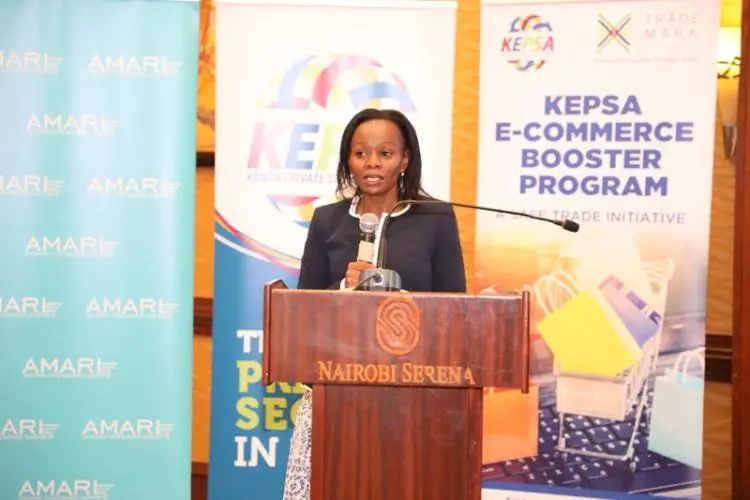
At the same time, KEPSA said the initiative will provide a unique platform to facilitate U.S. and Kenyan SME partnerships.
It will also help in supporting women and youth to run Kenyan entrepreneurs as well as U.S. women, minority, and diaspora owned businesses, and help SMEs in both countries address the current challenges many faces to access the two markets.
The agreement was signed by CCA President & CEO Florizelle Liser and KEPSA CEO Carole Kariuki and witnessed by President Uhuru Kenyatta in New York, U.S.A.