

- Kenya becomes the first African nation to obtain an EU data adequacy pact under a €102m EU–Kenya Digital Partnership, expected to boost digital trade, investment and tech sector jobs.
- A Kenya–Benelux Chamber of Commerce will connect European investors to Kenyan markets, alongside support for regional transport infrastructure linking Mombasa to the DRC.
- President Ruto urged European manufacturers to shift from raw material extraction to local value addition, arguing Africa must be seen as central to solving global food, energy and demographic challenges.
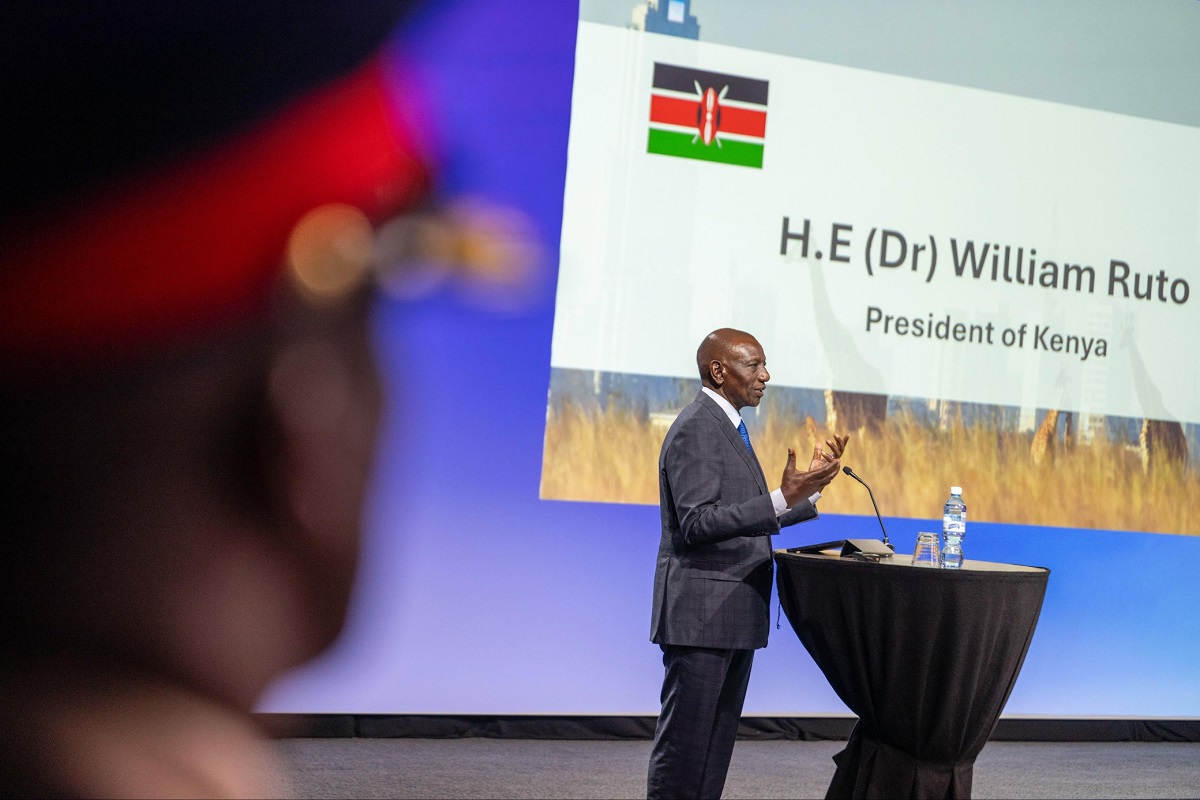
Kenya and Belgium have agreed on a host of major economic bilateral pacts including a Data Adequacy pact, making Kenya the first African country to obtain an EU data adequacy pact. Kenya’s President William Ruto secured the deals earlier this week during his State visit to Brussels, Belgium.
An EU Data Adequacy pact, which is officially known as an Adequacy Decision, is a legal determination by the European Commission that a country outside the EU offers a level of personal data protection equivalent to the strict standards of the EU’s General Data Protection Regulation (GDPR).
Normally, transferring personal data such as names, emails, or medical records outside the European Economic Area (EEA) requires businesses to use complex legal mechanisms, such as Standard Contractual Clauses (SCCs).
Securing data adequacy is, therefore, highly beneficial for the approved country’s economy. It drastically reduces legal and administrative costs for international businesses, making the country an attractive hub for tech investments, cloud computing, and digital trade.
Among other key outcomes of Dr. Ruto’s visit include financial commitment under the EU–Kenya Digital Partnership, that will support digital transformation initiatives and create employment opportunities in the Kenyan technology sector.
Data Adequacy pact and other wins for Kenya in EU
President Ruto also held discussions on the EU–Kenya Digital Dialogue which is expected to facilitate digital trade, attract investment, and unlock jobs in the tech industry.
In another landmark move, President Ruto has managed to secure formation of the Kenya–Benelux Chamber of Commerce. The chamber of commerce will connect European investors to the Kenyan market and expand trade and investment flows between Kenya and the Benelux region.
“This will strategically give both regions unprecedented access to while export opportunities and job creation,” he said.
President Ruto has also secured support for regional transport infrastructure that will link the Port of Mombasa to the Democratic Republic of Congo opening the interior of Africa to Europe.
“The series of agreements underscores Kenya’s growing focus on positioning itself as a regional digital and logistics hub, while deepening economic ties with European partners,”
President Ruto said it is time for a new era of mutually beneficial partnership with Belgium and Europe in general.
In this regard, he called on European manufacturers to change their overall investment model; “to stop extracting raw materials and instead invest in local value addition,” he asserted.
During the Kenya-Belgium Business Roundtable in Brussels, President Ruto underscored this please saying the Africa-Europe relationship must evolve beyond historical paradigms of dependency.
“So let us be clear about the partnership we propose today…it is not built on dependency but on sovereign equality, not built on aid but on partnership that is mutually beneficial, and not built on extraction but on investment that generates value for all,” he clarified with emphasis.
He said while Belgium was among the first European countries to recognise Kenya’s sovereignty back in 1963, now, President Ruto said, the conversation must change and adopt a broader mutually beneficial partnership between Africa and Europe.
President Ruto was emphatic, insisting that the global narrative of Africa as a land of crisis must be discredited.
“Africa holds the keys to resolving major global challenges such as food security, energy transitions, and shifting demographics,” President Ruto said.
“Africa is not part of the problem the world is trying to solve, rather Africa is in fact the larger part of the solution,” he asserted.
“The world cannot feed itself without Africa’s land, nor can it power its future without Africa’s energy, or grow without Africa’s people,” he reminded Europe.
However, despite this immense potential, President Ruto acknowledged that Africa remains constrained and it is only through rearranging the current economic relationship with Europe can this potential be realized and global problems solved.
Also Read: Blue-Raman: What EU funded new internet cable means for EAC
EU, Kenya enter ‘new era’ of economic partnership
Overall, under leadership of President Ruto, the EU and Kenya agreed to invest in clean transport and trade facilitation along the strategic Northern Corridor in East Africa.
They also agreed to roll-out high-speed connectivity for over 3,000 public offices, schools, health centres and digital hubs across Kenya.
President Ruto finalized advancement of cooperation under the EU-Kenya Strategic Dialogue and the EU noted the positive assessment so far and reaffirmed its intention to conclude the process as soon as possible.
Looking back, the EU and Kenya concluded negotiations for an Economic Partnership Agreement on 19 June 2023, the EU reports in its Agreement Review report published on the EU official site.
Then on 7 May 2024, the European Union and Kenya launched an adequacy dialogue to facilitate the free flow of personal data from the EU to Kenya, details the review.
The report says, the adequacy dialogue serves to boost digital trade and give Kenya access to Europe’s growing data economy.
This year, on 18 March 2026, the EU and Kenya launched the EU–Kenya Digital Dialogue to strengthen cooperation on digital policy and technological innovation.
“The dialogue focuses on shared priorities, including telecommunications and digital networks infrastructure, artificial intelligence innovation and ecosystems, and eGovernance including Digital Public Infrastructure (DPI),” reads the EU review.
According to the report, the EU and Kenya have a shared interest in building resilient value chains and strengthening strategic autonomy in critical sectors.
“Kenya’s innovation ecosystem and its role as a regional logistics and financial hub make it a natural anchor for Global Gateway in East Africa,” the EU review asserts.
In this latest dialogue, President Ruto has reaffirmed terms of the EU-Kenya Economic Partnership Agreement that provides for immediate full liberalisation of the EU market for Kenyan products.
It further incentivises EU investment to Kenya, and provides strong trade and sustainability commitments including binding provisions on labour matters, gender equality, environment and the fight against climate change.
The includes a dedicated chapter on economic and development cooperation, to enhancing the competitiveness of the Kenyan economy.
In what analysts describe as a ‘most successful economic growth agreement’ and ‘most decisive stand by an African leader’s President Ruto identified three primary obstacles that he said hamper Africa’s development; first he cited limited access to concessional resources, then he decried unfair high interest rates on loans, and finally biased credit ratings that he said price African risk far above reality.
That been said, President Ruto asserted that Africa has the potential to play a major role in solving global challenges “…if given a fair chance.”
President Ruto bluntly pointed out that if Europe does not change its view of Africa as a ‘crisis prone continent’ then economic growth partnerships between the EU and Africa will not bare the sought after results.
Read also: AI Everything Kenya x GITEX Kenya lays the building blocks for a sovereign AI stack