



- In Kenya, profitable agri-enterprises cannot access credit. Poultry delivers 108% ROI, cage aquaculture 135% and fish trading 257%, yet up to 53% of these enterprises cite lack of collateral as the primary barrier to scale, new FSD Kenya report reveals.
- Persons with disabilities are entirely absent from agricultural value chains. Survey shows zero representation across all sampled sectors, with 70% reporting workplaces that do not accommodate their needs.
- Fixed monthly repayment schedules ignore 7-to-12-month aquaculture cycles and biannual honey harvests, forcing viable enterprises into arrears, pain and collapse.
Every year, Kenya faces a food supply gap of roughly five billion eggs, up to 7.5 billion litres of milk, 340,000 metric tonnes of fish and 5,500 metric tonnes of honey, new data released in a government-backed survey shows.
While this deficit presents a huge opportunity for thousands of investors to tap, the same report reveals that the country plugs this gap through imports as investors in the East African country grapple with a financial system that systematically excludes the very enterprises that could close these deficits.
The Green Finance for Youth Employment: A Food Systems Analysis of 14 Counties in Kenya, published in May 2026 by FSD Kenya, IFAD and the National Treasury, surveyed 1,210 agri-enterprises, 45 green technology providers, and conducted 88 key informant interviews and 28 focus group discussions across five priority value chains: poultry, dairy, horticulture, fisheries and aquaculture, and apiculture.
What the data shows is a paradox playing out not just in Kenya but potentially across Africa. Agricultural enterprises are not failing; they are being locked out of the mainstream financial systems.
Agricultural finance mismatch: Profitable, but not fundable
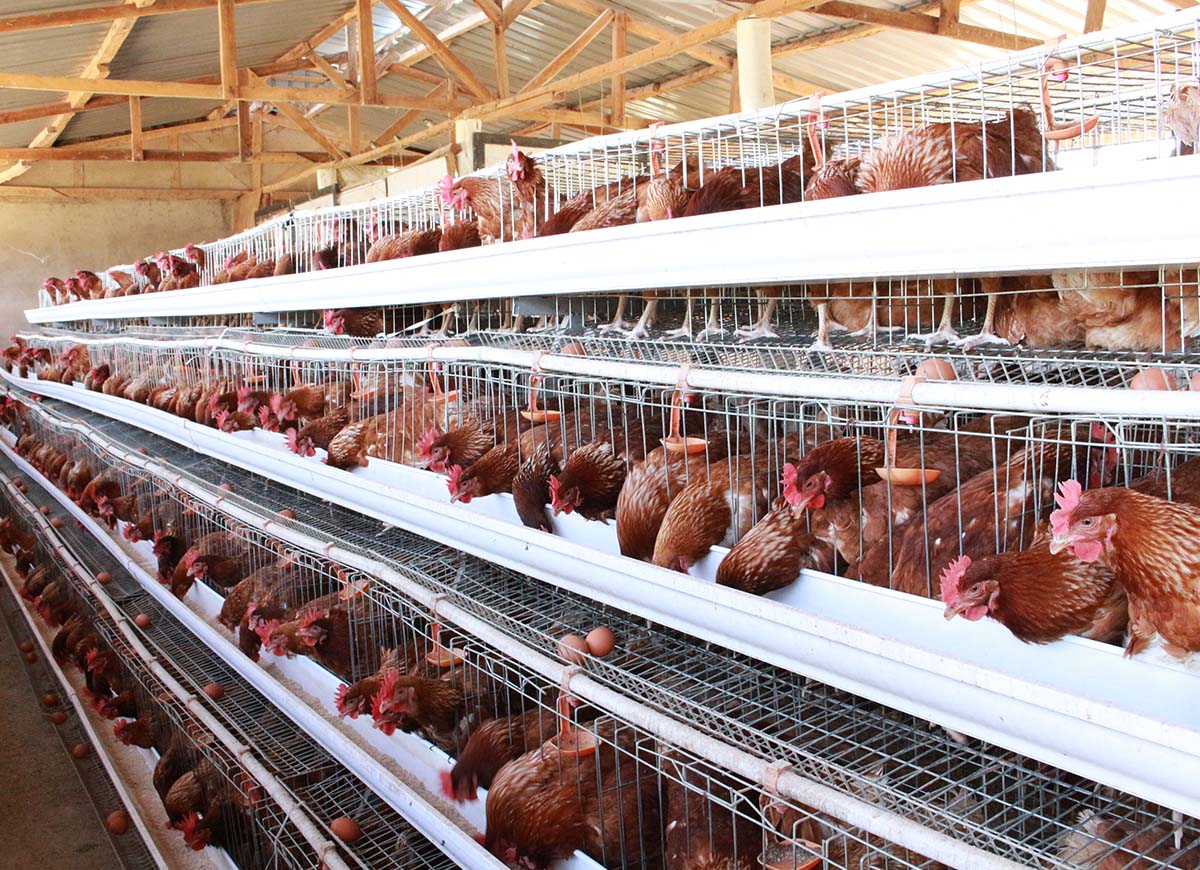
The survey found that a median poultry flock of 120 egg-laying birds generates a monthly net profit of KSh28,000 and a cumulative profit of KSh448,000 over a 16-month production cycle, effectively delivering a 108 percent return on investment.
An ordinary pond aquaculture operation harvesting 1,000 kg of fish per seven-month cycle yields a 127 per cent ROI. Similarly, cage aquaculture achieves 135 per cent. Fish trading returns 257 per cent while a 20-hive apiary can net KSh159,900 per season for investors.
Yet across all 1,210 enterprises surveyed, the most commonly cited barriers to finance were lack of collateral (53 per cent), irregular or seasonal income (43 per cent), weak financial records (16 per cent), and insufficient transaction history (15 per cent).
“The core challenge is not lack of opportunity or enterprise viability, but weak alignment between agricultural production systems and the financial, market, policy, and institutional ecosystems intended to support them.”
Read also: Livestock farming under pressure as Africa needs to balance food security and emission cuts
The exclusion of women and persons with disabilities
The survey’s most striking finding concerns persons with disabilities: they had zero representation across all sampled sectors. Seventy per cent cited workplaces that did not accommodate their needs.
Women, who own 44 per cent of surveyed enterprises (with 11 per cent of those owned by youth aged 18 to 35), face compounding barriers. Seventy-five per cent of women pointed to the difficulty of balancing family and work responsibilities as their primary challenge. Land and asset ownership remain disproportionately male, limiting their ability to offer collateral even where they operate profitable enterprises.
For youth, who own 40 per cent of surveyed enterprises (15 per cent of those owned by women), the barriers are different but equally binding. Among those aged 18 to 25, lack of experience affects 47 per cent, while employers flag “perceived impatience” for 56 per cent of this demographic. Among those aged 26 to 35, 63 per cent identify low salaries and pay demands as their main obstacle.
The skills mismatch
The report also exposes a deep disconnect between what agri-employers need and what training institutions produce. Employer demand is highest for sales agent roles, 60 per cent in horticulture, 55 per cent in poultry, and 54 per cent in aquaculture. Value addition and processing roles are most demanded in aquaculture (67 per cent) and fisheries (62 per cent). Feed formulation is concentrated in poultry at 33 per cent.
Yet formal training focuses mainly on production-related aspects, while marketing, aggregation, logistics, processing, and digital services receive limited attention. Green technology training is particularly weak across the country. TVET institutions offer general electrical courses without specialisation in the installation and maintenance of solar-powered pumps, milk chillers, incubators, or freezers, new technologies that are increasingly central to modern agriculture.
Interviews with 28 training facilities revealed reliance on outdated equipment, weak digital infrastructure, insufficient investment in trainer development and weak connections to industry. Dropout rates run between 30 and 40 per cent, driven by financial barriers, gender-specific challenges, and poor accessibility for persons with disabilities.
The technological opportunity
Where green technologies have been adopted, the returns are dramatic. In poultry, replacing conventional feed with Black Soldier Fly (BSF) protein and grid heating with solar installation cuts monthly expenses by 42 per cent, from KSh26,000 to KSh15,000 and more than doubles ROI from 108 per cent to 260 per cent. The additional capital expenditure of KSh229,000 pays back within a single production cycle: 1.3 months for solar heaters, 4.6 months for a solar milling machine.
In aquaculture, BSF feed substitution reduces feed costs, which account for 52 to 57 per cent of total expenses, by 40 per cent. A pond operation switching to BSF sees net profit rise from KSh112,000 to KSh132,000, and ROI improve from 127 per cent to 194 per cent.
Demand for these technologies is consistently high across all sectors: 38 per cent of dairy enterprises want solar milk chillers; 40 per cent of aquaculture enterprises demand solar freezers; 73 per cent of beekeepers have already adopted modern Langstroth hives. Yet adoption remains low because enterprises cannot meet upfront investment costs, and existing financial products are not structured around productive asset financing.
Read also: Africa’s $100 billion blueprint to firm up food security systems
Agricultural finance: What must change in Kenya
The report recommends four immediate shifts for investors and financial institutions.
- First, redesign loan products around agricultural cash flows. For aquaculture, grace periods of 7 to 12 months aligned to harvest cycles. For apiculture, biannual repayment schedules. For poultry, 6 to 12 months. For horticulture, seasonal input loans with 30-to-90-day terms. “Fixed monthly repayment structures are unsuitable,” the report states. “Many viable enterprises experience repayment distress despite being commercially profitable.”
- Second, develop alternative credit assessment models using mobile money transaction histories, cooperative delivery records, and digital platform data instead of land titles. The report notes that commercial banks require documentation rigour that most smallholders simply do not have, “effectively disqualifying a large share before an application is even assessed.”
- Third, scale asset-backed leasing where the financed equipment, solar incubators (KSh67,500), solar freezers (KSh87,500), PVC fish cages (KSh280,000), Langstroth hive kits, serves as collateral. “Asset-backed leasing and pay-as-you-hatch repayment structures” are explicitly recommended to remove the collateral barrier for youth enterprises.
- Fourth, formalise structured offtake agreements between youth-led enterprises and anchor buyers such as Brookside Dairy, New KCC, supermarket chains, hotel caterers, honey exporters to create receivables-backed lending models. “These agreements would provide enterprises with reliable market access and a stronger basis for accessing credit without relying on land titles as collateral.”
Agricultural finance mismatch and the need for fresh policies
The report also points to regulatory failures that extend beyond individual lenders. Cross-county taxation and cess regimes currently result in double taxation of agricultural commodities, “significantly eroding producer margins.” The study recommends coordinated advocacy through the Agricultural Sector Network, Council of Governors, and Kenya National Chamber of Commerce and Industry to harmonise these levies.
It also calls on the National Treasury and Central Bank of Kenya to revise prudential guidelines by introducing differentiated risk weightings for green loans and lending targeted at youth, women, and persons with disabilities. The current uniform 100 per cent capital charge, the report argues, “increases the cost of lending to underserved groups and limits financial inclusion.”
Across Africa, agriculture remains the largest employer of young people. Yet financial systems designed for formal, salaried, urban borrowers continue to exclude the very enterprises that could transform food security. Without redesigning how capital flows into agri-food systems, the deficits will only grow, not because agriculture cannot deliver, but because finance refuses to adapt.
Read also: Tanzania on track to achieve food self-sufficiency