

Trending
- Zimbabwe edges closer to arrears payment, debt restructuring and reset of ties with IMF
- Tanzania coffee industry mulls commercializing wastes to spur fresh revenue streams
- Reasons for African Currencies Growing in Significance for Business Decisions
- Nairobi forum launches push to close Africa’s climate protection gap
- East Africa’s lessons from India’s economic growth playbook
- Tanzania and Serbia to revive falling trade relations
- TotalEnergies commits $10 billion to Angola as fresh oil find comes on stream in three months
- In Africa, the conversations defining corporate reputation are going on in channels most CEOs cannot see


Browsing: South Africa

Kenya and South Africa have announced the signing of eight new agreements The agreements are in areas including tourism, migration…
Gabon is one of few countries with a carbon-negative economy, thanks to the Congo Basin’s immense tropical forests, which absorb more greenhouse gases than the country’s companies, cars, and towns emit.
It just approved an ambitious climate law to ensure that its economic bases are on forests and agriculture rather than fossil fuels.
Outside assistance is required to attain this goal so that the government can continue to enhance living standards.
Many African countries rely on coal for electricity and have refused to sign a declaration signed by more than 40 countries this week calling for an end to the most polluting of fossil fuels.
Given that South Africa is experiencing similar power generation problems, Robertson believes that if Zimbabwe does not overcome its power difficulties, this will impede economic growth in 2021.
The mining and industrial industries will almost certainly curtail output.
Tax and export income will decline, as will employment growth. This is unfortunate because Zimbabwe wouldn’t be going through all this pain if it had started constructing new power plants earlier.
Mergers and acquisitions worth US$52B were completed in South Africa during the first half of 2021, with the value of deals growing by 958% from 2020 with the tech sector in the lead according to Refinitiv Data that provides financial markets and infrastructure data . According to Digest Africa, the value of mergers and acquisitions in the African tech ecosystem in 2018 was US$504M with 24 out of the 39 deals taking place in South Africa making it the country with the most mergers, acquisitions and exits among the KINGS countries.
Gone are the days where an eight to five job was the order of the day. Millennials have flipped the…
In the US, cheap and accessible shale gas is rapidly displacing coal. And in China, concerns about poor air quality and related health issues have caused demand for coal to fall three years in a row, from 2014 to 2016. So is coal demand about to decline globally? Is coal headed for the ash heap of history? Such a development is unlikely.”
The relegation of coal to the dustbin of energy sources, the Boston Consulting Group (BCG) does not believe is likely. They are not the only ones who hold this view.
McKinsey & Company, another highly regarded consulting company, does not believe coal will not have a role in the energy mix of the world going forward. They are not as blunt in expressing their views as their counterparts at the BCG however. McKinsey & Company featured an article on their website proclaiming that the adoption and development of renewable energy will be an evolution that is gradual as opposed to a sudden revolution.
The multi-phase project will provide water to the Gauteng region of South Africa and generate hydroelectricity for Lesotho. The Lesotho…
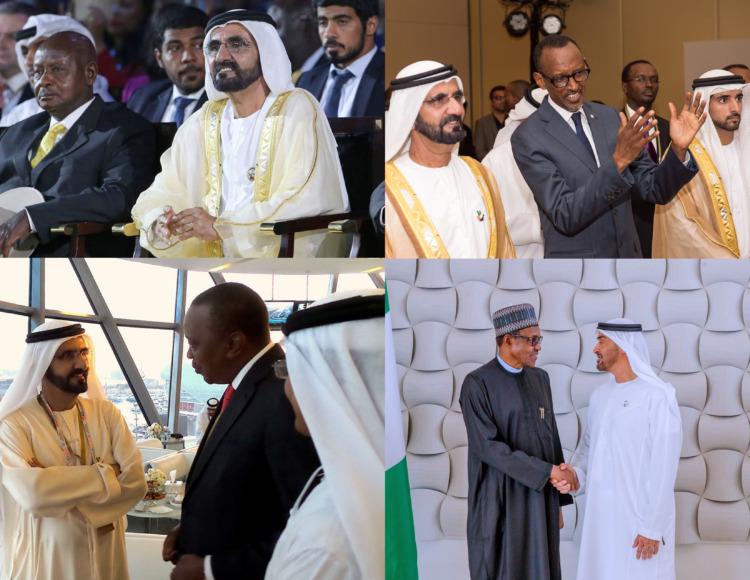
Commenting on Africa’s participation at the conference and the continent’s development in general Egypt’s representative at Expo 2020, Ahmed Maghawry Diab, who is also an official from the country’s Ministry of Trade and Industry said, “…the world has started to look at Africa and rediscover it…the continent has a lot of difficulties, but it has also started to develop.”
Another optimist for the continent’s development and what it has to offer is Dr. Levi Uche Madueke, Head of the African Union (AU) Strategic Partnerships Office and AU Commissioner General for Expo 2020 said, “…Africa is undergoing a dynamic socio-economic and political transformation. There is a lot happening on the continent but the world is yet to hear all about it. It is time to take charge of Africa’s narrative and reclaim its rightful place in the global arena.”

Liquids Intelligent Technologies has reported that over 90 percent of IT decision makers across South Africa, Kenya and Zimbabwe have…
Numerous advantages and benefits have been proffered to explain the motives individuals have for moving their assets offshore and investing in jurisdictions other than their home countries. Standard Bank reckons that offshore investment aids in capitalizing on circumstances outside the country providing a buffer against our markets, our inflation spikes and exchange rate fluctuations.
Essentially, offshore investment serves as a hedge against the volatility and harsh economic fundamentals in the local economy. Zimbabwe as a case in point has suffered from perennial poor economic performance for the greater part of the last two decades. The economic phase that characterized this period included compulsory expropriation of productive farmland, the expropriation of hard currency funds that were never returned, of individuals and organizations by the government to fund its operations, hyperinflation and a generally depressed economy.