Trending
- African governments drive new forest finance progress as global report warns funding globally must scale faster
- Fine Spinners eyes Kenya’s Agoa-backed apparel supply chain with $5m plant
- Why young Kenyan investors need to stop treating the stock market like a betting slip
- Tanzania tax reforms mandate VAT refunds to under 30 days
- In New York, world leaders unveil plan to overhaul global health architecture
- Minisend grows Kenya presence as official payment partner of Africa Blockchain Festival 2026
- UN resolution challenges world maps that make Africa look smaller
- Zimbabwe edges closer to arrears payment, debt restructuring and reset of ties with IMF


Browsing: Uganda
Medical marijuana may very well be the agri-business that Africa needs to get its economies high in the global multi-billion…
More importantly though, a clear signal was sent to the EU Parliament that the colonial days are over and that meddling in affairs and interfering with matters that are of the exclusive sovereign remit of the host countries, Uganda and Tanzania, is simply not tolerated.
Following the EU Parliament’s action, Total Energies is to appear before the Parliament for a hearing and answer queries that the members of parliament will have. That coupled with the fact that Total has an ongoing court case in France regarding an allegation of its failure to put in place an adequate vigilance plan covering health, safety, environment, and human rights risks as required by French law, related to the the same EACOP project, it will be interesting to see whether or not Total Energies might drop out of the project at the risk of being exposed to breach of contract claims by the other Parties to the venture.Total Energies controls EACOP legal shareholding since it has the majority.
However, it may be a small price to pay amid the increasing pressure in France and Europe for green and climate friendly projects. Worldwide, financiers are avoiding investments in fossil fuels projects and looking for what is hailed as green investments.
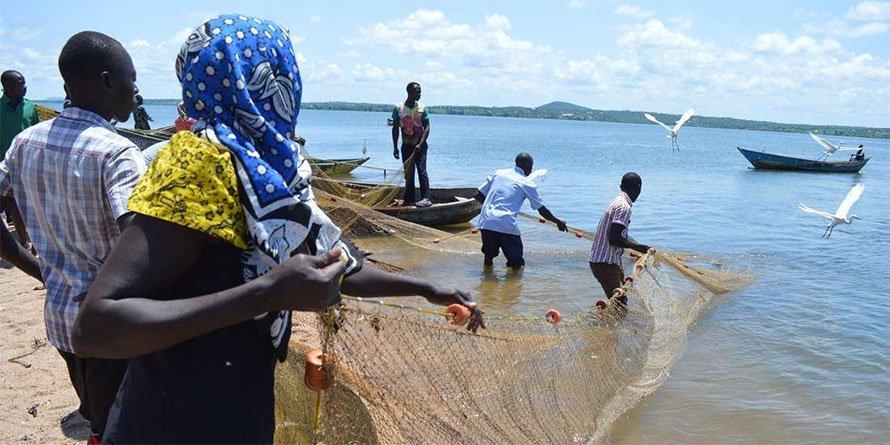
Lake Victoria’s fisheries support more than 3 million livelihoods and bring in US$500 million in revenues annually.
Nile Perch is the main fish caught in Lake Victoria. Fish maw – the air sack that aids the Nile Perch in floating and a Chinese delicacy – has been a major export source. Statistics from the Uganda Ministry of Agriculture indicate an increase in fish maw exports earning from US$27m in 2015, to US$31m in 2016, US$48m in 2017 and US$52m in 2018. These earnings exclude the earnings from Nile Perch and its eggs.
However, the lake has been invaded by water hyacinth – the floating, green mats of waxy leaves with purple blossoms – depriving the waters below of oxygen which makes it hard for aquatic life to survive.
That, plus overfishing which occurs when fishermen use undersized nets that catch fish before they reach maturity, rapid population growth, and pollution by wastewater, agro-pesticides and fertilisers threaten the future of fishing in Lake Victoria.
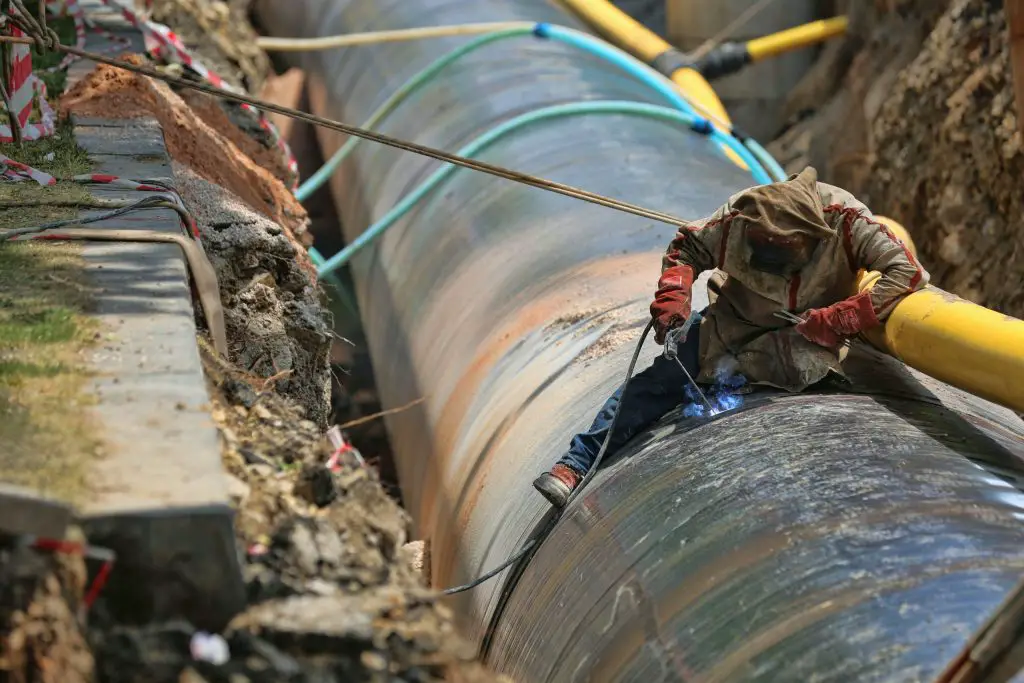
What is good for the goose must also be good for the gander. However, the EU commission has commissioned the Baltic pipe project, somewhat similar to the EACOP. The Baltic Pipe project was inaugurated on September 27, 2022, at an opening ceremony in Goleniów, Poland.
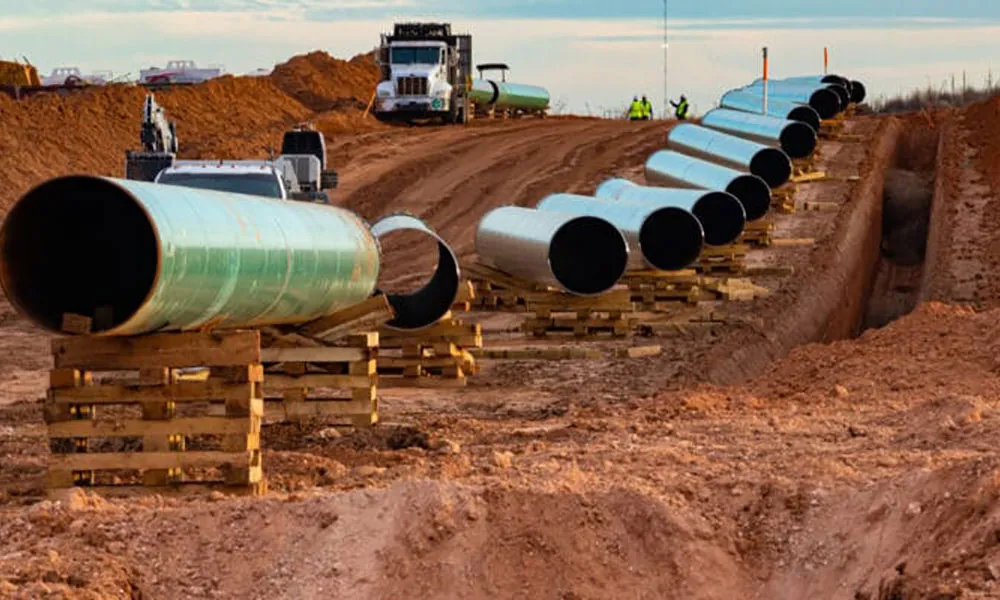
The ministry argued that the oil pipeline project is being implemented strictly on international safety, environmental and social aspects, including the Human Rights Impact Assessment (HRIA).
The EACOP project has managed to amass at least US$20 billion, benefiting the two neighbouring nations immensely. That’s why Tanzania is stern on highlighting key issues regarding human rights and environmental risks.
“A dedicated HRIA was undertaken as part of the project implementation process. The HRIA assessed and put in place measures for addressing the potential adverse of the project on the human rights enjoyment,” the statement pointed out.
According to the EU Parliament statement, at least 100,000 people have been forced to move out of their homes to leave the path for the pipeline.
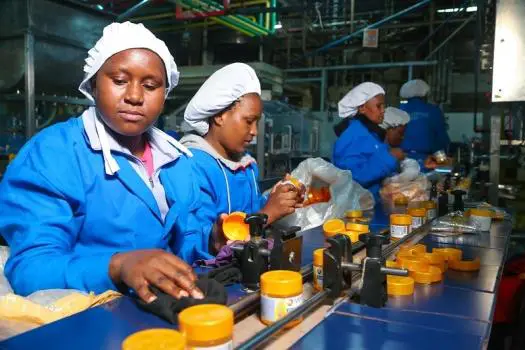
The AfCFTA Agreement has been signed by 54 African nations thus far. Among them, 46 tariff proposals have been filed, including one by the Customs Union. Furthermore, 29 tariff proposals are technically validated for trade.
Under the Rules of Origin discussions, 87.7% of import tariffs have been settled, while phase two consultations on Investment, Intellectual Property Rights, Competition Policy, Women and Youth in Trade, and Digital Trade are underway.
There are increasingly more and more ‘outbreaks’ of non-communicable diseases in Africa and more so in sub-Saharan Africa. These lifestyle…
Generally speaking, the proliferation of mobile phone technology has increased access to mobile money services (MMS) and is the backbone of mobile money deployment in both rural and urban areas of Africa.
“Despite its enormous benefits, embracing the usage and acceptance of mobile money has mostly been low due to security issues and challenges associated with the system,” warns professor Guma Ali from the Nelson Mandela African Institution of Science and Technology.
In a paper titled ‘Evaluation of Key Security Issues Associated with Mobile Money Systems in Uganda,’ the pundit suggests the need to carry out a survey to evaluate the key security issues associated with mobile money systems in Uganda (and Africa).
In the study that followed, which employed a descriptive research design, and stratified random sampling technique to group the population, some 741 registered mobile money (MM) users and 447 registered MM agents along with 52 mobile network operators (MNOs) IT officers participated.
Most Kenyans, 83 per cent, indicated a willingness to increase the amount of money they allocate to savings and investments, but the inability to save due to insufficient funds after fulfilling their obligations that require regular funding and the availability of quick digital loans.
Among their obligations which contribute to Kenyans’ financial strain is supporting their extended family which considerably bites into their savings. 84 per cent of people indicated that they regularly provide some income to their extended family, mostly in case of emergencies, because they feel a sense of obligation to send their extended families money and because their extended family members treat them better when they are sent money.
On their part, the extended family members mostly use the money to cater to recurring expenses like food & transport, school fees and medical expenses at 23 per cent, 19 per cent and 18 per cent respectively. Farm-related expenses like purchase of fertiliser ranked fourth at 14 per cent, phone and home upgrades came in fifth at 7 per cent while entertainment like Christmas celebration was sixth.
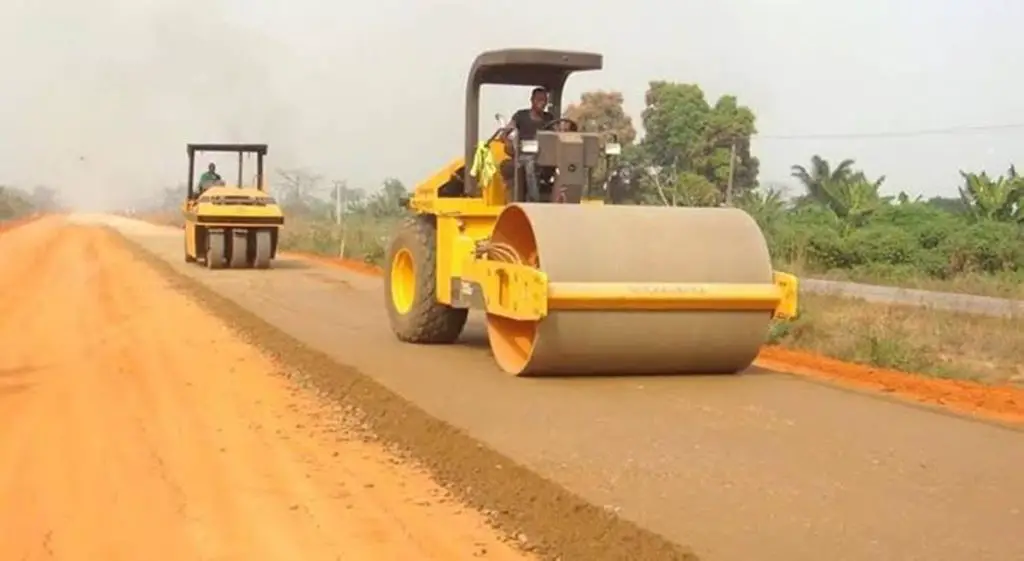
Infrastructure development continues to be a vital driver of foreign direct investment (FDI) since logistics are so necessary for global business development, mainly e-commerce, which is now a significant generator of income and jobs at home and abroad.