Trending
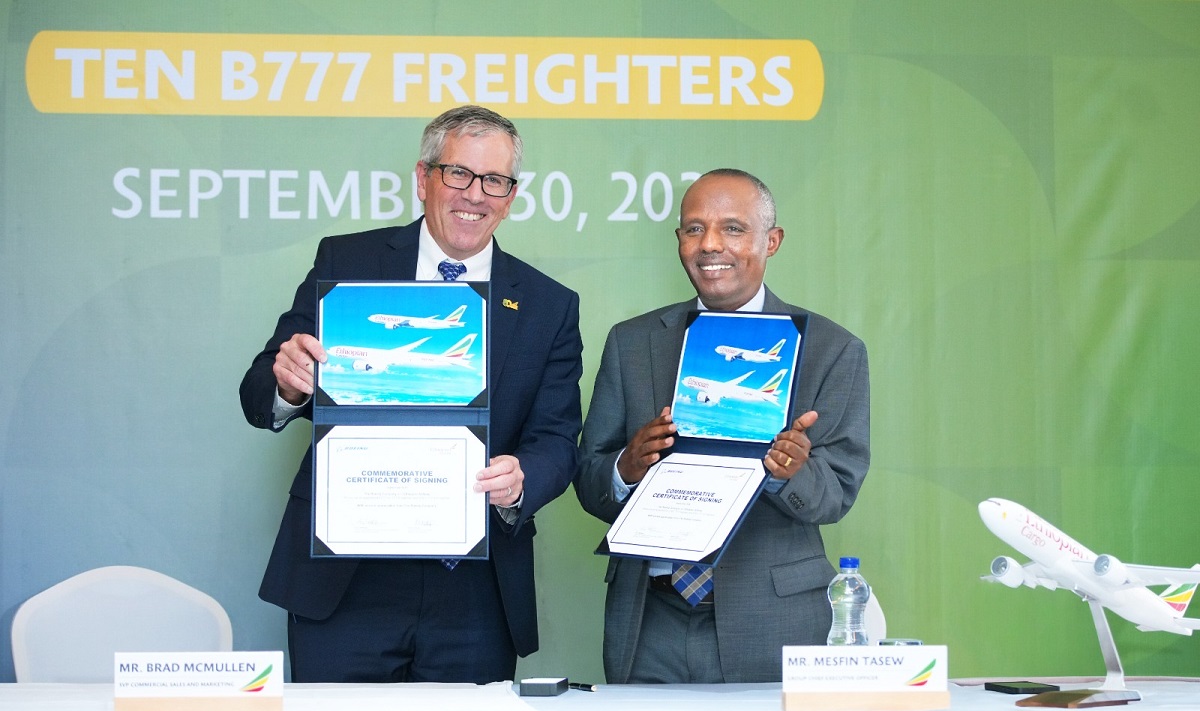
- Ethiopian Airlines bets big on Boeing freighters in $5 billion cargo fleet expansion
- Silicon Valley’s Tim Draper backs Nairobi blockchain festival, sees Africa as next digital frontier
- Dangote breaks ground on $16bn Lamu refinery as East Africa seeks fuel independence
- Gulf and African states meet in Dar to rewrite rules of labour migration
- African governments drive new forest finance progress as global report warns funding globally must scale faster
- Fine Spinners eyes Kenya’s Agoa-backed apparel supply chain with $5m plant
- Why young Kenyan investors need to stop treating the stock market like a betting slip
- Tanzania tax reforms mandate VAT refunds to under 30 days


For generations, millions of people have looked at world maps that make Africa appear smaller than it really is. A recent United Nations (UN)…

Here’s a question worth sitting with: how much growth are…
Geopolitics: Not since the wars in Afghanistan and Iraq reshaped…




Cross River State has invited investors into various sectors of its economy, as part of…

The EACOP is a 1,443km pipeline that is been constructed at a value of 3.5 Billion USD. These funds are been directly injected into the economies of Uganda and Tanzania effectively increasing their FDI by over 60 % during the construction phase alone.
The magnanimous project is been constructed and operated through a shareholding approach among several stakeholders including the government of Uganda through the Uganda National Oil Company (UNOC), the government of Tanzania through the Tanzanian Petroleum Development Corporation (TPDC), France’s Totalenergies and China’s CNOOC.
It is expected that through the East African Crude Oil Pipeline, the region’s East Africa’s oil potential. It will effectively attract investors and companies to explore the region’s oil potential. Further still, as new infrastructure projects commence in line with the pipeline, it will greatly contribute to the enhancement of the central corridor between Uganda and Tanzania.

According to the research finding, even though a minimum of 5%, of national health budgets, should be dedicated to mental health in low-income countries, most African countries still spend less than 1%.
Even though there is high-level policy commitment on paper in most African countries, however, allocation of appropriate budgets and human resources for mental health still lags woefully behind the rest of the world.
For example, in Ethiopia, Ghana, Nigeria and South Africa more than 90% of people living with mental illness do not receive any form of evidence-based care, the report points out.
Experts warn that the Covid-19 pandemic has had a worse impact on mental health. Due to the related economic impact of the pandemic which left millions without jobs and millions of others under-employed, mental health cases are worse due to elevated levels of stress, anxiety, social isolation and domestic disputes to mention but a few.
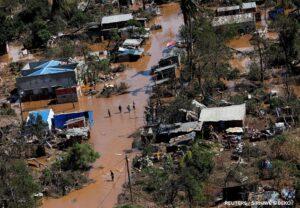
According to a Fair Tech Institute whitepaper by Access Partnership, a global public policy firm for the technology sector, the annual number of natural disasters is set to increase by 37 per cent from 442 to 541 occurrences by 2025.
The whitepaper highlights the urgency with which national governments and the private sector must attach satellite technology to implement more effective disaster management efforts in Africa and globally.
The whitepaper comes after several organizations agreed that climate change would make weather-related disasters more frequent and widespread in coming years.

In the latest fundraising led by B Capital Group, Flutterwave raised US$250 million, with participation from Alta Park Capital LP, Whale Rock Capital and Lux Capital.
Flutterwave said in an emailed statement on Wednesday. “The investment has enabled the company to become the highest valued African startup,” a Flutterwave email read.
Flutterwave has processed transactions worth more than US$16 million in over 50 million transactions across dozens of countries in Africa, facilitating cross-border transactions in multiple currencies for companies, including Uber Technologies Inc., Booking.com and Alibaba’s Alipay. It has evolved beyond payments products to an online marketplace and a lending channel to small and medium businesses.
With operations from the Nigerian commercial hub of Lagos to Nairobi, Kenya, the San Francisco-based company will continue to grow in East Africa. According to Flutterwave’s software engineer, the company also plans to expand its Francophone African nations such as Senegal and Cameroon.
Describing the EDGE Certification launch process as ‘a public declaration that we will continue to improve our gender index,’ Magala affirmed commitment to focus on what she described as ‘…capacity development initiatives that will move us towards a gender-equal Bank.”
What this means, as pointed out before, is not only more employment opportunities for women but promotions to high executive positions.
No one put it better that Magala when she said; “Ultimately, the EDGE certification process is changing the gender DNA of the bank.”
In this transformation process, the Bank maintains transparency and calls to both employees and stakeholders to hold the Bank accountable for any gender prejudice.