
Trending
- Kenya’s payments overhaul puts its $5 billion remittance economy at the centre of the FX debate
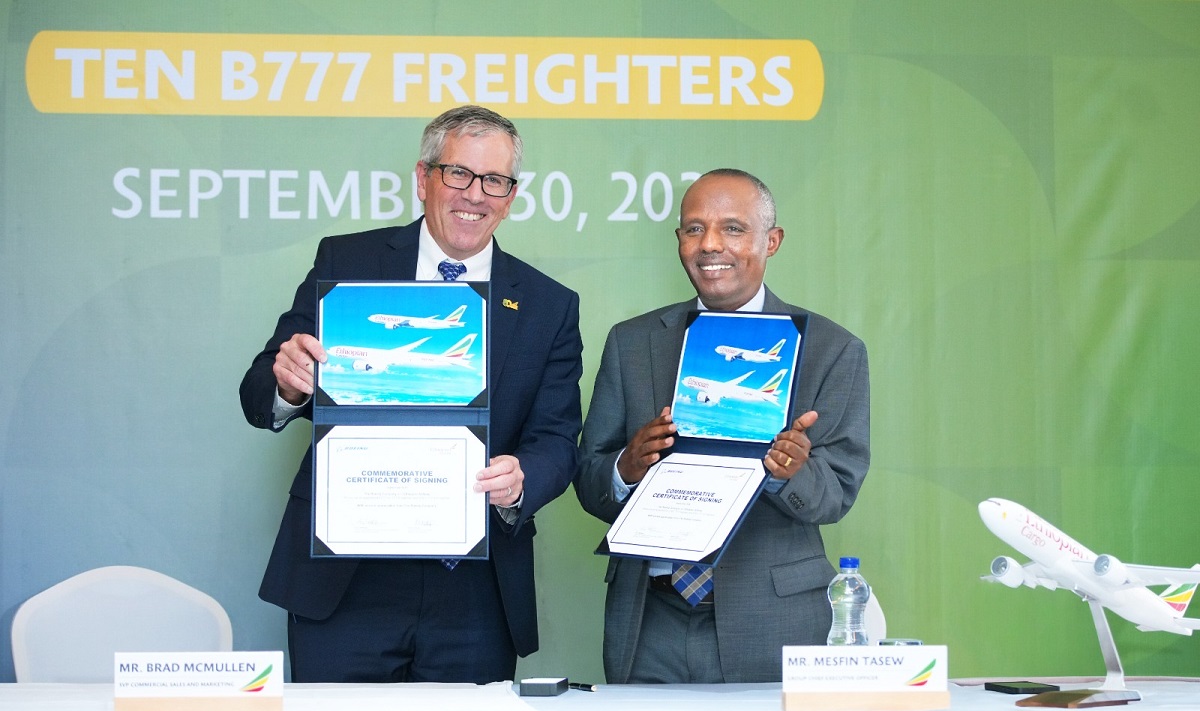
- Ethiopian Airlines bets big on Boeing freighters in $5 billion cargo fleet expansion
- Silicon Valley’s Tim Draper backs Nairobi blockchain festival, sees Africa as next digital frontier
- Dangote breaks ground on $16bn Lamu refinery as East Africa seeks fuel independence
- Gulf and African states meet in Dar to rewrite rules of labour migration
- African governments drive new forest finance progress as global report warns funding globally must scale faster
- Fine Spinners eyes Kenya’s Agoa-backed apparel supply chain with $5m plant
- Why young Kenyan investors need to stop treating the stock market like a betting slip


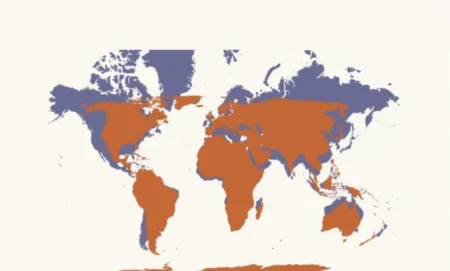
For generations, millions of people have looked at world maps that make Africa appear smaller than it really is. A recent United Nations (UN)…

Here’s a question worth sitting with: how much growth are…

Geopolitics: Not since the wars in Afghanistan and Iraq reshaped…


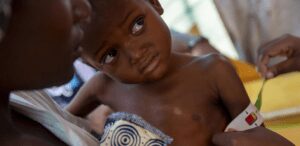
According to SOS Children’s Villages, 3.2 million children under the age of five die every year because of hunger and drought in Africa. In other words, more than half the children who die of hunger-related causes come from the continent.
In the same breath, he said that there has also been inconsistency in the flow of funds to UNICEF to support humanitarian response.
UNICEF said more than 255,000 children received treatment for severe wasting in Somalia last year. On Tuesday, January 2022, the International Organization for Migration (IOM) said the widespread drought in the Horn of Africa has severely affected the country the most, forcing the government to declare a state of emergency in November.
He gets his comedian background from his father who was also an impersonator. It is doing small impersonator gigs in Toronto that got him off the streets, to the US and to stardom.
At a young age, even before his career took off, Jim Carrey wrote to himself a cheque for $10 million.
According to legend, he one day drove up to the Hollywood Hills overlooking the city of Los Angeles and that is where he wrote himself the US$10 million cheque “for acting services rendered”.

On average, the continent’s billionaires are worth $4.7 billion now compared to the $3.4 billion…
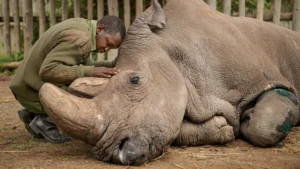
The rhino horn has become “gold” as it is rumoured to have medicinal properties. The horn is also used as a status symbol to show success and wealth in some African and Asian countries.
Rhino horns are used to reduce hangovers and high fever, detoxify the body, and as a form of beauty through jewellery making.
In 2020, the northern white rhino went extinct as the last remaining male died in Sudan and the two remaining females were too old to reproduce.

Twitter founder Jack Dorsey appointed four Africans to sit on Btrust (Bitcoin Trust) board on December 15, 2021.
Btrust is an initiative co-founded by Jack and the United States singer, Jay-Z, to deploy 500 bitcoin to develop and foster the currency in Africa and India.
Ojoma Ochai, Obi Nwosu, Abubakar Nur Khalil and South African Carla Kirk- Cohen. There were 7,000 applications interested in the same positions. The application form for board members established a mission to “make bitcoin the internet’s currency.”

The Aga Khan Hospital Dar es Salaam (AKH,D) performed its first Cochlear Implant Surgery on…