Trending
- African trade is growing despite the obstacles
- Why global capital is betting big on Africa’s digital promise
- Kenya posts stronger-than-expected Q1 growth at 5.3% on manufacturing rebound, tourism boom
- China’s new investment rules are about guardrails, not closed doors
- Zanzibar optimistic economic growth will hit 7.5% on tourism boom
- Kenya defies economic shocks to post record $22 billion in tax collections
- Forget South Africa: East Africa now rules in banking industry returns
- Lamu over Tanga: The commercial calculus that cost Tanzania $20bn refinery



Zanzibar legislators project 7.5% economic growth. President Mwinyi advocates private sector participation. Zanzibar recent talks with Brazil, US expected to bare fruits. Zanzibar has…
KRA reports record KES2.84 trillion (up 10.6%) in tax collections,…
UAE has cemented its spot as the main refining, and…
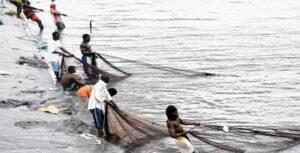
Tanzania is also party to the United Nation’s Food and Agriculture Organisation (FAO) agreement that requires countries not only to take all necessary actions to prevent and even end illegal fishing activities in the Indian Ocean but to also report all such activities.
Similarly, Tanzania is also a signatory to the United Nations Convention on the Law of the Sea (UNCLOS) and the FAO’s Code of Conducts for Responsible Fisheries as well as the Indian Ocean Tuna Commission (IOTC).
However, even with all these goodwill memberships, the country still underperforms in the fishing sphere and even with environmental concerns in mind, the country needs to increase foreign (and domestic) investment in the sector.
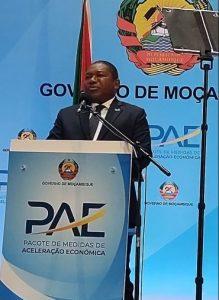
The PAE – Economic Acceleration Stimulus Package consists of 22 measures divided into two sets of reforms, the first being fiscal and economic stimulus and the second the improvement of its business environment, transparency, governance, and the acceleration of strategic infrastructure.
The fiscal and economic stimulus interventions include the reduction of selected taxes with a direct impact on the main productive sectors.
The measures announced lower the IRPC from 32 per cent to 10 per cent in agriculture, aquaculture, and public transport, and VAT from 17 per cent to 16 per cent and include a VAT exemption on imports for agriculture and electrification to boost renewable energy.
The Mozambican head of state also signalled the introduction of tax incentives for new investments over the next three years but did not mention the rates of these incentives.
The government later resolved that the state would use the city’s devolution funds forcing the Combined Harare Residents Association (CHRA) to approach the courts. The Combined Harare Residents Association (CHRA) also cited the city of Harare (CoH) and Geogenix B.V as a respondent in an urgent chamber application filed through Zimbabwe Lawyers for Human Rights (ZLHR).
CHRA is seeking to bar an order issued by Moyo on July 7 ordering CoH to stop all investigations into the Pomona deal and reverse its suspension.
They want the courts to declare that the directive by Moyo as well as the utilization of devolution funds to pay Geogenix B. V contractual obligations unlawful.
In a letter by Scanlen and Holderness addressed to Moyo dated July 18, the residents’ lawyers said the council had a right to govern its affairs in line with the Urban Councils Act.

African leaders are paid handsomely if their salaries are anything to go by. Even though the continent is still developing, its leaders take home fat cheques.
In Kenya, for instance, a New World wealth report revealed that people with political connections control half of the country’s wealth at the expense of ordinary citizens, some of whom live below a dollar per month.
In Africa, politicians fight for elected positions tooth and nail, attracted by affluent lifestyles, huge allowances and medical cover.
Who are the highest-paid African presidents? As reported by Business Insider, Cameroon president Paul Biya takes home the highest salary. He’s followed by King Mohammed VI of Morocco and South Africa’s Cyril Ramaphosa.
President Uhuru Kenyatta, who was first elected in 2013, will retire after serving his two constitutional terms. Four presidential candidates were cleared by the Independent, Electoral and Boundaries Commission (IEBC) in the State House race.
They are Deputy President William Ruto of the United Democratic Alliance, Raila Odinga of the Azimio la Umoja One Kenya Coalition Party, David Mwaure (Agano Party) and George Wajackpoyah (Roots Party).
The outgoing head of state has endorsed Raila as his preferred successor to the chagrin of his deputy, who has accused him of interfering in the 2022 succession politics.
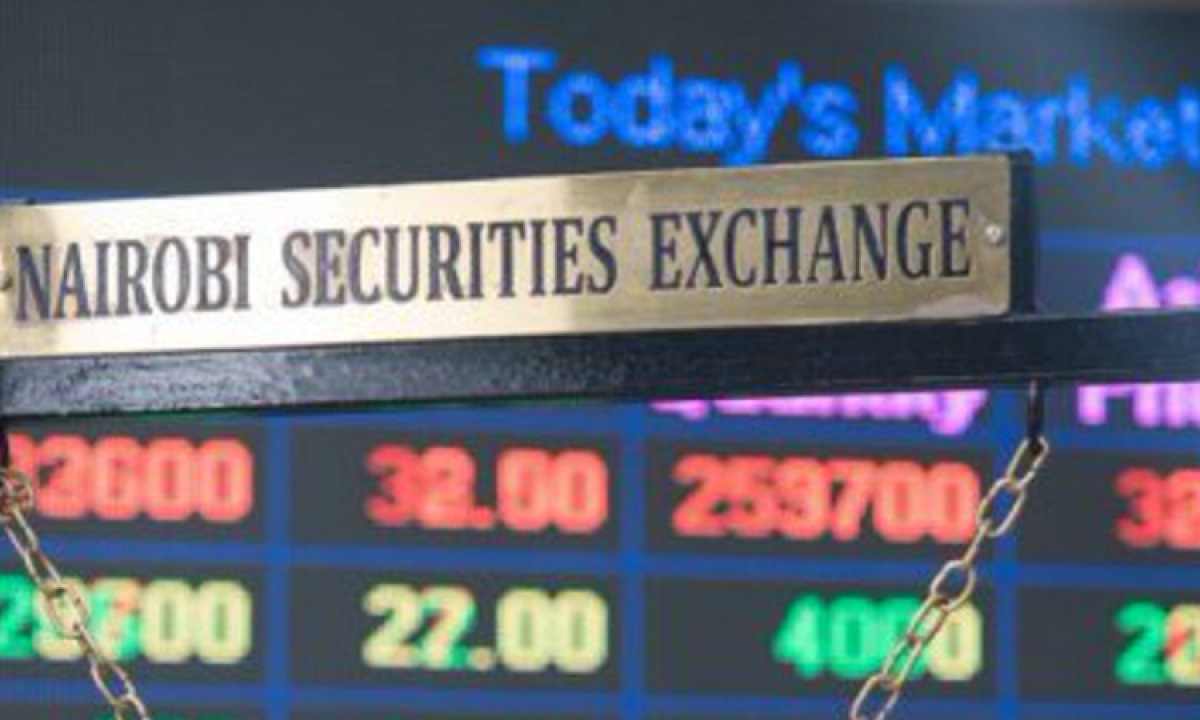
The central Bank of Kenya, in its July 2022 Monetary Policy Committee Market Perceptions Survey, notes that at the Nairobi Securities Exchange (NSE), NASI, NSE 25 and NSE 20 share price indices increased by 4.0 per cent, 4.1 per cent and 0.4 per cent, respectively, during the week ending July 28.
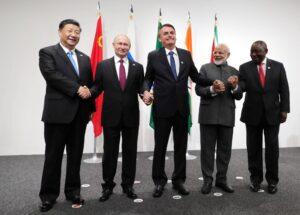
When the United Nations General Assembly voted overwhelmingly on March 2 to condemn Russia’s invasion…