

Trending
- African trade is growing despite the obstacles
- Why global capital is betting big on Africa’s digital promise
- Kenya posts stronger-than-expected Q1 growth at 5.3% on manufacturing rebound, tourism boom
- China’s new investment rules are about guardrails, not closed doors
- Zanzibar optimistic economic growth will hit 7.5% on tourism boom
- Kenya defies economic shocks to post record $22 billion in tax collections
- Forget South Africa: East Africa now rules in banking industry returns
- Lamu over Tanga: The commercial calculus that cost Tanzania $20bn refinery



Zanzibar legislators project 7.5% economic growth. President Mwinyi advocates private sector participation. Zanzibar recent talks with Brazil, US expected to bare fruits. Zanzibar has…
KRA reports record KES2.84 trillion (up 10.6%) in tax collections,…

UAE has cemented its spot as the main refining, and…

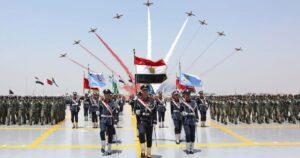
Amid increasing cases of terrorism and conflicts between member states, African countries have been allocating more money to defence to protect their citizens and businesses.
As of July 2022, nine African countries allocated over US$1 billion dollars each to their defence departments, according to Statista, a German company specialising in market and consumer data.
Data by Statista indicated that Algeria tops the list of African countries with the highest defence budgets in the continent. Algeria is followed by Nigeria, Morocco, Egypt, Libya and South Africa in that order. Overall, the list is dominated by countries in North Africa faced with internal and external aggressions.
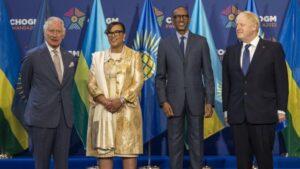
AfCFTA facilitates better access to trade across the continent for all Commonwealth citizens in member states; being one of world’s largest trading blocs. During her visit to Kenya in 2018, SG Scotland noted that, “AfCFTA gives the perfect platform to facilitate trade across the Commonwealth. Nineteen members of the AU are part of the Commonwealth family, the protocol is groundbreaking news because research shows, that when Commonwealth countries trade with each other, its 19 per cent cheaper and this is the Commonwealth Advantage.”
The combined GDP of Commonwealth countries, with a total population of over 2.4B, is now around $13 trillion and is estimated to reach $19.5 trillion in 2027. “With intra-Commonwealth trade expected to surpass $700 billion in 2022, and Commonwealth countries comprising a number of free trade zones including the Africa Continental Free Trade Area (AfCFTA), the Commonwealth Business Forum, provided a valuable opportunity to capitalize on global opportunities, for economic growth and social development.” The CEO of Trust Stamp, Gareth Genner who was one of the key guests at the 2022 CHOGM Business Forum, observed.
Earlier in the year, during the AfCFTA’s Secretary General Wamkele Mene’s visit to London, the UK launched a programme to support the implementation of AfCFTA; where the Foreign Commonwealth and Development Office (FCDO), pledged to provide up to £35m to provide trade facilitation and trade policy support to the AfCFTA Secretariat and Member States, through Trademark East Africa (TMEA), Overseas Development Institute (ODI) and other regional partners.

Zimbabwe’s economic and currency woes run much deeper than the finance minister can allude to. For starters, the country heavily relies on imports; it produces little in the form of manufactured goods for exports. This means that the country’s means of generating income in the form of foreign exchange consist largely of producing and selling raw goods with no value addition.
This phenomenon constrains the country’s ability to generate the foreign exchange it is in desperate need of to help underscore the value of its currency. This is perhaps the biggest stumbling block to the universal adoption and warm reception of the Zimbabwe dollar.
Zimbabwe’s citizens have had unpleasant experiences with the Zimbabwe dollar even before it collapsed in 2009. The country’s citizens have seen numerous bank failures with their savings and receiving no compensation for their losses. This was in 2004 when the banking crisis claimed the scalps of all but a handful of local/indigenous banks. In 2006 the central bank raided the foreign currency accounts of the largest exporters in the country. The foreign exchange, it is said, was used to finance the government and political expenditures.

Despite poor irrigation systems, extreme weather conditions and soil quality becoming the case for wheat importation instead of farming it, countries such as Tanzania and Kenya are amping up their farming systems.
Tanzania’s irrigation area has risen to more than 727,000 hectares from around 625,000 in 2021. The nation has built silos in Burundi, Kenya and Congo, easing up supply and trade of crops across the regions. Kenya, East Africa’s leading economy and among Africa’s top four in fintech is leveraging modern financial technology to enhance commercial agriculture practices.
Utiliser application is a challenge, and the nation is striving to assist farmers in adapting to new tech by offering subsidies to ensure productivity is restored, while Uganda is striving to level up the playing field for farmers to access and adopt low-cost irrigation and climate-smart agriculture systems. On the same note, it also intensifies the functions of the entire agriculture value chain by empowering small and medium agri-businesses with capital.
Though not an overnight project, Africa can realise the sustainable and relevant adoption of low-cost irrigation and climate-smart agriculture systems, which will arguably transform food production systems and farmers’ economies.
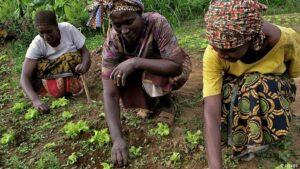
The CRDB alone offers at least 40 per cent of all loans issued to the sector and also unveils a vast opportunity package for local farmers via financing climate-resilient and adaptation projects in Tanzania, making available $200 million in agri-loans for the taking.
According to The Citizen, the adaptation projects target six million beneficiaries in Tanzania’s agriculture industry.
Top bankers are now taking agriculture as a viable product to invest in and develop. Tanzania’s best-performing retail bank, NMB, has set up a specialised agri-business department to serve and effectively attend to all farming financial aspirations.
Tanzania’s agriculture ministry has ramped up funding in research and development from $3.15 million to $4.86 million in the financial year 2022/2023. Further, irrigation is taking a new shift in Tanzania. According to the ministry, the area irrigated has increased from 695,045 hectares in 2020/2021 to 727,280 hectares in 2021/2022.
According to the United Nations Environment Programme (UNEP), the continent holds 30 per cent of…