

Trending
- African trade is growing despite the obstacles
- Why global capital is betting big on Africa’s digital promise
- Kenya posts stronger-than-expected Q1 growth at 5.3% on manufacturing rebound, tourism boom
- China’s new investment rules are about guardrails, not closed doors
- Zanzibar optimistic economic growth will hit 7.5% on tourism boom
- Kenya defies economic shocks to post record $22 billion in tax collections
- Forget South Africa: East Africa now rules in banking industry returns
- Lamu over Tanga: The commercial calculus that cost Tanzania $20bn refinery



Zanzibar legislators project 7.5% economic growth. President Mwinyi advocates private sector participation. Zanzibar recent talks with Brazil, US expected to bare fruits. Zanzibar has…
KRA reports record KES2.84 trillion (up 10.6%) in tax collections,…

UAE has cemented its spot as the main refining, and…


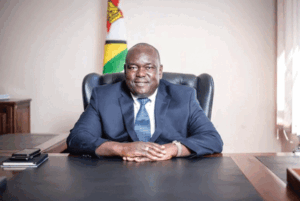
Oliver Chidawu had been the founding shareholder of an outfit called Heritage Investment Bank, and Douglas Munatsi was the founder of First Merchant Bank. Chidawu, in that period, also acquired a substantial portfolio of shares of companies listed on the Zimbabwe Stock Exchange. His portfolio comprised furniture retail and manufacturing companies as well as the manufacture and distribution of agricultural inputs.
In the 2000s, Chidawu was at his zenith. He had a portfolio of thriving businesses and had board seats on several Zimbabwe Stock Exchange listed companies like ABC Holdings Limited, Zimplow Limited, and Bindura Nickel Corporation.
Things started to go badly in the 2010s. Chidawu had made an unsuccessful expansion of his construction outfit to the United Kingdom. A difficult business environment coupled with expensive and unsustainable loans saw the businessman lose some of his prized interests.
Among Zimbabweans, there is a clear preference for the use of the United States dollar over the local currency. This is to the extent that there are some government services which cannot be accessed without United States dollars.
There are also some basic household commodities and goods that one will need to pay for using hard currency and will not be able to purchase if they have the local currency. Following on the issue of the currency crisis is the fact that exporters are already heavily burdened with operating costs in United States dollars.
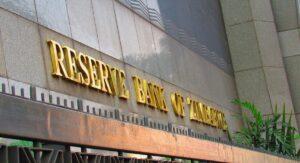
Regardless of whether it is an exporter or partial exporter, 40 per cent of all export proceeds generated by Zimbabwean-based exporters must be surrendered to the central bank. This is how the central bank has been funding its auction system to allocate foreign exchange to importers.
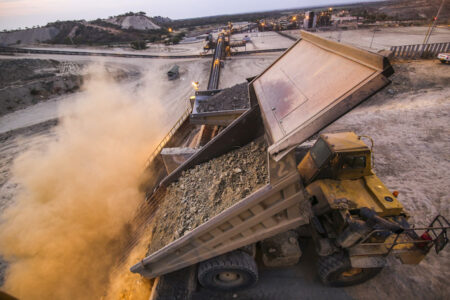
To be fair, the surrender requirements are not uniformly or universally applied. The central bank has introduced some concessionary measures. For instance, the tourism and agricultural sectors have been exempted from all foreign exchange surrender requirements. In the mining sector, players are allowed to retain up to eighty per cent of their export proceeds and only must surrender twenty per cent of their export proceeds.
Tax relief or a better legal framework for SMEs and start-ups would have been a major milestone for Tanzania’s private sector development agenda, however, the Finance Act does not address the heavy burden that start-ups and SMEs face when doing business in Tanzania and furthermore the proposed allocation of local government to the improvement of local entrepreneurship infrastructure was proposed, it was subsequently removed along with the contribution of local government finances to women entrepreneurs as well.
It would have been an opportunity for the Finance Act to enact amendments to certain Anti-Money Laundering Act and Economic Crimes Act provisions that treat tax offences as economic crimes or money laundering offences that are unbailable offences when they should be treated as tax offences that attract hefty fines and/or penalties.
Other areas that could have been amended are the problematic provisions of the Tax Administration Act including section 52(10) which provides that an objected assessment/decision is confirmed and subject to appeal if the Commissioner fails to determine it within 6 months of admission to name just a few.
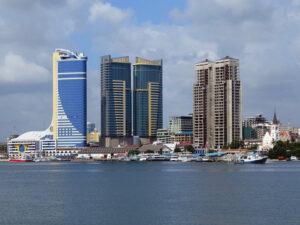
Further, the IMF argued that the ECF arrangement for Tanzania supports government priorities, strengthening fiscal space for much-needed social spending and high-yield public investment, resuming and advancing the authorities’ structural reform agenda and strengthening financial deepening and stability.
Moreover, the IMF statement noted that “the ECF arrangement is centred on supporting the economic recovery from the scarring effects of Covid-19 and coping with spillovers from the war in Ukraine; preserving macroeconomic stability, and advancing the structural reform agenda toward sustainable and inclusive growth.”
On a broader scale, the IMF’s financial support goes after levitating Tanzania’s essential priorities.
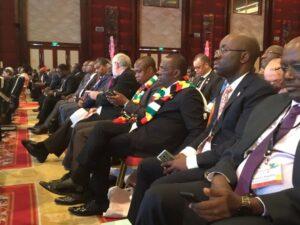
The summit that will be held from Tuesday, July 19, until Friday, July 22, will…
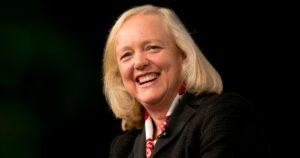
The United States (US) Senate has approved the nomination of Meg Whitman as the US ambassador to Kenya.
Whitman is one of the richest Americans. According to Forbes, her net worth is estimated at US$2.9 billion (Sh 343.3 billion). She sits on the boards of Procter & Gamble and General Motors.
The 65-year-old was vetted by the US’s Senate Foreign Relations Committee following her nomination by President Joe Biden in December 2021.