
Trending
- African trade is growing despite the obstacles
- Why global capital is betting big on Africa’s digital promise
- Kenya posts stronger-than-expected Q1 growth at 5.3% on manufacturing rebound, tourism boom
- China’s new investment rules are about guardrails, not closed doors
- Zanzibar optimistic economic growth will hit 7.5% on tourism boom
- Kenya defies economic shocks to post record $22 billion in tax collections
- Forget South Africa: East Africa now rules in banking industry returns
- Lamu over Tanga: The commercial calculus that cost Tanzania $20bn refinery



Zanzibar legislators project 7.5% economic growth. President Mwinyi advocates private sector participation. Zanzibar recent talks with Brazil, US expected to bare fruits. Zanzibar has…
KRA reports record KES2.84 trillion (up 10.6%) in tax collections,…

UAE has cemented its spot as the main refining, and…


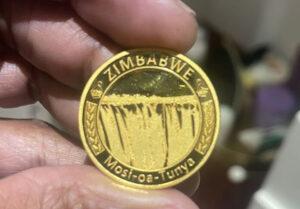
The new coins will be available for sale from 25 July in local currency, US dollars, and other foreign currencies at a price based on the prevailing international price of gold and the cost of production.
“The gold coins will be available for sale to the public from 25 July 2022 in both local currency (ZW$) and United States Dollars (US$) (and other foreign currencies) at a price based on the prevailing international price of gold and the cost of production. The coins will be sold through the Bank and its subsidiaries, Fidelity Gold Refinery (Private) Limited and Aurex (Private) Limited, local banks, and selected international banking partners. Entities selling the coins shall be required to apply to Know Your Customer (KYC) principles,” read the statement.
Aurex Private, a subsidiary of the central bank, is involved in diamond cutting and polishing over and above the manufacturing of jewellery.
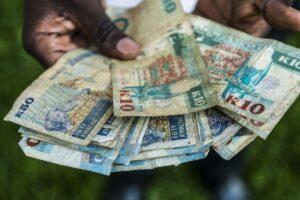
Zambia is Africa’s largest copper producer, which is one of the reasons it has one of the strongest currencies on the continent. The country possesses abundant natural resources, and because copper is the most prevalent metal, copper mining is carried out on a massive scale. This provides Zambia with a significant rise in foreign currency earnings from the sale of metals to other countries.
Bscholarly notes that the value of a currency is significant because it determines the economic performance of a country. This has a direct impact on a currency’s demand on the global market. Exchange rates compare one currency to another and provide an overview of a currency’s strength in the global marketplace. According to financial analysts, factors like interest rates, economic policies, and stability determine the strength of any currency.
Mining liberalization, a debt restructuring programme following default on debt repayments in 2020, and high commodity prices have also had a positive impact on the performance of the local currency.

Burundi’s future is bringing optimism via the change of the country’s health care system, despite…

Africa has been hailed as the next frontier in the provision of global oil and…
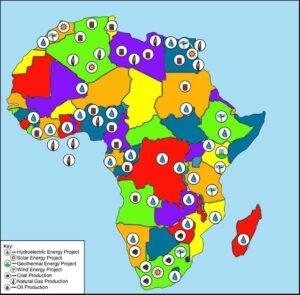
As Africa’s role in the global economy continues to garner prominence, it’s imperative for the…
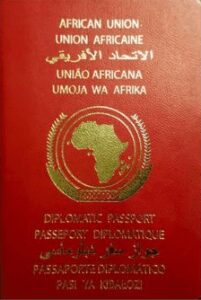
The African passport is a common passport document that is set to replace the existing nationally issued AU member states’ passport, and exempt bearers from having to obtain any visas for all 55 states in Africa. The three types of AU passports that are to be issued include the Ordinary Passport which is 32 pages and valid for five years, that will be issued to citizens and is intended for occasional travel such as business trips and vacations. The Official or Service passport will be issued to officials attached to government institutions, who have to travel on official business.
Finally, the diplomatic passport will be issued to diplomats and consuls for work-related travel and to their accompanying dependents. The passport has inscriptions in English, Swahili, Arabic, French and Portuguese.
The initiative aims at transforming Africa’s laws, which remain generally restrictive on the movement of people. This, despite political commitments, to bring down borders, with the view to promote the issuance of visas by member states, thereby enhancing the free movement of all African citizens within the continent. The passport will be biometric or an e-passport that meets international standards and will be modelled akin to the EU’s Schengen Zone one; to prevent fraud and illegal issuances, therefore, ensuring accountability. Leveraging on technology, the electronic system could be used to track movements, and hence aid in monitoring illegal travel and improve safe travel conditions.