
Trending
- African trade is growing despite the obstacles
- Why global capital is betting big on Africa’s digital promise
- Kenya posts stronger-than-expected Q1 growth at 5.3% on manufacturing rebound, tourism boom
- China’s new investment rules are about guardrails, not closed doors
- Zanzibar optimistic economic growth will hit 7.5% on tourism boom
- Kenya defies economic shocks to post record $22 billion in tax collections
- Forget South Africa: East Africa now rules in banking industry returns
- Lamu over Tanga: The commercial calculus that cost Tanzania $20bn refinery



Zanzibar legislators project 7.5% economic growth. President Mwinyi advocates private sector participation. Zanzibar recent talks with Brazil, US expected to bare fruits. Zanzibar has…

KRA reports record KES2.84 trillion (up 10.6%) in tax collections,…

UAE has cemented its spot as the main refining, and…
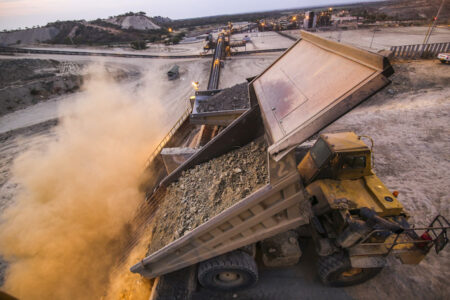



The current large-scale transition of the global economy, principally triggered by the current conflict between Ukraine and Russia as well as the standoff between China and the United States, creates a multipolar world map with new centres of power.
Brazil, Russia, India, China, and South Africa, also known as the BRICS nations, have enhanced industrial and financial might and are pushing for a seat at the global new power axis table. These nations are essential participants in international markets for products, services, and money, having a considerable, sometimes decisive, effect on how the global economy operates.
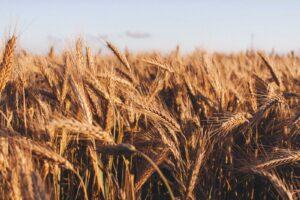
Dr. Tiberio Chiari, former Manager of the Agricultural Value Chains Programme in Oromia- Ethiopia, within the Ethio-Italian Development Cooperation Framework, offers some of these efforts that the government has implemented in the Ethiopian wheat value chain that other African countries can learn from.
Launch and execution of suitable growth policies
The government keeps working harder to ensure the country’s current dependence on wheat importation (of about 1.7 million tonnes) is fully nullified. After years of field experimentation, in 2021, the Ethiopian government launched its new plan.
The objective of the plan is to cut down the import of wheat by producing during the cold season in pastoral dry areas currently available in the Awash, Omo and Shebelle river basins. The approach includes the cultivation of 400,000 hectares of land and the deployment of a large-scale commercial farming model to achieve a productivity of 4.4 tonnes/ha.

As of 8th April, 2022, the Democratic Republic of Congo (DRC) officially joined the East African…
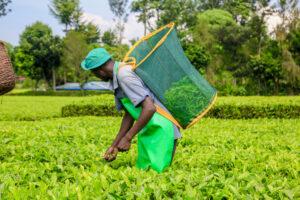
Trends suggest Kenya has outstanding resilience due to the quick bounce seen after the last election. Analysts believe the future leader must actively concentrate on transformation to allow the coupling of infrastructure investments to overall sustainability.
The future administration must establish legislation supporting political stability and social harmony to unleash industrial sector development. The adjustments will generate jobs, attract international investors, and lessen import dependency.

There are increasingly more and more ‘outbreaks’ of non-communicable diseases in Africa and more so…
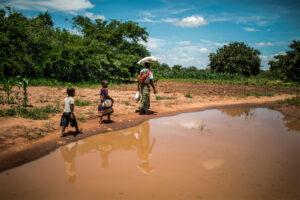
Africa’s fast population growth exacerbates the issue. According to most estimates, Africa’s population will double by 2050 and then double again by 2100, finally reaching over 4 billion by the end of the century. Feeding Africa’s rising population will need considerable breakthroughs in the continent’s food systems.
However, agricultural progress may be difficult if African farmers are subjected to more severe climatic effects. To prepare for these future difficulties, one must understand how climate change will materialize in Africa and its impact on the continent’s agricultural systems.