

Trending
- African trade is growing despite the obstacles
- Why global capital is betting big on Africa’s digital promise
- Kenya posts stronger-than-expected Q1 growth at 5.3% on manufacturing rebound, tourism boom
- China’s new investment rules are about guardrails, not closed doors
- Zanzibar optimistic economic growth will hit 7.5% on tourism boom
- Kenya defies economic shocks to post record $22 billion in tax collections
- Forget South Africa: East Africa now rules in banking industry returns
- Lamu over Tanga: The commercial calculus that cost Tanzania $20bn refinery



Zanzibar legislators project 7.5% economic growth. President Mwinyi advocates private sector participation. Zanzibar recent talks with Brazil, US expected to bare fruits. Zanzibar has…
KRA reports record KES2.84 trillion (up 10.6%) in tax collections,…

UAE has cemented its spot as the main refining, and…


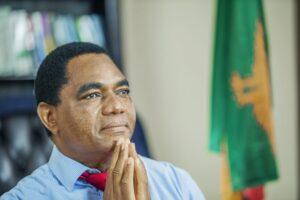
Zambia has dealt with the legacy of years of economic mismanagement, with an especially inefficient public investment drive. Zambia has been in debt distress. Therefore, the country needed a deep and comprehensive debt treatment to place public debt on a sustainable path.
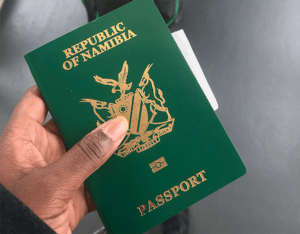
Once fully embraced by all Member States, the free movement of people within Africa is expected to have many important positive effects, including an increase in intra-African trade, commerce, and tourism; easier labour mobility; knowledge and skill sharing within Africa; the promotion of pan-African identity, social integration, and tourism; an improvement in trans-border infrastructure and shared development; the encouragement of an all-encompassing approach to border management; and the promotion of the rule of law, human rights, and shared development
Nationals of Namibia and Botswana will no longer require passports to travel between the two nations after the presidents of those nations decided to open their borders to one another.
The declaration was made at the opening ceremony of the Botswana-Namibia binational commission at the Gaborone International Convention Center by Namibian President Hage Geingob.
The Tanzanian Parliament recently passed a US$ 294 million budget to fund the country’s Ministry…

A balanced meal, three times a day, a basic need few in Africa can afford.…
The head of the Portuguese government was speaking in Maputo at a joint press conference with the President of the Republic of Mozambique, with whom he met as part of the 5th Luso-Mozambican Summit.
The Autorização de Residência para Actividades de Investimento – first introduced in 2012 and commonly known as the ‘Golden Visa’ – is a residence permit that provides qualifying non-EU / EEA / Swiss citizens and their families with full rights to live, work and study in Portugal.
According to The Portugal News, an alternative to the Golden Visa is the Portugal Passive Income Visa – also known as a D7 Visa – which provides residency status to non-EU / EEA / Swiss citizens, including retirees, who intend to relocate to Portugal and are in receipt of a reasonable and regular passive income. The D7 Visa is aimed at those who intend to live in Portugal, so holders must spend six consecutive months or eight non-consecutive months per year in Portugal.
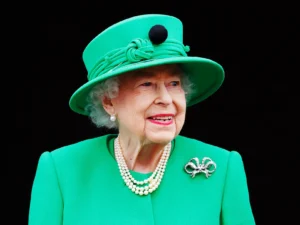
Queen Elizabeth II’s leadership of the Commonwealth for the past seven decades has remained admirable. She steered the institution’s evolution into a forum for effective multilateral engagement whose potential to drive tremendous socioeconomic progress remains incontestable and redounds to the Queen’s historic legacy.
Over the years, Britain’s interactions with its former colonies in Africa have grown to diplomacy, aid, trade and economic growth. The Queen has, over the years, remained highly revered and recognized as the head of the Commonwealth. The Queen has now rested. Her death breeds a wave of uncertainty about the future of the organization. The possibility of the status of the British monarch also disappearing becomes more visible. At this point, the rout of the British monarchy in Africa could be complete.