Trending
- African trade is growing despite the obstacles
- Why global capital is betting big on Africa’s digital promise
- Kenya posts stronger-than-expected Q1 growth at 5.3% on manufacturing rebound, tourism boom
- China’s new investment rules are about guardrails, not closed doors
- Zanzibar optimistic economic growth will hit 7.5% on tourism boom
- Kenya defies economic shocks to post record $22 billion in tax collections
- Forget South Africa: East Africa now rules in banking industry returns
- Lamu over Tanga: The commercial calculus that cost Tanzania $20bn refinery



Zanzibar legislators project 7.5% economic growth. President Mwinyi advocates private sector participation. Zanzibar recent talks with Brazil, US expected to bare fruits. Zanzibar has…
KRA reports record KES2.84 trillion (up 10.6%) in tax collections,…

UAE has cemented its spot as the main refining, and…

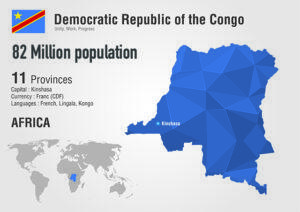
In 2020 Democratic Republic of the Congo was placed as the 87th economy in the world in terms of GDP (current US$), number 70 in total exports, number 105 in total imports, number 187 economy in terms of GDP per capita and the number 123 most complex economy according to the Economic Complexity Index (ECI).
According to figures from the Observatory of Economic Complexity (OEC), a global data visualization tool for international trade, as of 2020, the top exports of the Democratic Republic of the Congo are refined copper, cobalt oxides and hydroxides, cobalt, raw copper, and copper ore, exporting mostly to China, Tanzania, United Arab Emirates, South Africa, and Singapore.
The top imports of the Democratic Republic of the Congo are documents of title (bonds etc.) and unused stamps, packaged medicaments, sulphur, refined petroleum, and poultry meat, imported mostly from China, the United States, Zambia, South Africa, and India.

The calls for concrete, concomitant, and substantive actions against carbon emissions are not an exaggeration. The effects of climate change are obvious, even for the casual observer to see. Presently a devastating hurricane, Ian has made landfall on the United States coast of Florida. The tropical storm which tore through Cuba and made landfall in the United States a day ago has reportedly left an estimated 2.5 million people without electricity.
NBC News called hurricane Ian one of the most powerful storms ever to hit the United States. The hurricane it is said, has caused devastation and flooding that has left residents of Miami and Florida trapped in their homes. Hurricane Ian has been described as a category 4 hurricane with speeds of as much as 150 miles per hour or 240 kilometres per hour. Speeds like that make such a storm a threat to life and property. President Joe Biden has declared a major disaster in Florida and ordered that Federal assistance be rendered to the state efforts.
There have been reports that the polar ice caps are melting at a rapid pace and may no longer exist in this current generation. There have also been media warnings that should this eventuality become inevitable, then the low-lying parts of Denmark and surrounding countries could be submerged under water. The impact of climate change has not spared the African continent. It must be said that the impact of climate change is more devastating in Africa.
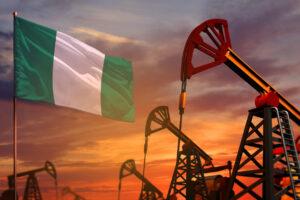
There is still plenty to accomplish. Even after a year, the PIA is still in a transitional period, with committees deliberating its practical implications. One seasoned Nigerian expert questioned how much the NNPC would change due to its transition into a limited liability corporation. Still, post-PIA data suggests that Nigeria’s oil and gas industry may be moving in the right direction.
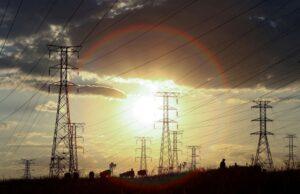
Zimbabwe has been experiencing intermittent power generation shortfalls due to an ageing plant at its Kariba hydropower station and the main coal-driven power generators at Hwange.
According to Crisis 24, Zimbabwe will likely remain susceptible to rounds of load shedding through 2022 and possibly beyond if additional power production capacity is not made available. In mid-June, a circular from Meikles Hotel in Zimbabwe said that they have been operating on generator power for about a week and were now offering guests buckets of hot water to bath with. This is also one of the effects of the increased power cuts evident, although it is a few months apart.
Crisis 24 added that temporary commercial and communications disruptions are possible while load shedding and unscheduled disruptions are taking place; cellular and mobile services could be affected. Traffic disruptions and longer driving times are possible during these periods due to malfunctioning traffic signals. Power outages could also result in the temporary unavailability of essential services such as ATMs and filling stations.
Ghana’s case specifically plays out with the dramatic effect consistent with a Shakespearean tragedy. The west African nation ironically is a darling of the West in terms of foreign direct investment. Yet, its debt levels have breached what multilateral institutions consider to be sustainable. A painful irony in the case of Ghana is that it was offered the opportunity to renegotiate the terms of its debts through the World Bank’s Debt Service Suspension Initiative. However, Ghana did not elect to participate.
A second painful irony is that Ghana, this time around, does not owe most of its debts to multilateral institutions like the International Monetary Fund or the World Bank. It owes the bulk of its debt to private lenders like the world’s largest asset manager Black Rock, and its has expressed that it has no interest in renegotiating the terms of Ghana’s sovereign debt.
If Ghana had borrowed from the multilateral institutions mentioned formerly, it would have the scope to renegotiate its loans as these institutions tend to be more conciliatory and concessionary in their dealings with borrowers, unlike the private lenders who are driven by the profit motive and the need to create value for shareholders.
Because of erratic economic policy, Zimbabwe continues to be the sick man of the Southern…