Trending
- African trade is growing despite the obstacles
- Why global capital is betting big on Africa’s digital promise
- Kenya posts stronger-than-expected Q1 growth at 5.3% on manufacturing rebound, tourism boom
- China’s new investment rules are about guardrails, not closed doors
- Zanzibar optimistic economic growth will hit 7.5% on tourism boom
- Kenya defies economic shocks to post record $22 billion in tax collections
- Forget South Africa: East Africa now rules in banking industry returns
- Lamu over Tanga: The commercial calculus that cost Tanzania $20bn refinery



Zanzibar legislators project 7.5% economic growth. President Mwinyi advocates private sector participation. Zanzibar recent talks with Brazil, US expected to bare fruits. Zanzibar has…
KRA reports record KES2.84 trillion (up 10.6%) in tax collections,…
UAE has cemented its spot as the main refining, and…
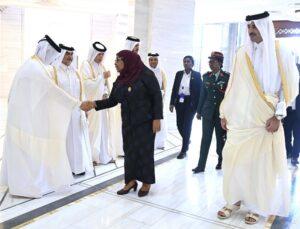
By agreeing to remove double taxation the countries also agree to remove barriers to bilateral investment and trade between one other. It is just as well because trade and investment between the two are growing.
Only recently the UAE renewable energy firm Masdar went into a deal with Tanzania to conduct several solar and wind power projects in the country. Similarly, the Emirates also signed several trade financing agreements with a few countries in West Africa as the UAE makes its mark in global economic growth.
Qatar is only the latest of the United Arab Emirates that Tanzania is making trade and investment deals with. In February this year, Tanzania participated at the World Expo Dubai 2020 to promote its products and opportunities.
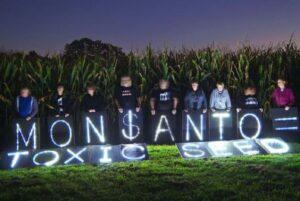
While Tanzania has approved genetic engineering research and has no issue with the safety of GMOs, across the continent in Nigeria, the story is different. The leading economy in Africa is against genetic engineering and/or the consumption of GMOs.
Stakeholders are calling on the government to revisit its biosafety laws to protect its people from what they describe as the uncertain safety of GM products.
Local media in Nigeria report worrisome findings of a survey by the Health of Mother Earth Foundation (HOMEF), which was conducted across nine major cities in the West African country that revealed over 30 food products found in the Nigerian market are GM products.
The products range from vegetable oils and cereals to ice cream and spices. Ok, so there are various GMOs on supermarket shelves in Nigeria. Is it a crime? No, in fact it is perfectly legal to import, sell and consume GM products in Nigeria.

To combat climate change and to mitigate its effects, Africa must adopt modern agriculture technologies, machine innovations and engineering for resilient crop varieties. Modern agriculture technologies help to manage farmers’ risks and even improve product quality which in turn brings about better prices.
Also, when it comes to modern agriculture technologies, there is renewed attention towards value addition, agro-processing and post-harvest management. These factors add to the need for increased investment in agriculture because they all translate to increased income and creation of employment opportunities.
This brings us to the question of funding. Where are countries supposed to get the money to invest in agriculture? To answer this question, African countries, almost all 55 of them, signed the 2003 Maputo Declaration, pledging to dedicate 10% of their annual budget to agriculture, but to date, few have done so.
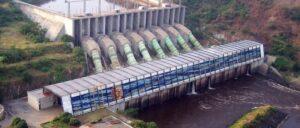
The dam is to be built in six phases by either of two rival consortiums, one led by China’s Three Gorges Corporation which has said electricity could be generated within four to five years. A Spanish engineering giant Actividades de Construction Services (ACS), has suggested Inga 3 would take six years to build.
On completion, that complex is estimated to have an output capacity of 42 GW, generating more electricity than the world’s two biggest hydropower plants, Three Gorges on the Yangtze River in China (22.5 GW of generation capacity) and Itaipu in South America (14 GW of generation capacity), combined. This will make it the world’s largest power plant.
Displaced people
Inga III is expected to divert water and flood the Bundi Valley for use as a reservoir. This will displace over 35,000 people who may have to move in phase 1 and 25,000 people later, including many who Inga I and Inga II had already displaced.
Bundi Valley is historically home to sacred and ancestral sites, cemeteries and the disruption, loss of livelihood and identity are threatened by Inga III.
In terms of foreign exchange reserves, according to HM Treasury, Britain has net official reserves of US$ 114 billion whereas it plans to embark on an economic plan to pull itself out of the stagflation quagmire by spending no less than US$ 173 billion dollars. If Britain were to use all its foreign exchange reserves to meet the cost of its economic plan it would run short of money and still have a deficit of US$ 59 billion dollars before fully implementing its plan.
Fair enough and granted, governments do not always have to spend cash that they have on hand. They can always borrow if they do not have sufficient cash to finance their operations.
Herein is the problem, the current economic environment does not support borrowing either by individuals, households, or governments. The cost of borrowing is just simply too high either by domestic debt or foreign debt. The Bank of England in acting against rising inflation has been raising interest rates. This translates to higher borrowing costs and reduced inflation.
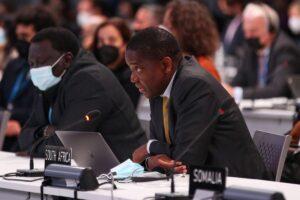
The goal of JETP is to help South Africa decarbonise and switch to renewable energy for its power needs as aligned in the country’s Nationally Determined Contribution emissions goals.
Through the program, South Africa will mobilise an initial commitment of $8.5 billion for the first phase of financing, which has now been secured and whose distribution plan will be announced next month in Egypt at the COP27.
“The Partnership is expected to prevent up to 1-1.5 gigatonnes of emissions over the next 20 years and support South Africa to move away from coal and to accelerate its transition to a low emission, climate resilient economy,” reports the European Commission.