
Trending
- African trade is growing despite the obstacles
- Why global capital is betting big on Africa’s digital promise
- Kenya posts stronger-than-expected Q1 growth at 5.3% on manufacturing rebound, tourism boom
- China’s new investment rules are about guardrails, not closed doors
- Zanzibar optimistic economic growth will hit 7.5% on tourism boom
- Kenya defies economic shocks to post record $22 billion in tax collections
- Forget South Africa: East Africa now rules in banking industry returns
- Lamu over Tanga: The commercial calculus that cost Tanzania $20bn refinery



Zanzibar legislators project 7.5% economic growth. President Mwinyi advocates private sector participation. Zanzibar recent talks with Brazil, US expected to bare fruits. Zanzibar has…
KRA reports record KES2.84 trillion (up 10.6%) in tax collections,…

UAE has cemented its spot as the main refining, and…


Banks provide working capital for the day to day running of the majority of corporate Zimbabwe. Most suppliers work on a 30 to 90-day credit facility where supermarkets get access to products and then pay for the merchandise later. With no line of credit, there has been a shock to the supply chain. A few days after the announcement, companies started issuing press statements stating their failure to honour pre-standing contracts. Within a week, certain products started disappearing from shelves.
Cooking oil, cornmeal, and sugar have vanished from supermarket shelves. A precedent that echoes the dreaded year 2008 when another policy inconsistency made supermarkets into ghost towns. Zimbabweans know the signs of a dying economy and remember how tough life became in 2008.

Kenya has expressed interest in pursuing a better bilateral relationship with the United Arab Emirates…

Before Mnangagwa’s statement, the Zimbabwean currency was officially valued at 165.94 to the US dollar,…
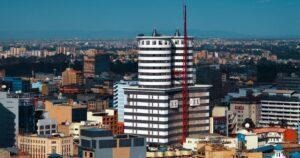
Kenyan companies saw renewed deterioration in business conditions in April 2022, on the back of…

President Mnangagwa said his Government is convinced that the recent exchange rate movements were driven by negative sentiments by economic agents as opposed to economic fundamentals.
“These negative sentiments have been propagating adverse expectations on future inflation and exchange rate movements, thus giving rise to artificially high demand for foreign currency as economic agents hedge against expected high inflation,” he added.
The Government listed measures that are expected to restore macroeconomic stability, support the current robust economic recovery trajectory, boost economic confidence, increase the appeal of the local currency, preserve value for depositors and investors and deal with market indiscipline.
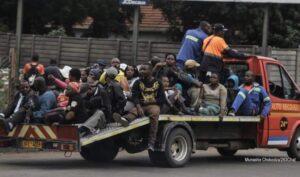
The Zimbabwean government introduced a transportation system that has the Zupco taking lead in ferrying passengers across the nation. For now, the major part of the ZUPCO fleet remains the private bus and commuter omnibus operators under the franchise agreement.
However, the busses on the ground are not enough and this has led to the rise of the ‘Mushika-Shika’ system (private cars illegally ferrying passengers to and from work). Operators who are not under the franchise have of late been taking advantage of the shortage of buses to offer transport to commuters at higher fares than those charged by Zupco.
The police at the moment is running a ‘No Mushika-shika’ operation and this has made movement extremely difficult in Zimbabwe. Police mounted roadblocks on all major roads, arresting motorists carrying more than three people in their vehicles. According to New Zimbabwe, commuter omnibuses that are not registered with the ZUPCO franchise are either being impounded or asked to drop passengers.