Trending
- African trade is growing despite the obstacles
- Why global capital is betting big on Africa’s digital promise
- Kenya posts stronger-than-expected Q1 growth at 5.3% on manufacturing rebound, tourism boom
- China’s new investment rules are about guardrails, not closed doors
- Zanzibar optimistic economic growth will hit 7.5% on tourism boom
- Kenya defies economic shocks to post record $22 billion in tax collections
- Forget South Africa: East Africa now rules in banking industry returns
- Lamu over Tanga: The commercial calculus that cost Tanzania $20bn refinery



Zanzibar legislators project 7.5% economic growth. President Mwinyi advocates private sector participation. Zanzibar recent talks with Brazil, US expected to bare fruits. Zanzibar has…
KRA reports record KES2.84 trillion (up 10.6%) in tax collections,…
UAE has cemented its spot as the main refining, and…

Last March the IMF and Mozambique announced they’ve reached a staff-level agreement on a US…
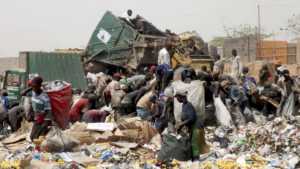
Nigeria, Africa’s largest economy, has not been spared either. Food staples are scarcer in Nigeria than ever before as the government tries to deal with a record inflation rate, indicating that the country may be in danger of experiencing a food crisis. Staple food costs have risen for a third year as Africa’s most populous nation succumbs to the onslaught of causes that are pushing an estimated 200 million people into poverty.
Because it relies on oil imports, Nigeria, a major petroleum producer, has a very fragile economy. Nigeria has been left vulnerable as oil prices have surged to a historic high. Increased political instability, the consequences of climate change, and the COVID-19 aftermath have all harmed Nigeria’s economy, sending the value of its currency down even more against the dollar.
As a result, the poverty rate in the country has remained at around 50%. According to the UN’s food organization, millions of people currently experience food insecurity, which is anticipated to rise this year. Nigeria now has the world’s greatest number of impoverished people. As many as four out of every ten individuals live below the poverty line, which means they earn less than $1 a day.
Nigeria is currently the United States’ 54th largest goods trading partner, with US$7.8 billion in…
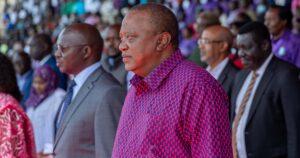
President Uhuru Kenyatta has announced a minimum wage increase of 12 per cent from 1st…
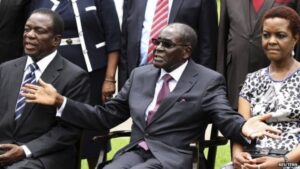
At the dawn of his administration, President Mnangagwa promised to address the country’s record on human rights, targeting those that oppress political activists and opposition, political party supporters, during elections. He also said his government would introduce economic policies favouring foreign investment. His mantra was ‘Zimbabwe is Open for Business. In its quest to kick-start itself to its former glory, the Zimbabwean government came up with economic policies such as the Look East Policy, and Indigenization, but they failed to yield results.
Mnangagwa’s administration has been rallying anti-sanctions sentiments, embarking on a re-engagement policy and the ‘Zimbabwe is Open for Business mantra. But, the sanctions have remained in place.
According to Afrobarometer, Mnangagwa has managed to mobilize support against the sanctions. In October 2019, leaders of the Southern African Development Community (SADC) agreed to campaign for the removal of the sanctions, arguing that they destabilize Zimbabwe’s economy and adversely affect the region. ZimEye reported a group of ZANU-PF supporters who camped near the U.S. Embassy in Harare on March 29, 2019, and vowed to stay put until the sanctions were lifted.
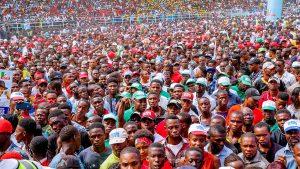
President Buhari of Nigeria is keen to complete critical infrastructure projects as elections approach next year.
One of these projects is the Lagos light rail train project, which has gathered dust for decades. The project is back in motion, with the state government optimistic that the first phase of the Blue Line – one of the two lines to form the Lagos Rail Mass Transit (LRMT) system – will be operational this year.
Power infrastructure is a crucial area of interest. The country is rushing on the six-year multi-billion-dollar pact with German company Siemens to expand and revamp the dysfunctional national grid to unlock at least 25,000 megawatts (MW) of electricity by 2025.
On the renewable energy side, the government is working on the 3,050 MW Mambilla Hydropower Project in Taraba, which has dragged on for over 40 years despite significant budgetary allocations.