

Trending
- African trade is growing despite the obstacles
- Why global capital is betting big on Africa’s digital promise
- Kenya posts stronger-than-expected Q1 growth at 5.3% on manufacturing rebound, tourism boom
- China’s new investment rules are about guardrails, not closed doors
- Zanzibar optimistic economic growth will hit 7.5% on tourism boom
- Kenya defies economic shocks to post record $22 billion in tax collections
- Forget South Africa: East Africa now rules in banking industry returns
- Lamu over Tanga: The commercial calculus that cost Tanzania $20bn refinery



Zanzibar legislators project 7.5% economic growth. President Mwinyi advocates private sector participation. Zanzibar recent talks with Brazil, US expected to bare fruits. Zanzibar has…
KRA reports record KES2.84 trillion (up 10.6%) in tax collections,…

UAE has cemented its spot as the main refining, and…




This comes after the National Treasury exempted the digital lender from a law limiting individual shareholding in microfinance to 25 per cent.
In a gazette notice signed by the Cabinet Secretary National Treasury, Ukur Yatani, the San-Francisco based fintech has been exempted from Section 19 of the Microfinance Act (for 4 years through 2025).
Currently, individuals or single entities are barred from holding more than a 25 per cent stake in a microfinance institution.
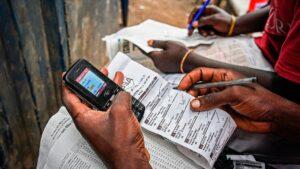
Sixty-nine per cent of Kenyan businesspeople said that digital payments have positively impacted their businesses as they can easily track expenses and income returns, which reduces errors and enables faster transactions.
The Central Bank of Kenya (CBK) has been pushing mobile money payments recently. Last year, following the outbreak of the COVID-19 pandemic, the Kenyan government released a directive through CBK, instructing commercial banks and payment service providers to halt charges on all transfers from mobile money wallets and bank accounts.
Despite the positive trajectory in digital payments adoption in Africa, Visa says there still is room for improvement.

The programme aims at empowering extension officers who would, in turn, train farmers through expert guidance. Chemba district targets to produce 100,000 tonnes of sunflower in the 2022 season to increase the production of edible oil in the country.
President Samia’s administration has plans to improve cotton farming, among other crops. The government has taken measures to improve sunflower production through an increased budget allocation for the Agricultural Seed Authority, up from Tsh.5.42 billion (US$2.3 million) in 2020-2021 to Tsh.10.8 billion (US$4.7 million) in 2021-2022.
In 2021, the government boosted the capacity of the Tanzania Agricultural Development Bank (TADB) by providing Tsh.208billon (US$90 million) to the bank to reach more farmers and finance them. It also empowered the National Food Reserve Agency (NFRA) to purchase 95,000 tonnes of maize from farmers.

TotalEnergies CEO Patrick Pouyanne said that the memorandum of understanding will see the French firm produce Liquefied Petroleum Gas (LPG) and also deploy large-scale renewable energy technologies to identify areas of commercial investment.
Uganda’s Minister of Energy and Mineral Development, Ruth Nankabirwa said in a speech ahead of the signing that the agreement would put the country on the path to first oil in 2025. She added that EACOP would create approximately 160,000 jobs during the project’s development.
The agreement dictates TotalEnergies will develop solar, wind, geothermal, and other renewable technology power projects in Uganda to add a combined installed electricity output capacity of 1 Gigawatt by 2030 to the current 1.2-Gigawatt production.

The agency also asked people to stay away from the missing monkeys and immediately call 911 whenever they saw any of them.
Animal rights activists in the US heavily criticized the crash. People for the Ethical Treatment of Animals (PETA) and an animal rights group contacted Kenya Airways chief executive, Allan Kilavuka, and the chairman, Michael Joseph, showing dissatisfaction over the treatment of monkeys.
PETA prompted KQ to reconsider subjecting the monkeys to long flights and immediately taking them to laboratories for experiments because that could cause them torture and even lead to their death.

In this context, it is only intelligent and strategic for any country, especially developing economies, to start laying down foundations on how they will work in the coming future. We take a look at Tanzania.
The WEF argues that new technologies, demographic shifts, and the impact of COVID-19 on the labour market have been radically transforming how organizations conduct business and the type of skills their human capital needs to support them thrive in this new era of work.
“Nearly 50 per cent of companies expected that by 2020, automation will lead to some reduction in their full-time workforce, while more than half of all employees will require significant re-skilling and upskilling,” notes WEF.