

Trending
- 2026 is turning out as a defining year in geopolitics, but for whom?
- Bitcoin Surges 20%: How Crypto Holders Are Exploring Cloud Mining Income in 2026
- Saudi Arabia and Tanzania pledge to deepen bilateral trade ties
- Tanzania rewrites its digital investment playbook
- Ethical sourcing boosting demand for Tanzania organic cotton
- DRC deploys 70,000 Ebola vaccine doses in high-stakes trial against deadly Bundibugyo strain
- Kenya’s private sector optimistic on growth despite inflation and geopolitical risks
- AfDB and Standard Bank ink $332 million social bond deal to fund South African SMEs



Bitcoin is back in the spotlight after one of its strongest rallies of 2026. BTC has climbed roughly 20% this week, briefly moving above…

Latest investment fund pool cover products from Britam Asset Managers Limited…

Family business, which constitutes the backbone of the continent’s enterprise…



KCB Bank Kenya has invested over KSh 120 billion to support Oil Marketing Companies (OMCs)…
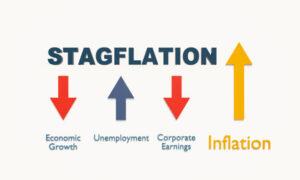
Other reasons that can best explain the origins of stagflation include falling productivity when an economy experience falling productivity. This could be because workers becoming less efficient. The consequence of this will be falling productivity and rising costs. Structural unemployment is another cause in cases where there is a decline in traditional industries.
This creates a tendency for unemployment to rise while productivity falls. Zimbabwe, during its lost decade from 2000 to 2010, experienced this kind of stagflation.
More generally and more contextually, stagflation comes from supply shocks. These result from supply chain disruptions. Where demand for goods and services increases or is unchanged, the result is rising prices and lower productivity.
Stagflation is not desirable in an economy because citizens of a country are generally happy when prices are low and the economy is booming.

Due to globalization, countries worldwide are increasingly interdependent. This is why a conflict between two countries in Europe will cause ripple effects that the rest of the world feels. On this basis, the World Bank projects that economic growth in 2022 will slump. Not slow down but slump. The choice of words is intentional.
Malpass now believes that the world is in for several years of above-average inflation and below-average growth. This projection will most likely lead to destabilizing consequences for low- and middle-income economies. These low- and middle-income countries are largely on the African continent. Stagflation which the world last saw in the 1970s, will have a devastating effect on countries in Africa. Most countries in the continent do not have the resources like Germany to muster multibillion Euro or multi-billion United States dollar packages to subsidize the economic plight of their citizens.
World Bank forecasts a sharp downgrade of its global economic outlook and anticipates a sharp contraction in the economy. The global economy is expected to slow down from the GDP growth rate achieved in 2021 of 5.7% to 2.9% in 2022. The downgrade from the multilateral institution is because of the war in Ukraine, which has triggered food and energy increases as well as supply and trade disruptions.

The ZSE’s 2020 research found that individual Zimbabweans made a meagre amount of contributions to the regional capital market. A few of the obstacles mentioned are a lack of understanding of the investment process and the notion that it is the realm and preservation of the wealthy in society.
According to an article by Mail and Guardian published May 25, 2022, this survey prompted the bourse to launch ZSE Direct, a product that would make access to the market straightforward even for first-time investors.

Absa Bank Kenya has announced the exit of its CEO Jeremy Awori after nearly ten…
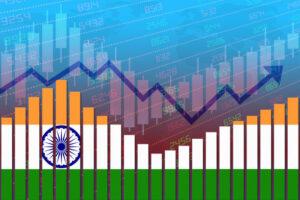
In terms of the economic outlook for India, opinions are divided given the headwinds facing the global economy presently, like the cost-push inflation from increases in food prices and soaring energy costs brought on by the Russia-Ukraine conflict. Deloitte, the global consulting and accounting firm, is optimistic about the economic growth prospects of India. It is projected that the Asian country will remain the fastest growing economy in the world, with growth projected to come in at between 7.1% to 7.6% in the years 2022 to 2023 and 6% to 6.7% in the years 2023 to 2024.
How has India managed to bullet-proof its economy to the extent that it has managed to register economic growth within a context of slowing global economic growth? According to Deloitte, India is primarily a domestic demand-driven economy, with consumption and investments contributing to 70% of the economic activity.
According to the Reserve Bank of India (RBI) analysis of 10,000 listed companies, businesses have seen a steady net profit-to-sales growth over the past year and are sitting on piles of cash. This fact highlighted by the global accounting firm is a key contrast with African economies, which tend to be driven by factors other than domestic demand. African economies generally suffer from a disproportionate dependence on foreign demand to drive economic growth.