

Trending
- Minisend grows Kenya presence as official payment partner of Africa Blockchain Festival 2026
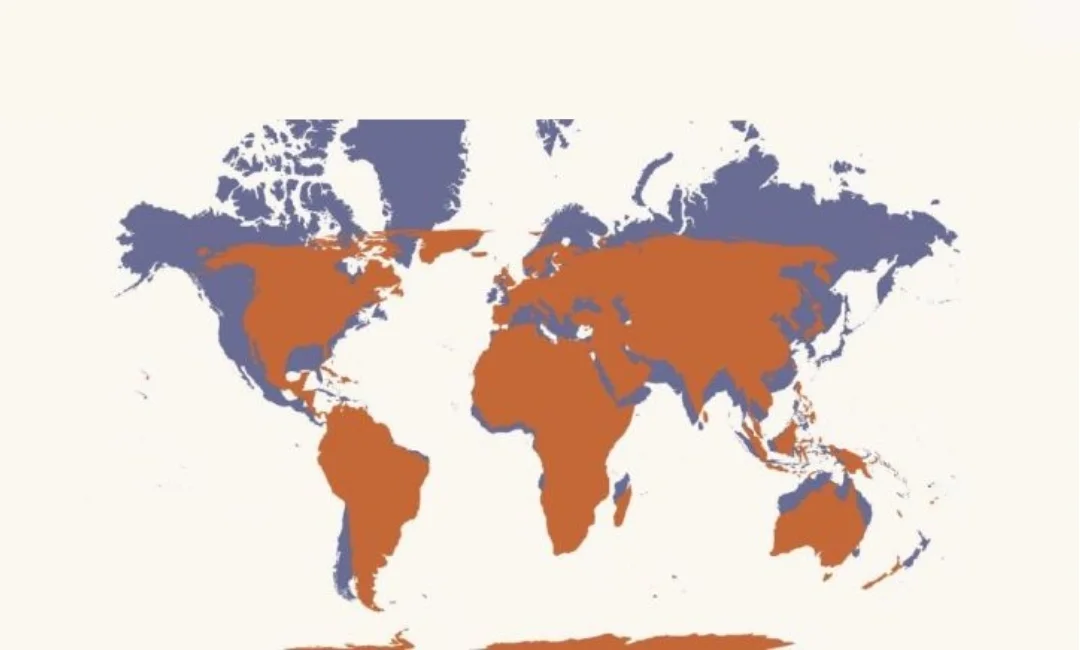
- UN resolution challenges world maps that make Africa look smaller
- Zimbabwe edges closer to arrears payment, debt restructuring and reset of ties with IMF
- Tanzania coffee industry mulls commercializing wastes to spur fresh revenue streams
- Reasons for African Currencies Growing in Significance for Business Decisions
- Nairobi forum launches push to close Africa’s climate protection gap
- East Africa’s lessons from India’s economic growth playbook
- Tanzania and Serbia to revive falling trade relations


Browsing: Tanzania

On October 14, 2018, the Kenya Space Agency (KSA) presided over the launch of a 1U nanosatellite, Kenya’s first space mission. The event took place at Konza Technopolis, a large technology hub planned on the outskirts of Kenya’s capital, Nairobi.
At the launch, some five Kenyan top universities competed for top position each presenting its own satellite model with the primary payload being a low-resolution camera.
The competition was meant to see which university’s satellite camera would be able to perform remote sensing applications. The project primarily focused on using satellites to provide imagery for crop monitoring to assist in smart agriculture.

In the past decade alone, there has been a proliferation of new means of digital payment that to a great extent has brought about financial inclusion in a way that traditional platforms like banks and money lenders couldn’t.
It is the introduction of these new non-bank financial services providers generally referred to as FinTechs that has conjured the need for digital financial services regulations. Towering above FinTechs are Mobile Network Operators (MNOs), commanders of the Digital Financial Services market.
MNOs were lucky enough to find a ready and defined market to usurp. MNOs already had an existing client base and an enormous network of agents that were using their mobile telecom services for texting and calling.

Learning poverty is costing African young learners dearly Median international school fees in Africa span from US$4000 to US$10000 in…
According to the review, money supply to accommodative monetary policy measures and supportive fiscal policy during the first half of 2021/2022.
Tanzania is a nation whose economy is driven by the healthy participation of the private sector, the sector fair well amid slow times.
Credit to the private sector grew by 5.9 per cent compared with an average of 5.1 per cent from July to December 2020.

Constructed under the East African Community regional development project, the road is key to the much aspired regional integration and opens doors to the ports for Africa’s landlocked countries like Uganda, Rwanda and the DRC.
Owing to its importance, the African Development Bank and the Japan International Cooperation Agency (Jica) are among the project funders as well as the Tanzanian government itself through its own internal revenue.
Complete with spar roads, the highway will open up enormous economic potential of each region it passes. On the other side of the border, the Kenyan government has also begun work on the connecting 40km project Mtwapa-Kilifi Road, part of the overall 460km Malindi-Tanga-Bagamoyo East African corridor development project.

So now the government through its Ministry for Agriculture has decided to take action to increase domestic production of edible oils. To do this, the government has developed several strategic approaches including upgrading peasant technology.
This initiative fits into the country’s overall industrialization initiative that targets mainly agricultural mechanization. By increasing funding for the set up of factories and smaller production plants, Tanzania is able to increase its output of edible oils.
However, the country needs to increase seed production hand in hand with increasing its value chain capacity. This is where the Tanzania Agricultural Research Institute (Tari) based in Dar es Salaam comes in. A globally-renowned research institute that develops hybrid seeds among other agricultural research works.

Tanzania Railway Investment In the most recent development, an additional 282km of the railway are been constructed to connect Tanzania…

While in France, President Samia attended the One Ocean Summit in Brest. The three-day summit discusses ocean safety and actions against the threats to the ocean. Among other things, initiatives launched at the summit aim to protect the marine ecosystem and develop sustainable fisheries.
The initiatives seek to fight pollution particularly from plastics as well as to respond to the impacts of climate change and to advocate for improved governance of oceans.
This State Visit follows last year’s visit to Tanzania by French Minister for Foreign Trade and Economic Attractiveness, Franck Riester, who visited the East African economic hub in October 2021.

In this context, it is only intelligent and strategic for any country, especially developing economies, to start laying down foundations on how they will work in the coming future. We take a look at Tanzania.
The WEF argues that new technologies, demographic shifts, and the impact of COVID-19 on the labour market have been radically transforming how organizations conduct business and the type of skills their human capital needs to support them thrive in this new era of work.
“Nearly 50 per cent of companies expected that by 2020, automation will lead to some reduction in their full-time workforce, while more than half of all employees will require significant re-skilling and upskilling,” notes WEF.

The RoRo, along with the ramp and terminal were completed as of March 2021 after three years of dedicated construction works. With its completion, vehicles can now be driven, not carried, off the ship.
With this development, large vessels that took up to four days to offload and turn around now take only 17 hours to offload, that is say, an average of three vehicles per minute offloaded per minute.
The terminal is also a major game-changer because instead of driving two km in search of parking, vehicles can now be parked in the spacious berth with a handling capacity of 3,000 vehicles at a time.