Trending
- 2026 is turning out as a defining year in geopolitics, but for whom?
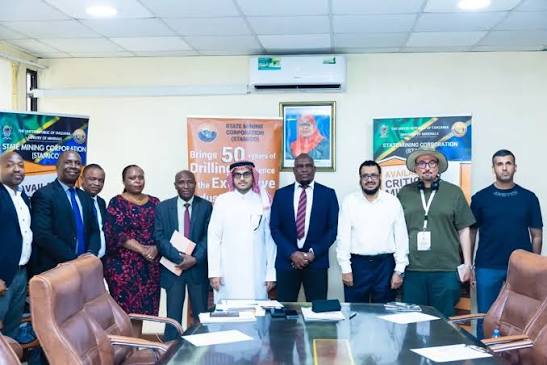
- Saudi Arabia and Tanzania pledge to deepen bilateral trade ties
- Tanzania rewrites its digital investment playbook
- Ethical sourcing boosting demand for Tanzania organic cotton
- DRC deploys 70,000 Ebola vaccine doses in high-stakes trial against deadly Bundibugyo strain
- Kenya’s private sector optimistic on growth despite inflation and geopolitical risks
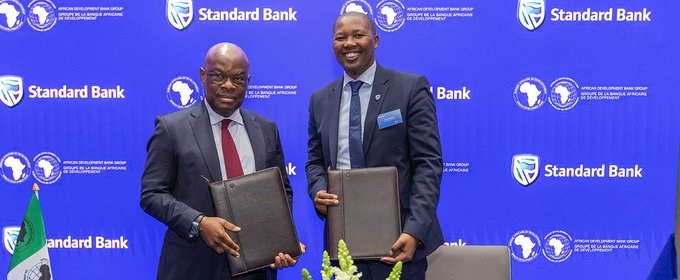
- AfDB and Standard Bank ink $332 million social bond deal to fund South African SMEs
- Equity Group’s regional foray powers $351M H1 profit as Kenyan unit cedes dominance


Saudi Arabia commits to increased trade with Tanzania. Already the oil-rich nation has entered into an agreement to set up a meat processing plant…

Tanzania is rolling out new laws aimed at attracting investors…

Tanzania organic cotton gaining global market interest. Growing call for…


A recent index report showed that Tanzania’s agro sector is mechanizing rapidly on the back drop of value addition mini-factories, the revolution is not unique to Tanzania, it is happening continent wide and North Africa is leading.
Evidence to this fact lies in the pages of the Africa Industrialization Index (AII) report that show more than 35 of Africa’s 52 countries have become more industrialized over the span of the last decade.
The multi-stakeholder report, prepared by the African Development Bank, the African Union and the United Nations Industrial Development Organization (UNIDO), attests to an ongoing industrial revolution in Africa.
The Africa Industrialization Index (AII) uses 19 indicators to rate each country’s level of industrialization ranging from performance of its manufacturing sector, capital, labor to a country’s business environment, its infrastructure and even its entire macroeconomic status.
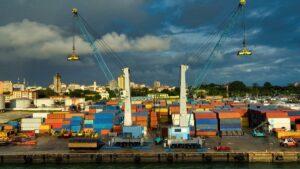
As countries and entire regions react to the global pandemic by seeking to strengthen their resilience, they will, on one hand, cut dependence on sourcing or at least diversify their sources and on the other hand, improve their own responsiveness to demand.
That is where agriculture technology comes in, because what is bound to happen is shorter supply chains will emerge and Africa food security will be undermined.
The continent, while prioritizing transport infrastructure will do well by investing in human resource development and agriculture technology to diversify Africa food sources and Africa food security. The future is in automation, so if a country has the needed human resource it can invest in developing value chains tended by a more technical labour working its agriculture technology.
To build Africa food security, the huge population of Africa youth can offer great competition to the rest of the world if it is educated to meet the global technical needs as ever more intangibles hubs form.
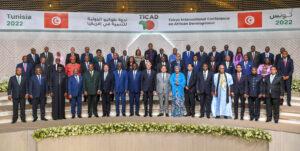
In the wake of the global economic slowdown, JETRO has opened a support desk to assist Japanese companies expansion in Africa and also helping African firms enter the Japan market, JETRO CEO Sasaki said.
The forum highlighted the importance of supporting startups, emphasis on green investment, development of human resources and Africa food security.
Through the JETRO forum, the Japanese business community launched an investment fund for startups in Africa valued at over 10 billion yen.
JETRO CEO Sasaki said the forum also catapulted launch of the Green Growth Initiative with Africa valued at 4 billion dollars that will finance public and private cooperation ‘toward a structural transformation to achieving net zero.’

The 2023 Africa Prize for Engineering Innovation shortlist represents ten African countries, including first timers Angola and Sierra Leone, and demonstrates the importance of engineering as an enabler of improved quality of life and sustained economic development.
The UK Royal Academy of Engineering shortlist of innovations tackle challenges central to the UN’s Sustainable Development Goals, including clean water and sanitation, sustainable cities and communities, good health and wellbeing, and clean energy, good health and wellbeing, and quality education.
Several water innovations are featured in the shortlist Africa Prize Engineering Innovation, including a real-time water quality monitoring and control system, an acid mine drainage solution to recycle contaminated water for human consumption, a portable unit that uses fish waste to boost production of vegetables, and a water management system to prevent excess borehole pumping and drying out of aquifers.
Describing the signing of the five memorandums of understanding, Dawood Al Shezawi, Chairman of the Organizing Committee of the Annual Investment Meeting, stated that the MOUs come in the context of the ongoing efforts made by the Annual Investment Meeting to implement that strategic plan into real-world results that will encourage direct and indirect investment and drive sustainable development.
The Annual Investment Meeting (AIM) is an initiative of the AIM Foundation, an independent international organization fully committed to empowering the world’s economy by boosting effective promotion strategies and facilitating opportunities for economic productivity and expansion.
The Foundation also undertakes the operation and management of the AIM Global Investment Network and its 15 affiliated Business Groups, including the supervision of the Annual Investment Meeting Global and Regional Chapters.

In the move to a cashless society, Rwandans are also showing appreciation for this leadership and quality of service, again the numbers say it all, MTN customer market share increased by 2.9pp to 65.7%.
Rwanda, as most all of the rest of Africa, is experiencing continued increase in demand for data. This demand puts pressure on delivering the needed services at affordable rates, especially giving the increasing cost of data. So it is worth noting and a lesson for the rest of the East African bloc, that the government of Rwanda has taken a bold but very visionary move in changing its Broadband policy.
Rwanda has shown its commitment to accelerate broadband coverage by adopting such measures as the introduction of wireless technology neutrality, which has significantly allowed for improved efficiency. On the ground, this is translated in the form of rolling out of next generation technologies like LTE and 5G all of which help create a cashless society.