Trending
- 2026 is turning out as a defining year in geopolitics, but for whom?
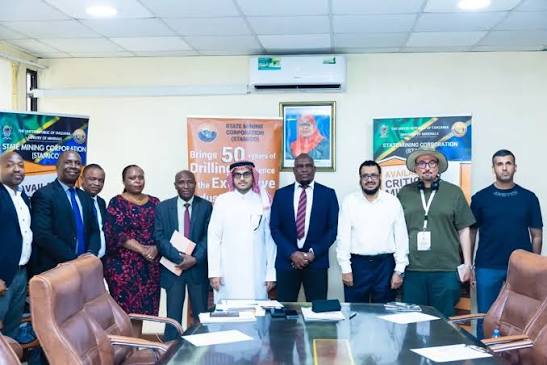
- Saudi Arabia and Tanzania pledge to deepen bilateral trade ties
- Tanzania rewrites its digital investment playbook
- Ethical sourcing boosting demand for Tanzania organic cotton
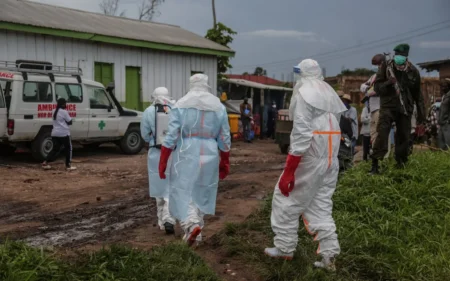
- DRC deploys 70,000 Ebola vaccine doses in high-stakes trial against deadly Bundibugyo strain
- Kenya’s private sector optimistic on growth despite inflation and geopolitical risks
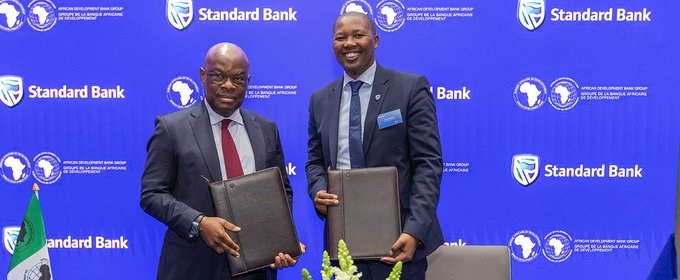
- AfDB and Standard Bank ink $332 million social bond deal to fund South African SMEs
- Equity Group’s regional foray powers $351M H1 profit as Kenyan unit cedes dominance


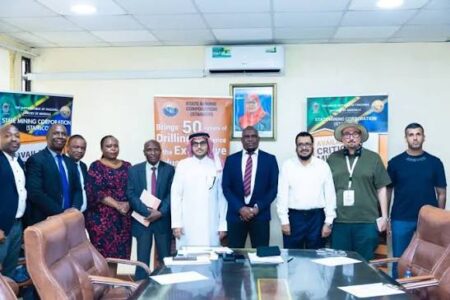
Saudi Arabia commits to increased trade with Tanzania. Already the oil-rich nation has entered into an agreement to set up a meat processing plant…

Tanzania is rolling out new laws aimed at attracting investors…
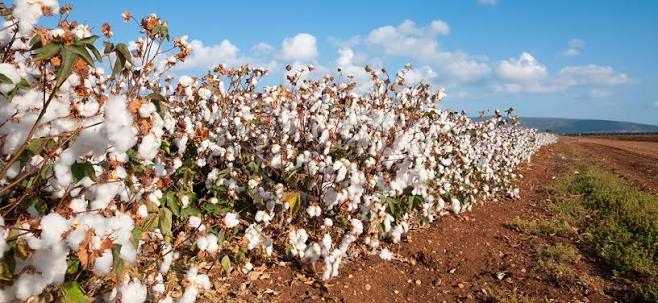
Tanzania organic cotton gaining global market interest. Growing call for…
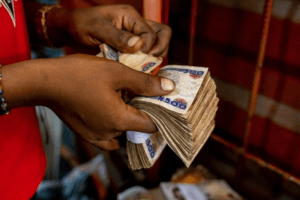
The Central Bank of Nigeria (CBN) has announced that it would redesign the country’s N200, N500 and N1, 000. The change would be done to reduce the amount of money in circulation and control inflation, according to the CBN Governor, Godwin Emefiele.
The CBN highlighted concerns of “illicit” funds in circulation, which it said bandits and kidnappers had been exploiting in perpetrating their crimes.
The regulator said as much as 85 per cent of currency in circulation were outside the vaults of the country’s banks, encouraging criminality, currency hoarding and reducing the efficacy of the central bank’s monetary policies.
Burundi formulated the National Development Plan (NDP) 2018-2027, in order to provide a socio-economic diagnosis of the country to structurally transform the Burundian economy for robust, sustainable, resilient, inclusive growth, creating decent jobs for all and leading to improved social welfare.
By the same token, the National Peacebuilding Program was developed in 2020 to operationalize the NDP. This program serves as a reference for all intervention strategies and actions aimed at promoting economic growth, community recovery, reintegration and sustainable and inclusive resettlement in Burundi.
Late September marked the launch of an economic memorandum report of Burundi supported by the World Bank. This was aimed at identifying opportunities to accelerate economic growth. Prepared with perspective to the successive external shocks of both the pandemic and the Russia-Ukraine conflict, some of the proposed solutions included increasing agricultural productivity, boosting trade, and managing natural capital, investing in infrastructure, restoring macroeconomic stability and strengthening infrastructure governance.
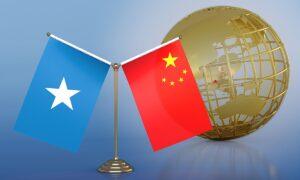
The diplomatic Somalia-China relations have played a crucial role in the Chinese government’s development of over 80 infrastructure projects in Somalia, including the national stadium, Banadir hospital, and north-south highway.
![Oil-extraction-in-Angola. [Photo: Financial Fortune]](https://theexchange.africa/wp-content/uploads/2022/10/ANgola-300x200.jpg "Sectors to revive Angola’s heavily indebted economy")
Angola is also rich in other minerals like iron ores, diamonds, gold, marble and phosphate deposits. The embassy of Angola’s economic outlook indicates that from the 1950s through 1975, iron ores were explored in provinces such as Malange, Bié, Huambo, and Huíla, and average output reached 5.7 million tonnes per year between 1970 and 1974.
The most explored minerals were exported to Japan, Germany, and the United Kingdom, earning Angola US$50 million a year.
Angola’s phosphate deposits are estimated at 150 million tonnes, located in the provinces of Cabinda and Záire. These resources have so far been unexplored. In Southeastern Angola in the provinces of Namibe and Huíla, marble, granite, and quartz reserves abound. Marble is especially consumed in the local market, while black granite is on demand and exported to United States and Japanese markets.
Debts are quite effective economic tools when used correctly. However, debts have been seen to…

The challenge facing the EAC is not the lack of natural resources but the lack of high-tech industries. China is a perfect example of a country that transformed from an agricultural civilisation to an industrial one. More than 850 million individuals have been lifted out of poverty due to recent economic growth brought about by China’s industrialisation.
Without involvement in the fourth industrial revolution, the East African Community would never be able to escape its state of backwardness. Therefore, the DRC will catalyse industrial transformation inside the East African Community, Africa and the world.